

Medical reviewer: Confirm. Reviewer registration and source check: Confirm. Last reviewed: Confirm.
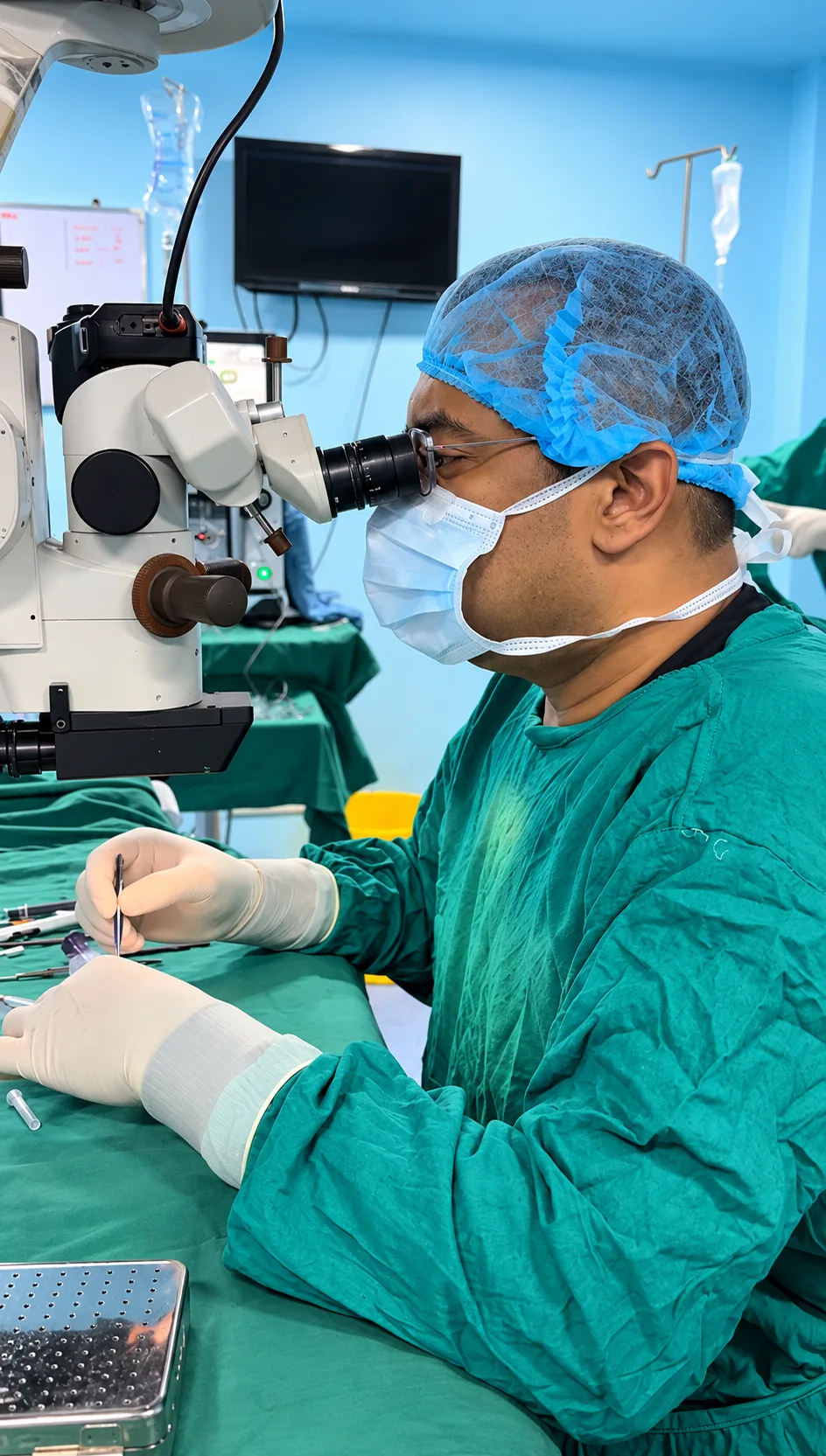
All cataract operations remove the clouded lens through a small cut and replace it with a clear artificial lens. Phaco uses ultrasound through about 2.2 to 3 mm, MICS through about 2 mm or less, and SICS removes the lens whole through a larger tunnel. Laser cataract surgery automates some steps first. For most eyes, the surgeon and the lens matter more than the label.
New to the topic? Start with cataract surgery in Delhi. To compare lenses, see cataract lens types and price. Book a cataract evaluation or call 9643 900 900.
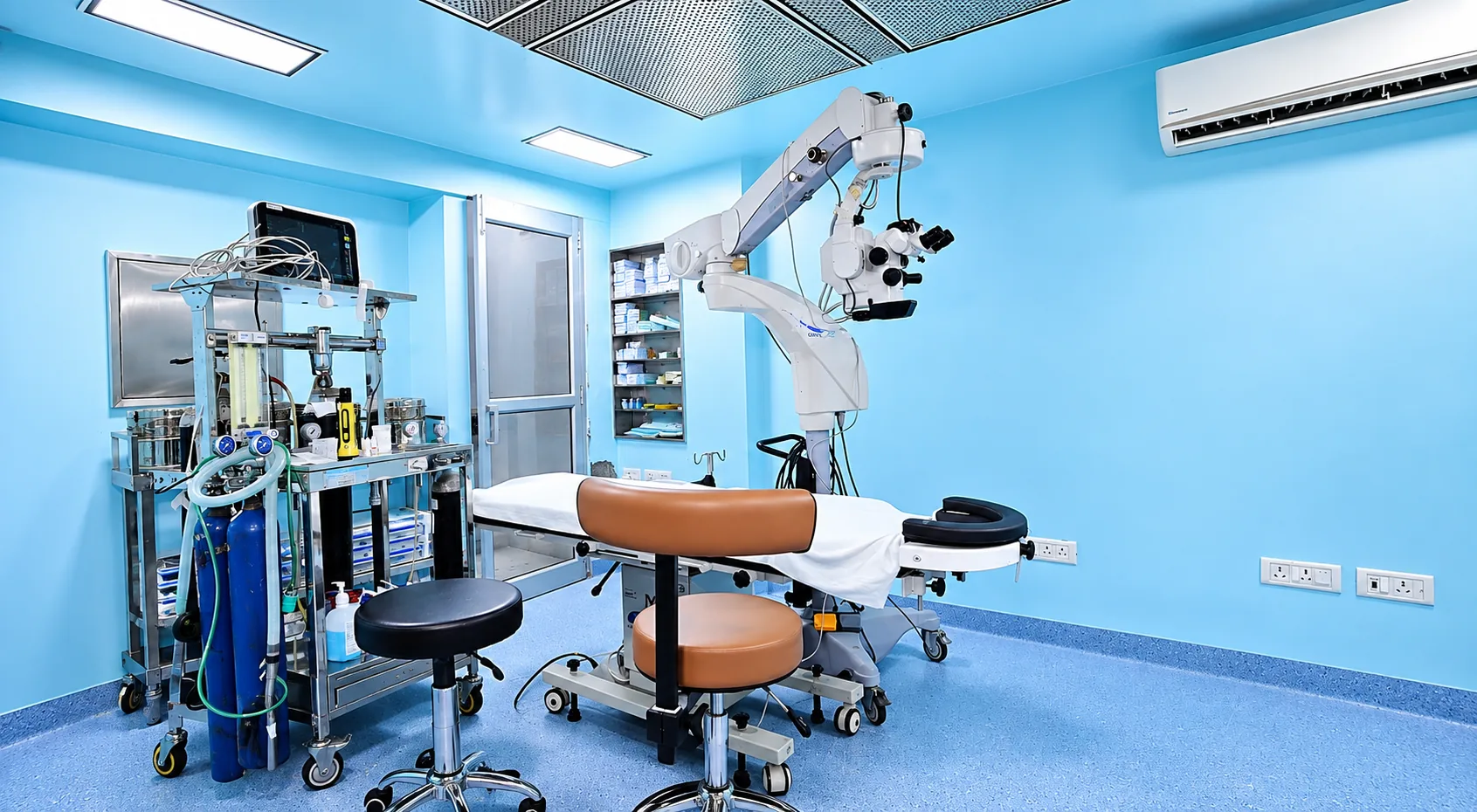
Phaco, MICS, SICS and laser at a glance
- All four are day-care operations, usually under numbing drops or a small injection around the eye.
- The cataract is the same disease whichever method is used; what changes is how the lens is broken up and how big the opening is.
- SICS, phaco and MICS are priced per eye by us. See the table below.
- 'Robotic' cataract surgery usually means laser-assisted surgery. It is not a robot that operates alone.
- Studies that compare laser-assisted with standard phaco have generally found similar vision in ordinary cataracts.
How do SICS, phaco, MICS and laser compare?
| Feature | Manual SICS | Phaco | MICS | Laser-assisted (femtosecond) |
|---|---|---|---|---|
| Opening | Larger, around 6 mm or more | About 2.2 to 3 mm | About 2 mm or less | Made by the laser, then phaco through about 2 to 3 mm |
| How the lens is removed | Taken out whole, or in a few pieces, through a tunnel | Broken by ultrasound and suctioned out | Same as phaco, through finer instruments | Laser softens and divides the lens; ultrasound still removes it |
| Stitches | Often none; sometimes one or two | Usually none | Usually none | Usually none |
| Anaesthesia | Drops or injection | Drops or injection | Drops or injection | Drops or injection |
| Day care | Yes | Yes | Yes | Yes |
| Suits | Very hard cataracts; eyes where phaco is not suitable | Most cataracts | Most cataracts; some surgeons prefer it with a toric lens | Selected eyes, chosen case by case |
| Fee per eye | Confirm | Confirm | Confirm onwards | Confirm |
| Offered at Jain Eye Hospital | Yes | Yes | Yes | Confirm |
Sizes are general figures from ophthalmic teaching. The exact incision depends on the instruments and the surgeon.
What is manual small incision cataract surgery (SICS)?
In SICS the surgeon makes a self-sealing tunnel in the white of the eye, loosens the hardened lens and slides it out whole, then places a foldable lens. No ultrasound machine is needed. Because the opening is wider, there is a little more swelling and healing takes slightly longer than with phaco, and the cornea can be left with a little more astigmatism.
It earns its place with very dense, brown cataracts that need a lot of ultrasound energy to break up. In those eyes phaco can strain the cornea, and SICS is often the safer path. It also fits situations where phaco is not suitable for the eye. The fee is Confirm per eye.
An older method called extracapsular cataract extraction (ECCE) uses a larger incision still, and stitches. It is used rarely, for example when the lens is too hard or loose for other methods.
What is phacoemulsification (phaco)?
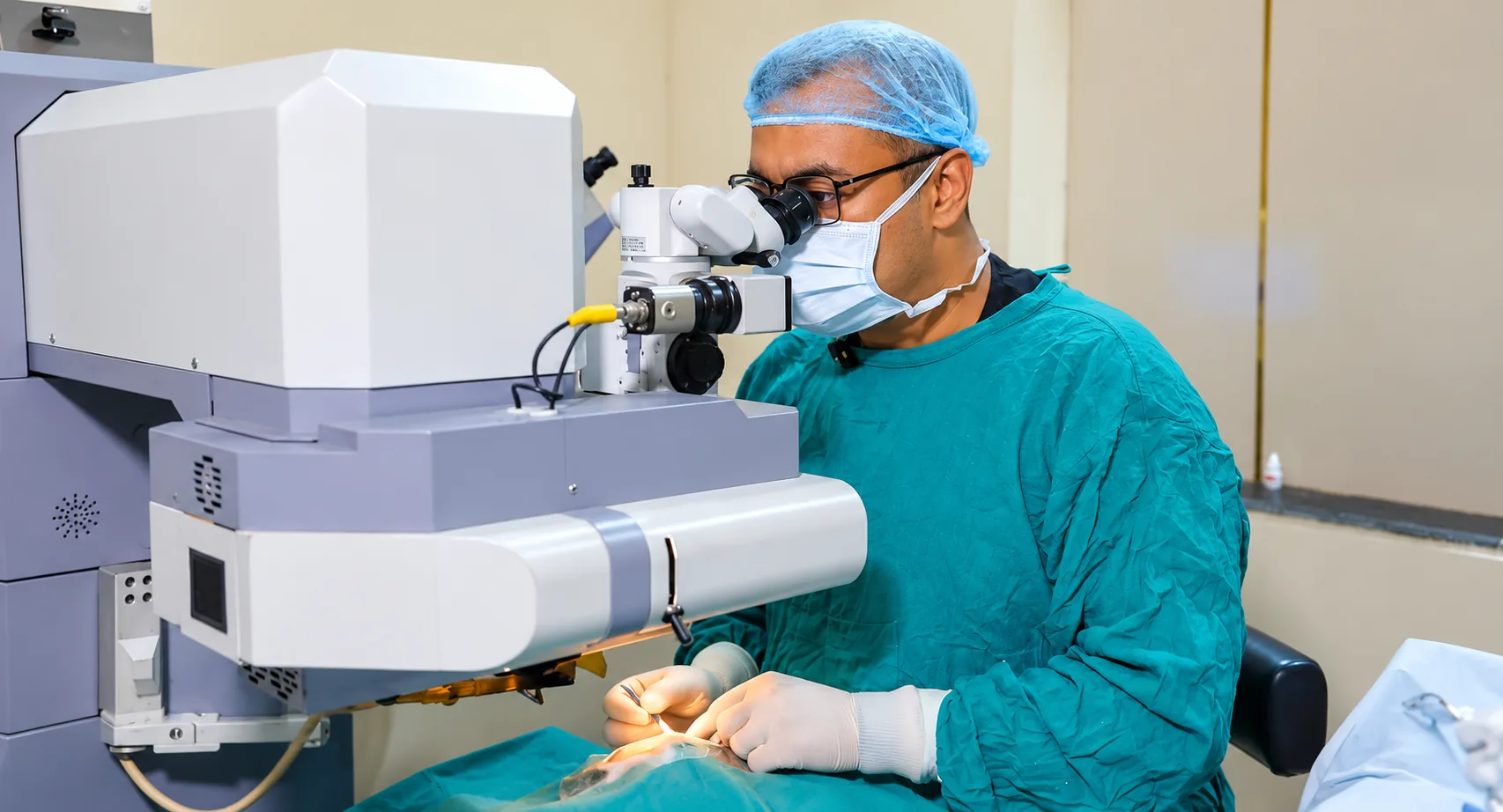
Phaco stands for phacoemulsification. A fine probe vibrates at ultrasound speed to break the cloudy lens into tiny pieces, and the same probe suctions them out through a cut of roughly 2.2 to 3 mm. The folded lens is placed through the same opening, where it unfolds.
It has been the standard method in many countries for decades. The opening is small enough to seal without stitches in most eyes, and most people see better within a day or two. Phaco is used for the majority of routine cataracts. The fee is Confirm per eye, and the lens is added as listed on the cost page.
What is MICS cataract surgery?
MICS stands for micro-incision cataract surgery. It is phaco carried out through a smaller opening, roughly 2 mm or less, using thinner instruments. The aim is less disturbance of the cornea and a little less astigmatism induced by the cut. In practice the gain in vision over standard phaco is small in most eyes, so MICS is chosen for a mix of reasons: the surgeon's preference, a toric lens plan, or an eye that is sensitive to astigmatism.
Do not read 'micro' as a promise of a better result. Skill in handling a particular eye matters more. The MICS fee is Confirm onwards per eye.
What does laser cataract surgery really add?
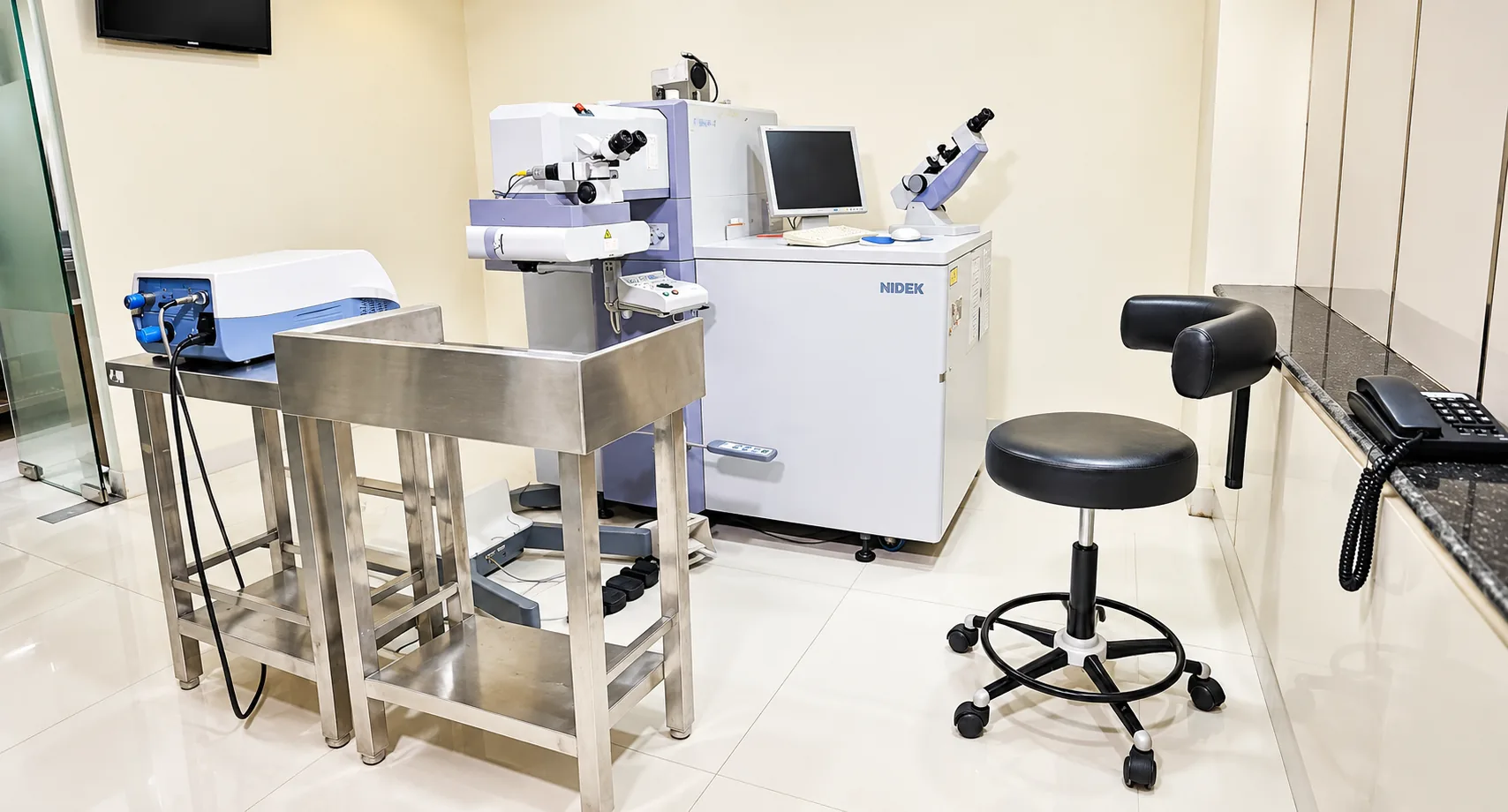
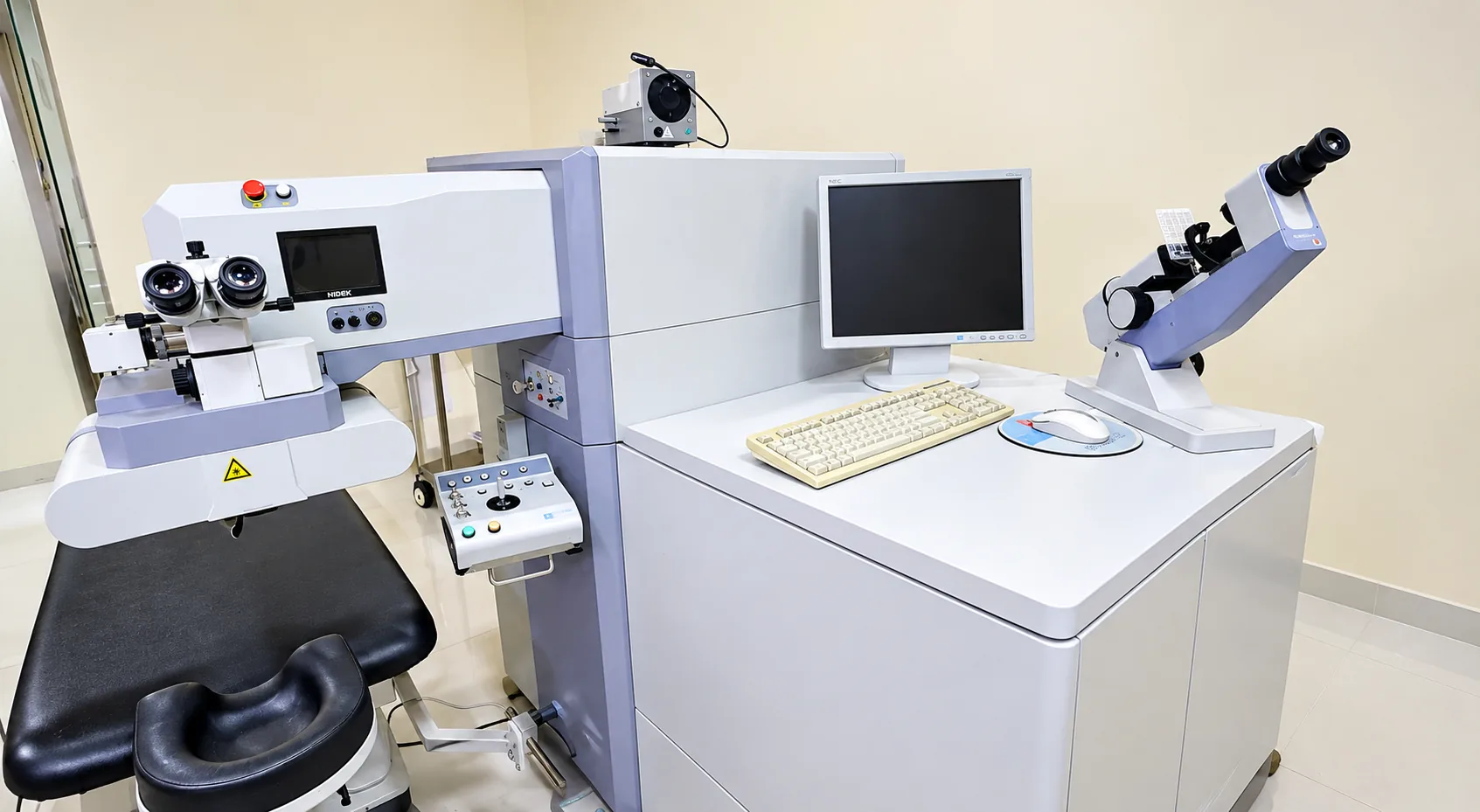
In femtosecond laser-assisted surgery, a computer-guided laser does three jobs before ultrasound: it makes the corneal incisions, opens the front of the lens capsule in a neat circle, and divides or softens the cataract. The eye is held steady by a suction ring while it works, which is the part patients sometimes dislike. After that, the cataract is removed in the usual way, with ultrasound and suction, and the lens is placed.
What the laser adds is precision in the first steps. What it does not add, for most eyes, is a clearly better outcome: when laser-assisted and standard phaco have been compared in studies, vision after surgery has generally been similar in ordinary cataracts. It can be useful in selected eyes, such as a lens that is loosely held, or when a surgeon wants very exact capsule openings for a premium lens. It cannot be done in every eye: a small pupil, corneal scars or a deep-set eye can stop the laser from docking.
Claims such as 'bladeless', 'no pain' or 'no risk' sell the technology more than they describe the operation. The laser costs extra, adds time on the table, and does not remove the need for ultrasound. If a centre advises it, ask what it changes for your eye. Confirm
What is robotic cataract surgery?
In India the phrase usually means laser-assisted cataract surgery. A surgeon still plans the operation, removes the cataract and places the lens. There is no fully automated robot that does cataract surgery by itself. When a quote says 'robotic', ask whether it means femtosecond laser, which machine it uses, and what the extra charge pays for. Confirm
Which technique suits which eye?
| Eye situation | Usual approach | Why |
|---|---|---|
| Routine age-related cataract | Phaco or MICS | Proven, quick recovery |
| Very hard (brown) cataract | Phaco with care, or SICS | Dense lenses need much ultrasound energy; SICS spares the cornea |
| Small pupil or loosely held lens | Surgeon's plan, with extra instruments | Safer handling of the capsule |
| Astigmatism with a toric lens | Phaco or MICS | Alignment and incision planning matter |
| Phaco not suitable for the eye | SICS | Allows removal without ultrasound |
| Earlier retina, glaucoma or corneal surgery | Individual plan | The eye is more complex |
| Diabetes | Phaco or MICS after a retina check | Retina is looked at before the date is fixed |
This is a guide. Your surgeon decides after examining your eye and may change the plan during the operation, for example moving from phaco to a larger opening if the lens proves harder than expected.
Is recovery different with different techniques?
Only slightly. All four methods are day-care, and in all of them most people see better within a day or two and return to light routine in about a week. A larger opening, as in SICS, may mean a little more redness and a somewhat longer settling period. Healing depends more on the health of your eye, any diabetes, and whether you follow the drop schedule than on the method used. The full day-by-day table is on cataract surgery in Delhi.
What do the methods cost per eye?
| Technique | Fee per eye |
|---|---|
| Manual SICS | Confirm |
| Standard phacoemulsification (phaco) | Confirm |
| MICS | Confirm onwards |
| Laser-assisted | Confirm |
The lens, diagnostics (Confirm), post-surgery care (Confirm) and day-care charges (Confirm) are added, and follow-up visits up to 45 days after surgery are included. The itemised bill, with low and high worked examples, is on the cataract surgery cost page.
These are indicative ranges. The exact fee is confirmed after examination, because the procedure, the lens or drug used and the condition of your eye decide it. Fees last updated [month year, CONFIRM]. Cashless eligibility and covered services: Confirm with the hospital and insurer.
What do we offer at Jain Eye Hospital?
At Jain Eye Hospital & Laser Centre we perform manual SICS, standard phaco and MICS. The equipment is described on our technology page Confirm. Doctor-specific title, qualifications, registration, clinical assignments, procedures and OPD availability: Confirm. If your eye needs a different method from the one you came expecting, we say so before the date is fixed.
Come in the same day if
After any cataract operation, do not wait for the next scheduled visit if you have:
- Pain that grows rather than settles
- Vision that falls after it had begun to improve
- Spreading redness or thick discharge
- New floaters, flashes of light or a curtain in the vision
- A blow, scratch or splash to the operated eye
Call 9643 900 900 or WhatsApp 96 43 53 63 73. See eye emergencies for what to do on the way.
Laser cataract surgery or phaco: how to decide
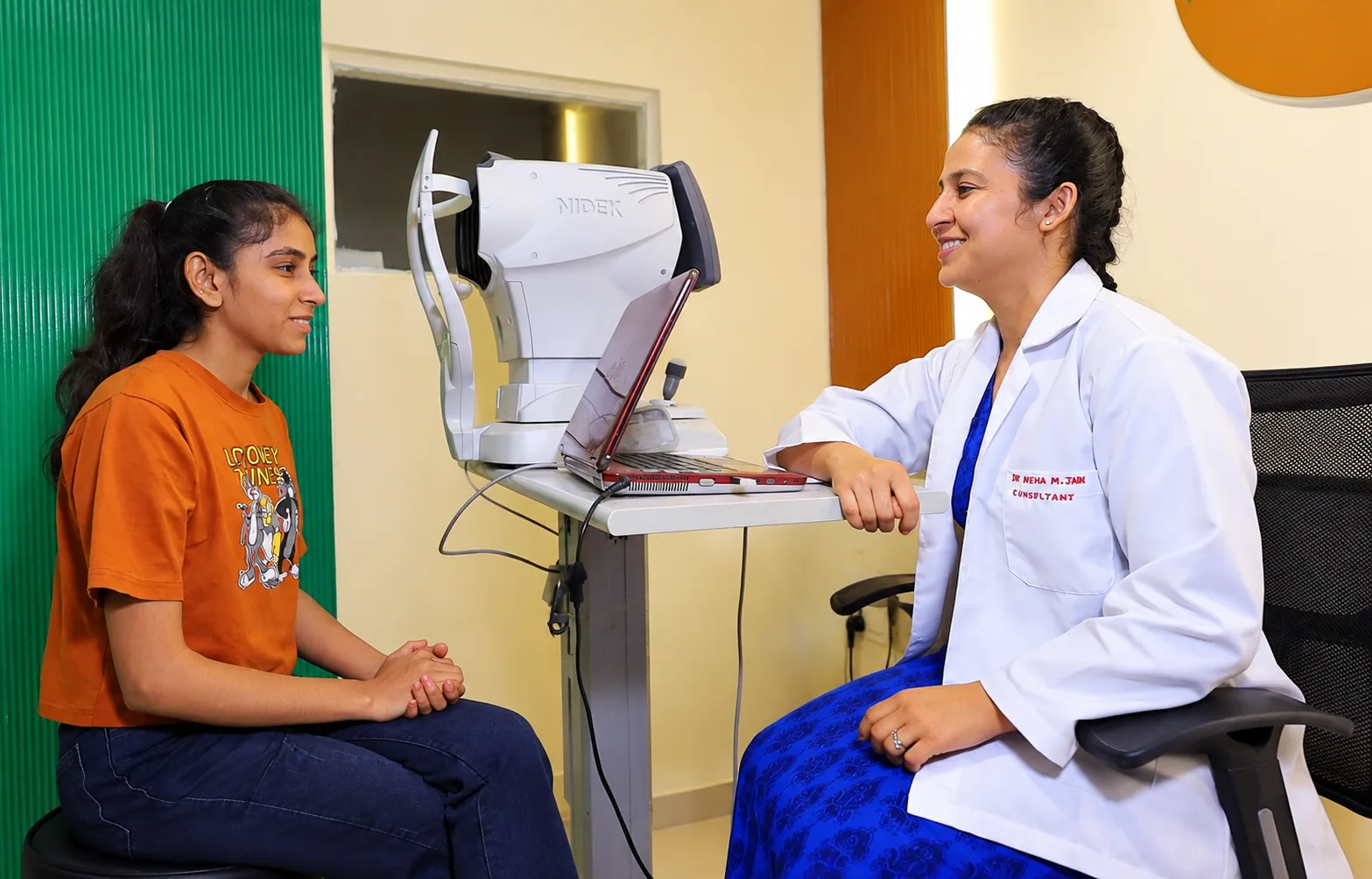
Ask your surgeon which technique they would use for your eye, and why. A clear answer names your cataract, your pupil, your cornea and your lens choice. If the case for a more expensive method rests on a word such as 'bladeless' or 'robotic', ask for the reason in terms of your eye. Our eye checkup tests the eye before this decision is made.
We are at AG-152, Poorbi Shalimar Bagh, Delhi 110088, near Richi Rich Banquet, and see patients from across North-West Delhi and beyond. Book a cataract evaluation and bring your old spectacles and reports. Other fees are listed under treatment costs.
Based on patient information from the American Academy of Ophthalmology and the National Eye Institute. General information; your surgeon advises for your eye.
FAQs
Is laser cataract surgery better than phaco?
For most ordinary cataracts, published comparisons have generally found similar vision after laser-assisted surgery and standard phaco. Laser assistance may help in selected complex eyes or with some premium lenses. The surgeon's experience, the health of your eye and the lens you choose usually matter more than the name of the technique used.
What is robotic cataract surgery?
In India, robotic cataract surgery usually means femtosecond laser-assisted surgery, where a computer-guided laser makes the incisions, opens the lens capsule and softens the cataract. The surgeon still removes the cataract and places the lens. It is not a fully automated robot, and it suits only selected eyes. Ask what the extra charge covers.
What is MICS cataract surgery?
Micro-incision cataract surgery (MICS) removes the cataract through an opening of about 2 mm or less, using fine instruments. It is a refinement of phaco rather than a different operation. The smaller opening can mean less astigmatism from the cut and quick healing. It suits most routine cataracts. Our MICS fee is Confirm onwards per eye.
Which cataract surgery has the fastest recovery?
Phaco, MICS and laser-assisted surgery all let most people return to light daily activity within a few days. SICS, with its larger opening, can take a little longer to settle. The pace depends more on the health of the eye, the hardness of the cataract and following the drops than on the method. Your surgeon gives you a plan.
Is laser cataract surgery more expensive?
Generally yes, because the laser equipment and single-use parts add a charge on top of the surgery. Our fees for SICS (Confirm), phaco (Confirm) and MICS (Confirm onwards) are per eye. Confirm Always ask for a written per-eye quote that names the technique, lens and follow-up visits included.
Is phaco surgery outdated?
No. Phacoemulsification remains the standard cataract technique in many countries, and ultrasound is still the main step in MICS and laser-assisted surgery. MICS and laser methods refine it rather than replace it. For most eyes, a well-performed phaco or MICS operation is an established and effective choice.
Are stitches needed in cataract surgery?
Modern phaco and MICS openings are usually self-sealing and need no stitches. Older manual methods with larger openings, such as extracapsular extraction, usually need stitches, and SICS sometimes does. Your surgeon tells you which technique is planned for your eye and whether any stitch is expected, before the day of surgery.
Can every cataract be treated with MICS?
Most can. Very dense cataracts, a small pupil, weak lens support or earlier eye surgery may call for a modified approach, extra instruments or a different technique such as SICS. Your surgeon decides after a detailed examination and explains the plan, including any change in fee, before the operation. The fee is confirmed in writing.