

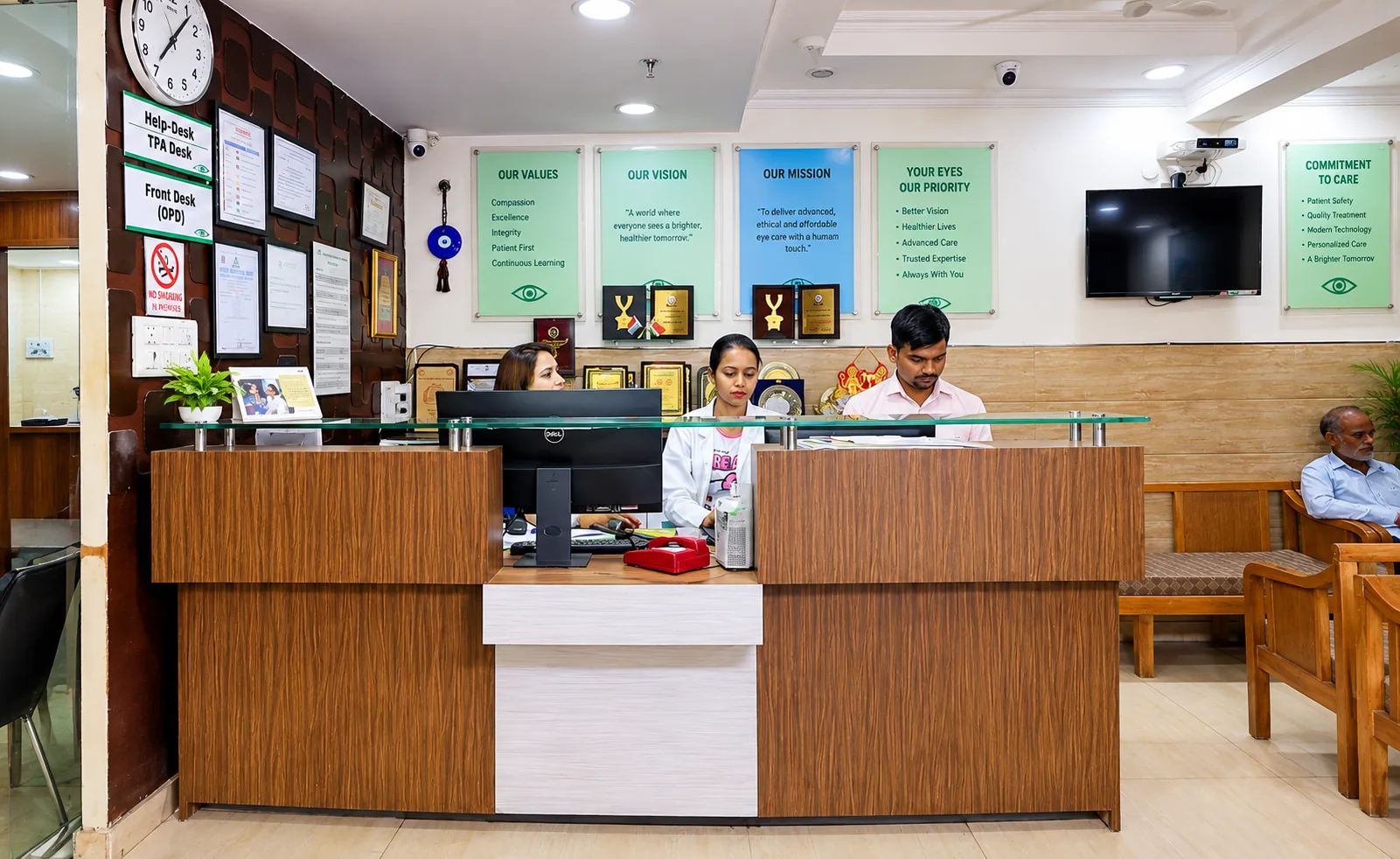
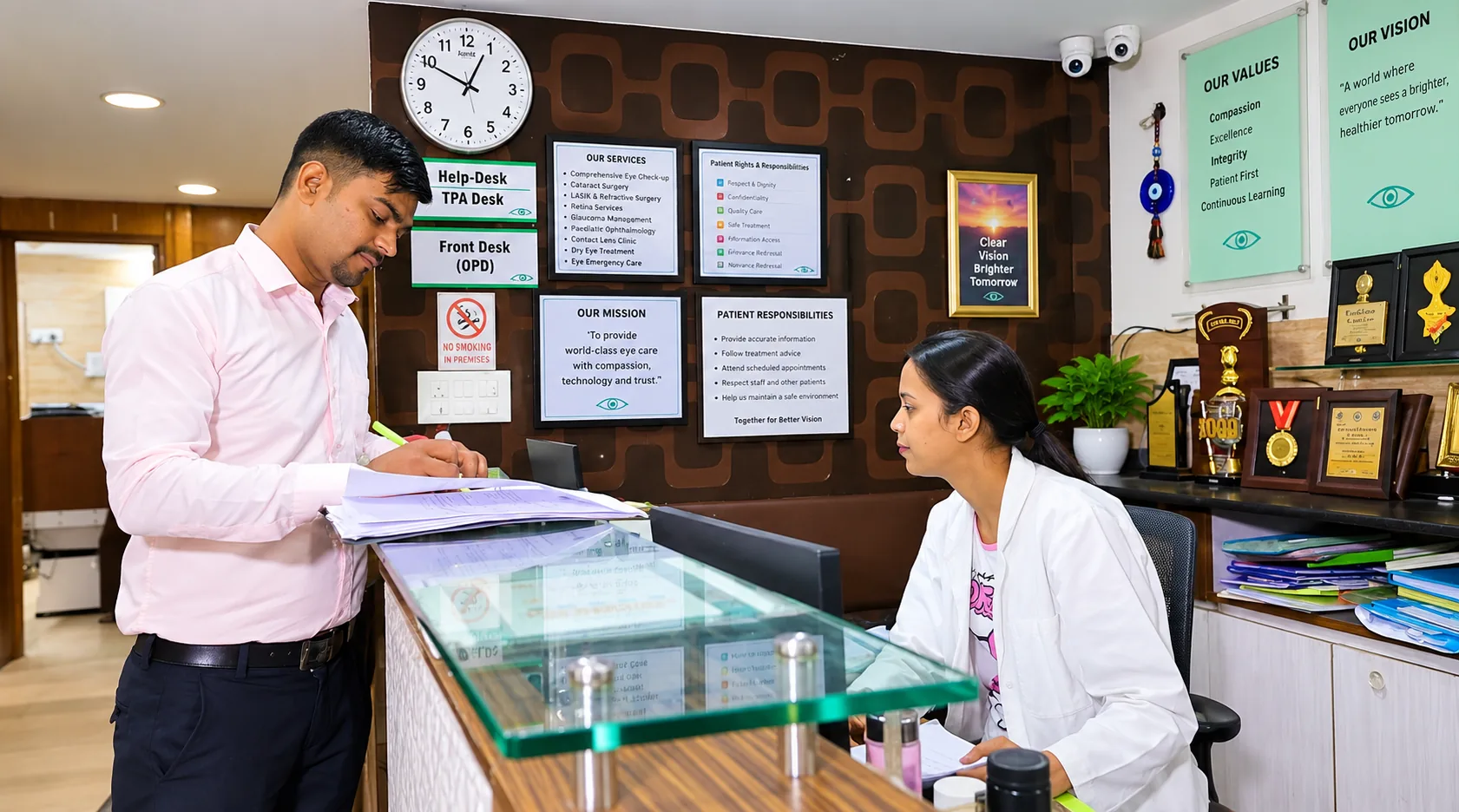
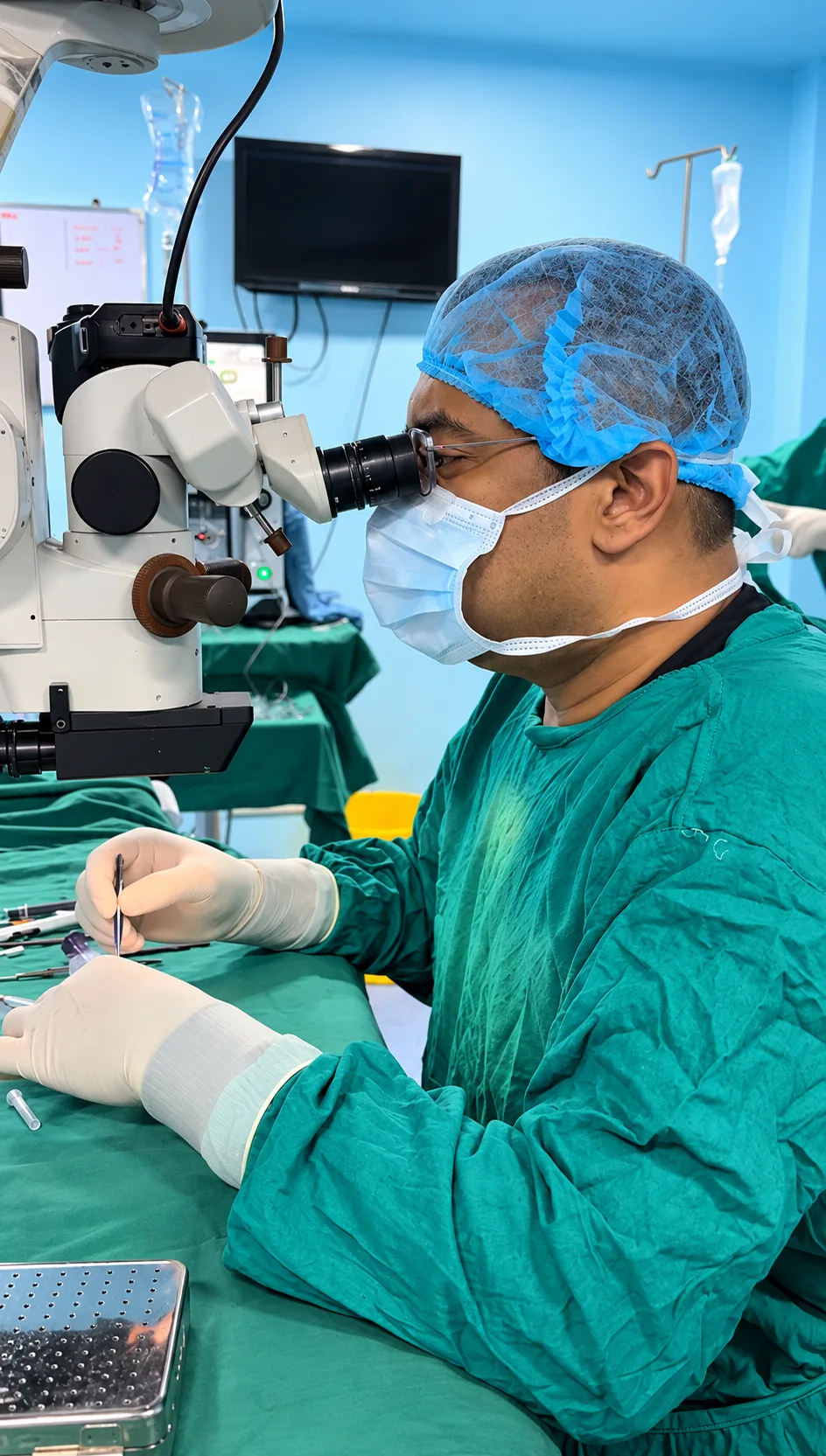
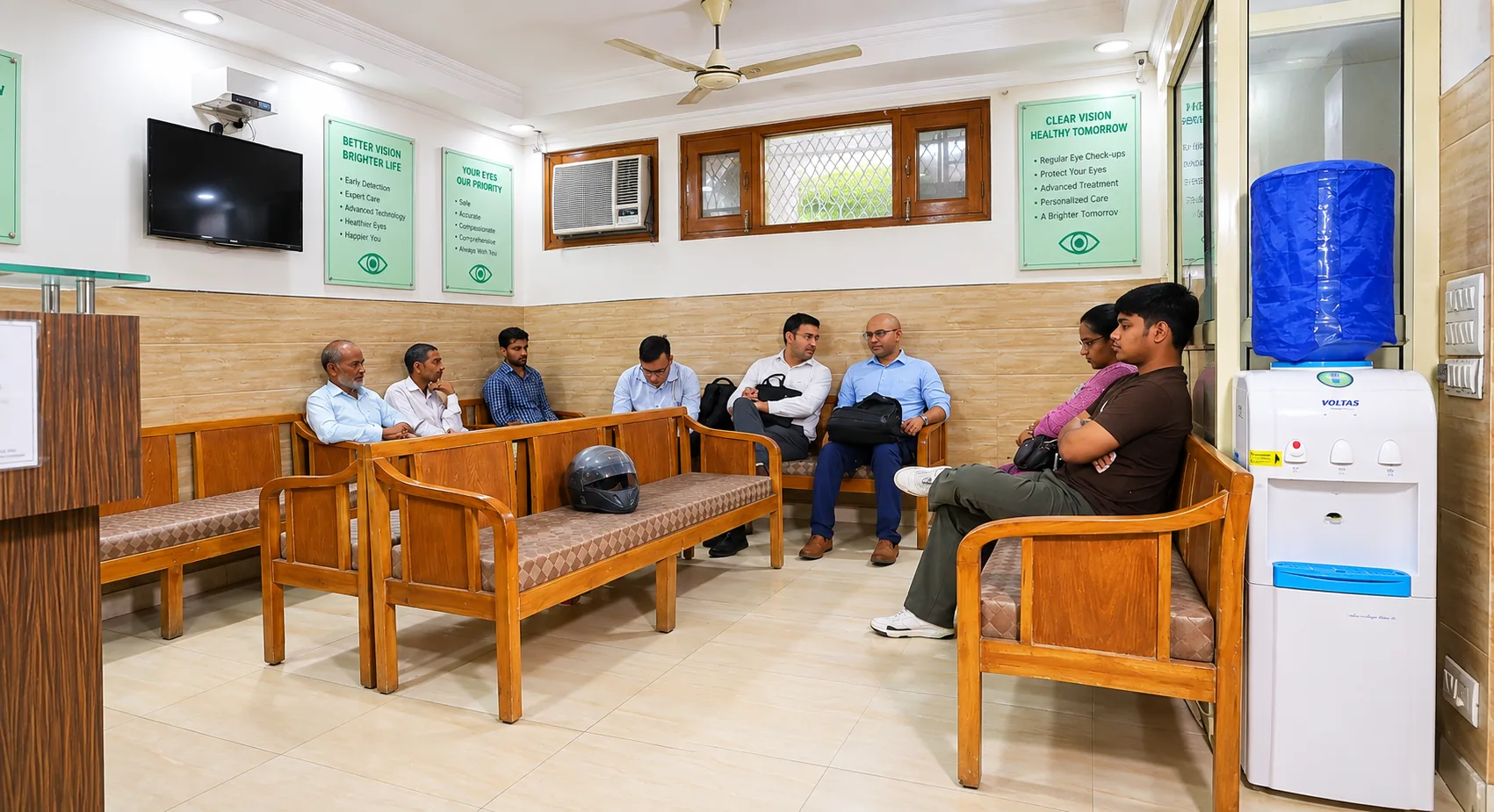


Dry eye treatment in Delhi at Jain Eye Hospital & Laser Centre, Shalimar Bagh, starts with tests to find out why the tear film is failing. Care then moves up in steps: lubricants, lid care, anti-inflammatory drops, punctal plugs and, where suitable, IPL. Dr Rajat Jain reviews this page. Fees are confirmed after assessment.
Medical reviewer: Confirm. Reviewer registration and source check: Confirm. Last reviewed: Confirm.
Book a dry eye assessment or call 9643 900 900.
What is dry eye?
Your eye is covered by a thin film of tears made of three layers: a watery layer from the tear glands, an oily layer from small glands in the eyelid edge (meibomian glands) that stops the water from evaporating, and a mucus layer that helps the film spread. Dry eye disease means the film is too small, evaporates too fast, or is unstable, so that the surface of the eye becomes irritated and inflamed.
There are two broad types, and many people have both. In aqueous-deficient dry eye the eye does not make enough tears. In evaporative dry eye, which is the more common kind in people who work on screens, the oil glands are blocked or underperforming (meibomian gland dysfunction, or MGD) and tears vanish too quickly.
Dry eye is usually a long-term condition that is controlled rather than cured. Most people become comfortable with the right routine, but symptoms can return when the season, workload or health changes.
What are the symptoms of dry eye?
- Burning, stinging or a gritty feeling, as if sand were in the eye
- Redness, especially by evening
- Tired eyes and heaviness of the lids when reading or using a phone
- Blur that clears after a few blinks
- Light sensitivity
- Stringy mucus in the corner of the eye on waking
- Contact lenses that become uncomfortable by afternoon
- Watering, which surprises many people. When the surface is dry and irritated, the eye makes a rush of reflex tears that are watery and do not coat the surface well. If your eyes water all day, dry eye is one possible cause; the watery eyes page lists the others, including a blocked tear duct.
What causes dry eye in Delhi?
Dry eye has many causes, and several often act together.
- Screens. We blink less often and less fully when we look at a phone or computer, which leaves the lower part of the cornea exposed. Delhi office and school hours are long.
- Air conditioning and fans. Cold, dry air blowing across the face, in offices, cars and metros, dries the film.
- Pollution and dust. Smog, dust, smoke and construction particles irritate the eye surface and inflame the lids.
- Contact lenses. Lenses sit in the tear film and often worsen dryness by the end of the day.
- Age and hormones. Tear production falls with age, and menopause and some hormonal changes make dry eye more likely.
- Medicines. Antihistamines, some antidepressants, some blood pressure tablets, acne medicine and others can reduce tears. Do not stop a medicine without asking the doctor who prescribed it.
- Meibomian gland dysfunction. Oil glands clog with thick secretions, often with blepharitis (inflamed lid edges) or rosacea.
- Systemic disease. Rheumatoid arthritis, Sjogren's syndrome, thyroid disease and diabetes can all be involved.
- After eye surgery. Dry eye is common for some weeks to months after LASIK, and may follow cataract surgery. A pre-existing dry eye is better treated before surgery.
- Allergy and rubbing. See eye allergy.
How does the Delhi year affect dry eyes?
| Season | What is in the air | Effect on dry eye | What helps |
|---|---|---|---|
| October to January (post-monsoon, smog, Diwali, winter) | Smog, crop-burning smoke, firecracker particles, cold dry air | Burning, redness and heavy lids are common; flare-ups are frequent | Wrap-around glasses outdoors, preservative-free lubricants, a bowl of water or humidifier indoors, cut rubbing |
| February to March (Holi, spring dust) | Dry winds, pollen, colour powders | Itching and dryness together; rubbing risk rises | Keep colour powder away from the eyes, rinse with clean water, lubricants, treat allergy |
| April to June (heat, loo, dust storms) | Hot dry winds, dust, strong AC use at home and in the car | Evaporation is fast; eyes feel sandy | Sunglasses, avoid AC vents pointing at the face, drink plenty of water, lubricants |
| July to September (monsoon) | Humid air, but more eye infections | Dryness often eases; red eye may be infection, not dry eye | Do not treat a painful red eye with leftover drops; get it checked |
Can you check yourself for dry eye at home?
A quick self-check is a pointer, not a diagnosis. Answer yes or no:
- Do your eyes burn, sting or feel gritty by evening?
- Does your vision blur on a screen or a book and clear on blinking?
- Do you use eye drops more than a few times a week for comfort?
- Do you work long hours in air conditioning or on screens?
- Do your contact lenses feel dry after a few hours?
- Do your eyes water all day, or feel worse in wind and smog?
Two or more yes answers suggest dry eye is worth testing, and any pain, light sensitivity or falling vision needs a doctor soon. Use of drops that contain a steroid or an antibiotic without a prescription is a reason to be seen, not a self-treatment.
Which tests do we use to diagnose dry eye?
Dry eye is diagnosed by combining your history with simple tests, usually done in one visit. Confirm
| Test | What it measures | How it is done |
|---|---|---|
| Symptom questionnaire | How much dryness affects your daily life | A short form |
| Tear break-up time (TBUT) | How long the tear film stays intact between blinks | A drop of dye, and the doctor watches under a blue light |
| Corneal and conjunctival staining | Surface damage from dryness | Dye drops, then examination at the slit lamp |
| Schirmer test | How many tears the eye makes in a few minutes | A small strip of paper at the lower lid edge |
| Lid and gland examination | Blocked glands, inflamed lid margins, mites | Pressure on the lid and slit-lamp examination |
| Meibography | Images of the oil glands | A scan of the lid Confirm |
Please do not put drops in on the morning of the test unless the doctor says so, and bring all the drops and medicines you use. The fee is confirmed at the visit; see eye checkup for other tests.
What is the treatment ladder for dry eye?
Treatment follows a stepwise approach recommended by TFOS DEWS II. Most people begin at the first steps, and only some need the later ones. Your doctor chooses steps based on what the tests show.
| Step | Treatment | For whom | Notes |
|---|---|---|---|
| 1 | Screen breaks, full blinking, humidifier, wrap-around glasses outdoors, stop smoke exposure | Everyone | Cheapest and often the most effective |
| 2 | Lubricating drops and night gels; preservative-free if used often | Mild dryness | Drops used more than four to six times a day are usually preservative-free |
| 3 | Lid hygiene and warm compresses, with omega-3 supplements only if advised | Evaporative dry eye, blocked glands | A daily routine of a few minutes |
| 4 | Anti-inflammatory drops (for example cyclosporine) or a short supervised course of other drops | Moderate to marked dry eye | Doctor-supervised only, and slow to work |
| 5 | Punctal plugs | Not enough tears | A tiny plug placed in the tear drain in the clinic in minutes; it keeps tears on the eye longer |
| 6 | IPL (intense pulsed light) or thermal gland therapy Confirm | Meibomian gland dysfunction that has not responded | A short course of sessions a few weeks apart, for selected patients only |
| 7 | Autologous serum drops, special lenses (scleral lenses), or other specialist care | Severe or surface-damaged dry eye | Referral or specialist clinic |
A few points make the ladder easier to follow.
Preservative-free drops. The preservative in many bottles can itself irritate the surface when drops are used many times a day. Preservative-free drops come in single-use vials or special bottles, and your doctor will tell you if you need them.
Steroids. A short, supervised course may be used to calm a flare. Steroid drops used without advice can raise eye pressure and bring on cataract, and some can hide an infection.
Plugs. Plugs are usually tried after a trial of temporary ones. They can fall out or cause irritation, and can be removed.
IPL. Intense pulsed light applied to the skin around the eyes is thought to help the oil glands work better by reducing lid inflammation. It does not suit everyone, and the benefit is usually partial. It is followed by gland care at home. Confirm
No fee figures are shown for dry eye care on this page. The fee for the assessment and any step is confirmed after examination, and you can see our other fees on treatment costs.
What home care helps?
- Follow the 20-20-20 rule: every 20 minutes, look at something 20 feet away for 20 seconds, and blink fully several times.
- Put your screen slightly below eye level, which exposes less of the eye.
- Warm compress: soak a clean cloth in warm (not hot) water, hold it over closed lids for five to ten minutes, then gently massage along the lid edge. Repeat daily.
- Clean the lid edge with a lid wipe or diluted baby shampoo on a cotton bud if the doctor advises.
- Keep AC vents and car vents pointing away from your face; use a humidifier or a wide bowl of water in dry rooms.
- Drink enough water, and cut down on smoke, including other people's.
- Omega-3 supplements help some people but not all; ask before starting.
- Do not rub your eyes.
- Do not use eye drops from a friend, a chemist's shelf or leftover bottles that contain steroid or antibiotic.
Why do contact lenses, LASIK and cataract surgery matter?
Contact lenses. Wearing time is a limit. If lenses feel dry by afternoon, switch to glasses on some days, use a lens-safe lubricant, and ask about a different material or schedule. Painful red eye in a lens wearer is not dry eye until proved otherwise; see cornea treatment.
Before LASIK. Dry eye should be tested before any laser vision correction, because LASIK temporarily reduces corneal sensation and tear production. Mild dry eye can often be treated first. Significant dry eye may make surface treatment or another option safer. See our LASIK surgery page.
After LASIK or cataract surgery. Dryness is common in the first weeks and months, and usually improves with lubricants and the steps above. If it persists, tell your surgeon; do not assume it is normal.
When does dry eye need a doctor?
Come in the same day if: you have severe eye pain, a red eye with a white spot on the clear part of the eye, sudden loss of vision, marked light sensitivity, or discharge from the eye. Call 9643 900 900.
Book a visit within a few days to a couple of weeks if:
- Symptoms have not improved after about two weeks of regular lubricants
- You use drops many times a day just to cope
- You wear contact lenses and the eyes keep getting red
- You have rheumatoid arthritis, thyroid disease, diabetes, a dry mouth or joint pains
- You are planning LASIK or cataract surgery
- Your lids are swollen or crusted, or you have recurrent styes
Where do you come for a dry eye assessment?
Doctor-specific title, qualifications, registration, clinical assignments, procedures and OPD availability: Confirm. His qualifications are MBBS, MS Ophthalmology (Gold Medalist) and FICO (UK), with a fellowship at LV Prasad Eye Institute Confirm. See his doctor profile.
The hospital is at AG-152, Poorbi Shalimar Bagh, near Richi Rich Banquet, Delhi 110088, close to the Shalimar Bagh Metro station on the Pink Line Confirm. Patients from Rohini, Pitampura, Model Town, Ashok Vihar and Paschim Vihar often come after a day of screen work. The doctor responsible for dry-eye care and the OPD schedule: Confirm. Call before travelling. See the Shalimar Bagh hospital page or the North West Delhi page. To start dry eye treatment in Delhi, book a dry eye assessment and bring your drops and a list of medicines.
FAQs
What is the treatment for dry eyes?
Treatment depends on the cause and severity. It usually starts with lubricating drops, regular screen breaks and warm compresses. If symptoms persist, your doctor may add anti-inflammatory drops, punctal plugs or in-clinic treatment for blocked eyelid glands. A short assessment with tear tests helps choose the right step for you.
Can dry eye cause watery eyes?
Yes. Dry, irritated eyes can trigger reflex tearing, so constant watering can actually be a sign of dry eye. These reflex tears are watery and do not protect the eye surface well. A tear film test, lid examination and a check of the tear drainage help the doctor find the real cause.
Does screen time cause dry eye?
Screens reduce how often and how fully we blink, so tears evaporate faster and the eye surface dries. Follow the 20-20-20 rule: every 20 minutes, look at something 20 feet away for 20 seconds and blink fully. Keep the screen slightly below eye level and keep air conditioning from blowing on your face.
Does Delhi's pollution make dry eye worse?
Smog, dust and dry winter air can irritate the eye surface and worsen symptoms in Delhi, especially from October to January. Wear wrap-around glasses outdoors, use lubricants as advised, keep indoor air humid and avoid rubbing your eyes. See a doctor if redness, pain or blur persists despite these steps.
Are lubricant eye drops safe to use daily?
Most lubricant drops are safe for regular daily use. If you need them more than four to six times a day, preservative-free drops are usually advised to avoid irritation from preservatives. Do not use steroid or antibiotic drops without a prescription, because steroids can raise eye pressure and cause cataract when used unsupervised.
What is IPL for dry eye?
Intense pulsed light therapy uses gentle light pulses on the skin around the eyelids to help treat blocked or inflamed oil glands, a common cause of evaporative dry eye. It is usually given as a short course of sessions a few weeks apart, and suits only selected patients after assessment Confirm.
Can dry eye be cured permanently?
Dry eye is often a long-term condition that can be controlled well rather than cured once and for all. Treating the underlying cause, such as blocked eyelid glands or an autoimmune condition, and following a simple daily routine keeps most people comfortable. Symptoms may flare in smog season or during heavy screen use, so plans are adjusted.
Can I have LASIK if I have dry eyes?
Mild dry eye can often be treated and controlled before LASIK, and many such patients go on to have surgery. Significant dry eye may make surface treatment or another option safer, because LASIK can temporarily worsen dryness. Pre-LASIK tests check tear quality, and your surgeon will discuss the safest choice for your eyes.
Which doctor treats dry eye?
An ophthalmologist, often one with a cornea and ocular surface interest, diagnoses and treats dry eye, especially when symptoms persist despite lubricants or affect vision. At Jain Eye Hospital, dry eye assessments are done in the cornea clinic with Dr Rajat Jain. Bring your drops and medicines, and avoid using drops on the morning of the test.