








Watery eyes happen for one of two reasons: the eye makes too many tears, often because of dry eye irritation or allergy, or the tears cannot drain because of an eyelid problem or a blocked tear duct. Many babies have a blocked duct that opens in the first year. Adults with constant watering usually need a tear drainage test.
Key facts
- A dry eye can cause watery eyes, because irritation triggers a flood of reflex tears.
- Many newborns have a blocked tear duct, and most open by themselves during the first year.
- An adult whose eye waters all the time, in every weather, should have the drainage tested.
- A painful red swelling at the inner corner of the eye needs a doctor the same day.
- Steroid drops from a chemist do not cure watering and can do harm.
- DCR is an operation that makes a new tear drain, and it is for a confirmed blockage only.
Why are my eyes watering? Two main reasons
Every eye makes tears all day. A thin film coats the eye, and the extra drains through two tiny openings (puncta) in the inner corners of the lids, down a small canal into the tear sac and then into the nose. That is why your nose runs when you cry.
Watery eyes mean one of two things has gone wrong:
- Too many tears. Something irritates the eye: dryness, allergy, a lash or a speck, an inflamed lid margin, wind or smoke.
- Not enough drainage. The drain is narrowed or blocked, or the lid has slipped away from the eye, so tears spill over the lid instead of draining.
Doctors treat the two causes very differently, which is why it helps to know which you have.
What are the causes of watery eyes?
| Cause | Type | Clues | Usual treatment |
|---|---|---|---|
| Dry eye | Too many tears (reflex) | Gritty, burning, worse on screens and in air conditioning | Lubricants, lid care; see dry eye treatment |
| Allergy | Too many tears | Itching in both eyes, seasonal flare-ups | Antiallergy drops; see eye allergy |
| Blepharitis | Too many tears | Crusting at the lash base, red lid edges | Lid hygiene, warm compresses |
| Infection | Too many tears | Red, sticky, gritty | See conjunctivitis |
| Foreign body or turned-in lash | Too many tears | Sudden, one eye, scratchy | Removal |
| Blocked tear duct | Poor drainage | Constant tearing, sticky discharge, worse in the cold | Massage in babies, probing, DCR |
| Loose or out-turned lower lid | Poor drainage | Older age; lid sags, tears run down the cheek | Minor lid surgery |
| Scarring or injury to the drain | Poor drainage | After injury, past infection or surgery | Specialist assessment |
Wind, cold, strong sun and long two-wheeler rides make eyes water in nearly everyone. If the watering continues indoors, in still air, it is worth checking.
Why does my baby have a watery eye?
A watery, sticky eye in a baby is very often a blocked nasolacrimal duct. The drainage canal does not finish opening before birth in many babies, and tears pool on the lid. The eye is usually white and comfortable, with watering and a crust of sticky discharge in the morning.
Most blocked ducts open on their own during the first year. Doctors usually advise:
- Wash your hands and clean the lids with cooled boiled water on cotton wool, wiping from the inner corner outward.
- Ask the doctor to show you the gentle tear sac massage once, before you do it at home. A wrong technique does not help.
- Review at about 6 to 12 months, or sooner if the eye turns red.
If the duct is still blocked after the first birthday, a short probing procedure may be advised, in which a fine instrument opens the duct. Confirm.
A baby with a swollen, red, tender inner corner or a fever needs a doctor the same day. A newborn with red, swollen eyes and thick discharge in the first weeks also needs urgent attention, because some infections need treatment straight away. See our paediatric eye care page.
What causes watery eyes in adults and older people?
In adults the commonest causes are dry eye, allergy and lid margin inflammation. As we age, other reasons join them:
- The lower lid loosens and turns outward or inward, so the opening for drainage no longer touches the eye.
- The tiny drainage openings narrow.
- The tear duct clogs gradually, more often in women, and after long-standing infections or sinus problems.
- Dry eye becomes more common, and reflex tearing follows.
- Scarring from past injury, infection or some drops.
Watering with a sticky discharge, or a swelling that appears and settles at the inner corner, points toward a blocked duct. Watering from a dry, gritty eye improves with lubrication. The doctor will usually ask about the last time you had an eye infection, injury, sinus trouble or surgery.
Come in the same day if
- there is a painful, red, hot swelling at the inner corner of the eye
- you have fever with a swollen eyelid or cheek
- the eye waters after a blow, chemical splash or something entering the eye
- watering comes with pain, light sensitivity or blurred vision
- a newborn has red, swollen or very sticky eyes
- watering started suddenly in one eye with facial droop, double vision or a sudden change in sight
Call 9643 900 900. See also our eye emergency page.
What tests find the cause of watery eyes?
The examination for watery eyes is short and usually comfortable Confirm.
- History. Is it one eye or both? Is it worse in wind, indoors, in the morning? Any past injury, surgery or infection?
- Slit lamp examination. The doctor looks at the lid position, lashes, the drainage openings, the tear film and the surface of the eye.
- Tear film tests. Simple tests show whether dryness is the trigger.
- Dye disappearance test. A drop of harmless dye is placed in the eye, and the doctor watches how quickly it clears.
- Syringing. After numbing drops, a fine, blunt tube is placed gently in the inner opening and salt water is flushed through the drain. If it reaches the nose and throat, you may taste or feel it, and the drain is open. If fluid comes back, there is a blockage.
- Scan or X-ray with dye. Used in some cases to locate the block before surgery.
Most of these tests can be done during one visit, once the doctor has seen you.
What can I do at home for watery eyes?
These steps are safe for watery eyes while you wait for an appointment.
| Do | Do not |
|---|---|
| Wipe from the inner corner outward with a clean tissue, then throw it away | Rub the eye with a handkerchief or dirty fingers |
| Use preservative-free lubricating drops if the eye feels dry or gritty | Use leftover antibiotic drops, or any steroid drops |
| Place a cool cloth on closed lids if itchy | Put home remedies in the eye |
| Use a warm compress on the lids for crusting | Press hard on a swelling at the inner corner |
| Wear wraparound glasses outdoors or when riding | Ignore watering that lasts more than a few weeks |
| Follow the 20-20-20 rule on screens | Wear contact lenses while the eye is red or sticky |
Warning on chemist drops Do not use steroid eye drops, including combination antibiotic and steroid drops, unless an eye doctor has examined you. They do not unblock a tear duct or treat dryness, and they can raise eye pressure and bring on cataract.
How are watery eyes treated?
Treatment of watery eyes follows the cause.
| Cause | Treatment |
|---|---|
| Dry eye | Lubricating drops, lid hygiene, treating the cause; see our dry eye treatment page |
| Allergy | Avoid triggers, antiallergy drops, no rubbing |
| Blepharitis | Daily lid cleaning and warm compresses; see chalazion and stye for the lumps it can cause |
| Infection | Treat the infection |
| Loose or turned lid | Minor eyelid surgery Confirm |
| Blocked duct in a baby | Massage, review, probing after the first birthday if needed |
| Blocked duct in an adult | DCR if the block is confirmed and symptoms bother you |
| Infected tear sac | Antibiotics first, then DCR once settled |
Surgery is the last step, not the first. Many people with watering have a dry eye or an allergy, and an operation would not help them.
What is DCR surgery?
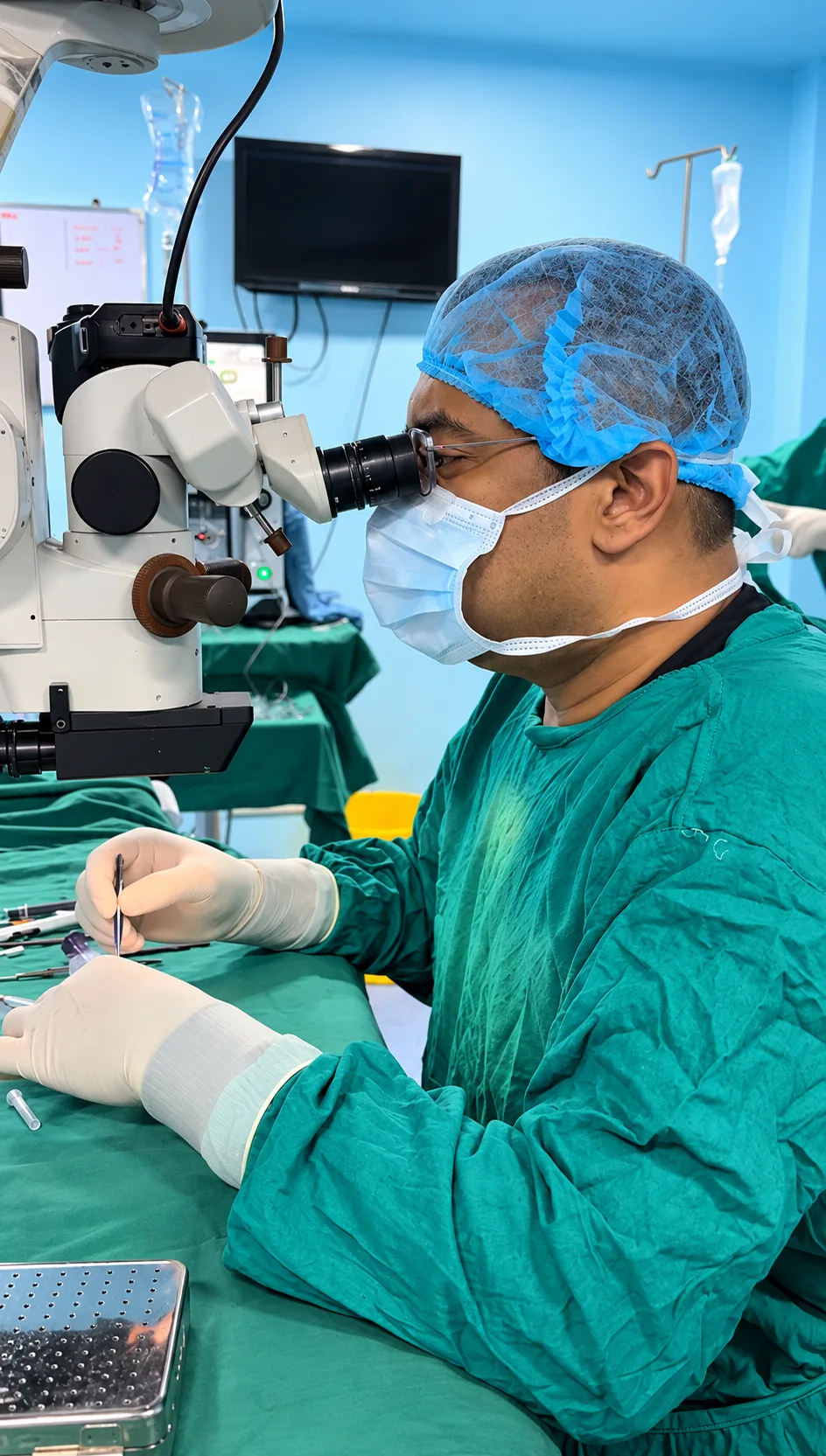
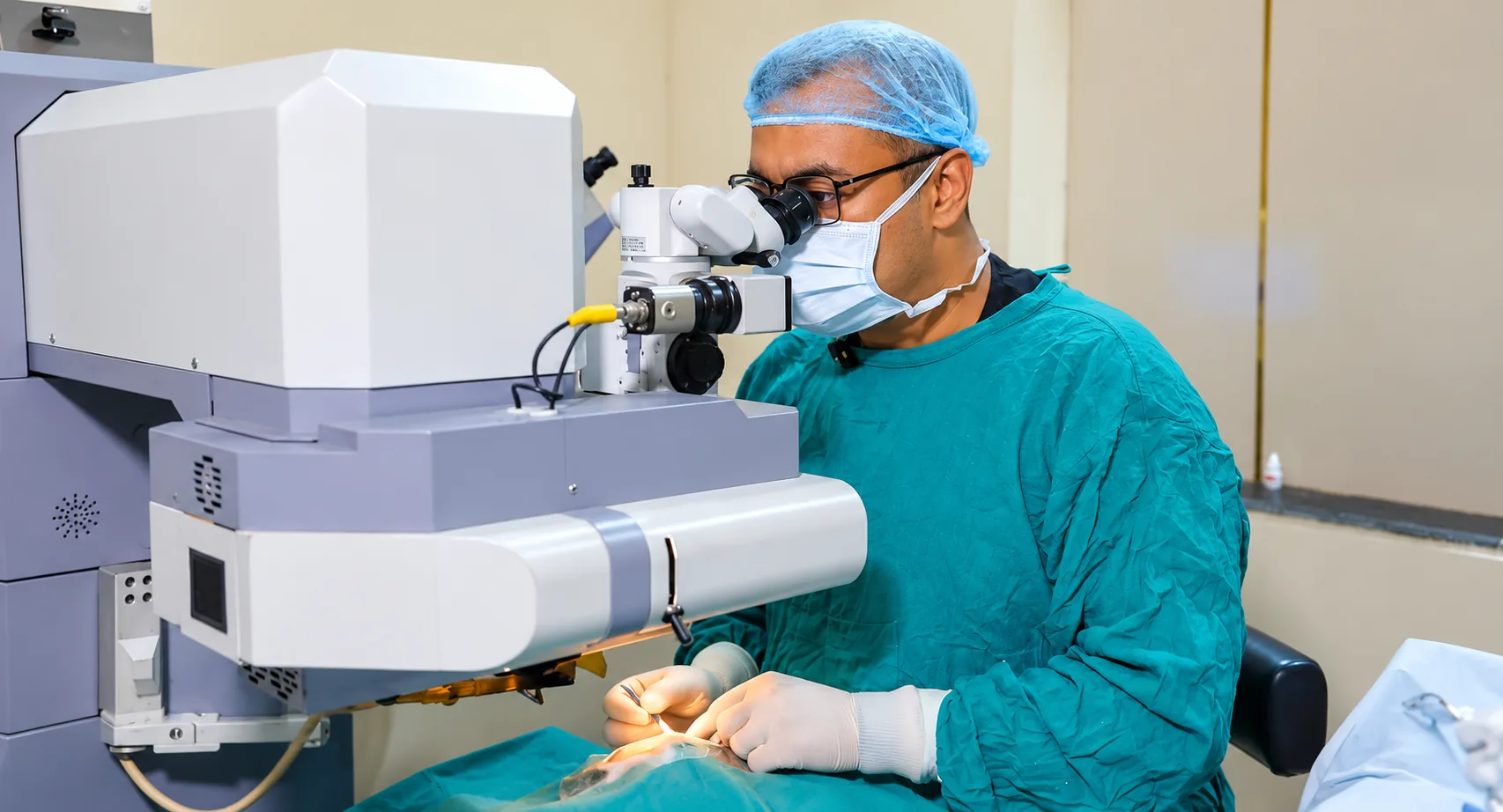
Dacryocystorhinostomy, or DCR, makes a new path for tears from the tear sac straight into the nose, bypassing a blocked duct. It can be done through a small cut on the skin beside the nose, or through the nose with an endoscope, with no cut on the face. The surgeon chooses based on your anatomy. It is usually done under local anaesthesia with sedation, or general anaesthesia, as a day case or a short stay.
DCR is offered only when the blockage is confirmed on syringing and the watering troubles you, for example if you have repeated tear sac infections. Sometimes it is advised before cataract or other eye surgery, if an infected sac would raise the risk of infection.
Confirm. We explain this at your first visit, so you know where the operation will take place before you decide.
After DCR most people return to light work in about a week. Avoid blowing your nose hard and heavy lifting for a short period, and attend follow-up visits. A fine silicone tube, if placed, is removed after weeks to months. Watering usually improves as healing completes, though not everyone is fully relieved.
What does watery eye treatment cost?
The fee depends on the cause, the tests needed and whether a procedure is advised. We confirm the exact fee after examination and before any operation. See treatment costs for what a visit includes. Our current CGHS empanelment status and letter validity: Confirm and cashless eligibility and covered services should be confirmed with the hospital and insurer; see insurance and payment.
Seeing an eye doctor for watery eyes in Shalimar Bagh
Jain Eye Hospital & Laser Centre is at AG-152, Poorbi Shalimar Bagh, near Richi Rich Banquet, Delhi 110088, near Shalimar Bagh station on the Pink Line Confirm. Patients come from Rohini, Pitampura, Ashok Vihar, Model Town and across Delhi. OPD days and hours: Confirm. For watery eyes that last more than a few weeks, book an appointment or call 9643 900 900, and bring a list of the drops you have used. WhatsApp: 96 43 53 63 73. See all common eye problems.
Medical reviewer: Confirm. Reviewer registration and source check: Confirm. Last reviewed: Confirm.
FAQs
Why do my eyes water when they feel dry?
Dry, irritated eyes signal the glands to make reflex tears, which are watery and spill over the lid instead of coating the eye properly. This is common with screen use, pollution and air conditioning. Treating the dryness with lubricating drops and lid care often reduces the watering within a few weeks.
Is a blocked tear duct in babies serious?
It is common and usually opens on its own during the first year, with gentle massage of the inner corner as shown by your doctor. See a doctor if the eye becomes red, swollen or very sticky, or if watering continues after the first birthday, when a simple probing procedure may be advised.
How is a blocked tear duct diagnosed in adults?
The doctor gently flushes salt water through the tear drain, a test called syringing, to see whether it reaches the nose and throat. Lid position, dryness and allergy are also checked, because they cause watering too. A dye test or a scan is used in some cases to locate the blockage before planning treatment.
What is DCR surgery?
Dacryocystorhinostomy (DCR) makes a new path for tears from the tear sac into the nose when the tear duct is blocked. It can be done through a small cut beside the nose or through the nose with an endoscope. Ask us whether DCR is done at our hospital or arranged by referral.
Can allergies cause watery eyes?
Yes. Allergies cause itchy, watery and red eyes, often in both eyes, during the spring and Delhi's dust and smog seasons. Antiallergy eye drops, cold compresses and avoiding triggers such as pollen, pets and dust help. Avoid rubbing, which worsens itching, and see a doctor if symptoms return each season.
Can old age cause watery eyes?
Yes. With age the lower eyelids can loosen or turn outward, so tears do not drain properly, and the tear duct can narrow. Dry eye also becomes more common and triggers reflex watering. All of these are treatable, with lubricants, minor lid surgery or tear duct procedures, depending on the cause.
Should I use steroid drops for watering eyes?
No. Steroid drops do not treat blocked tear ducts or dryness, the two commonest causes of watering, and they can raise eye pressure and cause cataract. They should be used only if an eye doctor prescribes them for a specific condition, with eye pressure checked during treatment.
Can watery eyes be a sign of infection?
Yes, especially when watering comes with redness, sticky discharge, pain or a tender swelling near the inner corner of the eye, which may be an infected tear sac. Infection needs prompt treatment. See a doctor quickly if the swelling spreads, fever develops or your vision is affected.
Do screens cause watery eyes?
Long screen use reduces blinking and dries the eye surface, which can trigger reflex watering. Take breaks with the 20-20-20 rule, blink fully, keep the screen slightly below eye level and use lubricating drops if needed. If watering continues, have your eyes checked for dryness, allergy or a change in glasses power.
How long is recovery after DCR?
Most people return to light work in about a week after DCR. Avoid blowing your nose hard and heavy lifting for a short period as advised. Stitches or silicone tubes, if used, are removed at follow-up visits over the next weeks to months, and watering usually improves as healing completes.