

A stye is a tender, infected gland at the lid edge. A chalazion is a firm lump from a blocked oil gland inside the lid that usually does not hurt. Most settle with warm compresses over two to six weeks. A chalazion that stays, grows or blurs vision can be drained in a short procedure under local anaesthesia.
Key facts
- A stye is red, tender and quick; a chalazion is firm, slow and usually not sore.
- Warm compresses for 10 minutes, 3 to 4 times a day, help most lumps.
- Never squeeze, prick or scrape an eyelid lump at home.
- A lump that returns again and again in the same spot should be examined.
- Steroid drops from a chemist are not a home remedy for either.
- Rarely, a lid growth can look like a chalazion, which is why a lump that will not go needs checking.
What is the difference between a chalazion and a stye?
Both are lumps on the eyelid, and they can change from one to the other. A stye (hordeolum in medical language) is an infection of a lash root or a small gland, usually by bacteria that already live on the skin. A chalazion (also called a meibomian cyst) forms when a meibomian gland, one of the oil glands lined up along the lid margin, gets blocked and its oil leaks into the lid, which then reacts with a hard, round swelling.
| Feature | Stye | Chalazion |
|---|---|---|
| Cause | Bacterial infection of a gland or lash root | Blocked oil (meibomian) gland |
| Pain | Tender, often sharp when pressed | Usually little or none |
| Speed | Appears over 1 to 2 days | Builds over days to weeks |
| Look | Red, swollen, often a small yellow head at the lid edge | Firm, round lump deeper in the lid, skin over it moves |
| Where | Lid margin | Often inside the lid, upper or lower |
| Usual first care | Warm compress, doctor may add an antibiotic ointment | Warm compress and lid hygiene; draining if it persists |
An untreated stye can leave behind a chalazion. If you are unsure which you have, examination in the clinic takes a few minutes.
What causes an eyelid lump, and who gets one?
Oil from the meibomian glands keeps tears from evaporating. When the oil thickens, the gland blocks. Several things make that more likely:
- blepharitis, a long-standing inflammation of the lid margins, with crusting at the lash base
- dry eye and oily skin
- rosacea or seborrhoeic dermatitis
- diabetes, which makes infections and blockages more frequent
- old or shared eye makeup, kajal and mascara
- rubbing the eyes, including in children whose glasses power has not been corrected
Delhi's dust and heat add sweat and grime to the lid margin, which is one reason lumps are common in summer. Adults between 30 and 50 and children both get them. Having one makes another more likely.
How do I use a warm compress for a chalazion or stye?
Warmth softens the thickened oil and helps the gland drain. It is the usual first treatment.
- Wash your hands with soap.
- Soak a clean cloth in warm water. It should feel comfortably warm on your inner wrist, never hot.
- Close the eye and rest the cloth over the lid for 10 minutes. Re-warm it when it cools.
- Repeat three or four times a day.
- After each session, press very gently along the lid toward the lashes with a clean fingertip for a few seconds. Stop if it hurts.
- Clean the lash line with a cotton bud dipped in cooled boiled water if there is crusting.
Do not squeeze or pierce the lump. That can push infection deeper into the lid and face and leave a scar. Do not wear eye makeup or contact lenses until it has healed, and do not use leftover antibiotic or steroid drops.
Warning on chemist drops Do not use steroid eye drops, including combination antibiotic and steroid drops, without an eye doctor's advice. They can raise eye pressure, cause cataract and worsen some infections.
How long should I wait before seeing a doctor?
| How long since it began | What usually happens | What to do |
|---|---|---|
| First week | A stye comes to a head and drains, or shrinks | Warm compresses, clean lids |
| Weeks 2 to 4 | A chalazion often shrinks slowly | Continue compresses; book a visit if it is not smaller |
| Weeks 4 to 6 | Many chalazia settle; some persist as a small firm bump | Doctor review |
| After about 6 weeks | A lump that remains is unlikely to clear on its own | Draining may be advised |
These are general timings. See us sooner for a large lump, a child, or one that is changing.
Come in the same day if
- the redness and swelling spread across the lid, to the cheek or to the other eye
- you have fever or the lid is hot and very painful
- the lid is so swollen the eye cannot open
- your vision has become blurred, or the eyeball itself hurts
- a small child has a swollen, red lid
- the lump bleeds or looks like an ulcer
Call 9643 900 900. If the whole eye is red and painful, read about red eye and our eye emergency page.
How does Jain Eye Hospital diagnose and treat a chalazion?
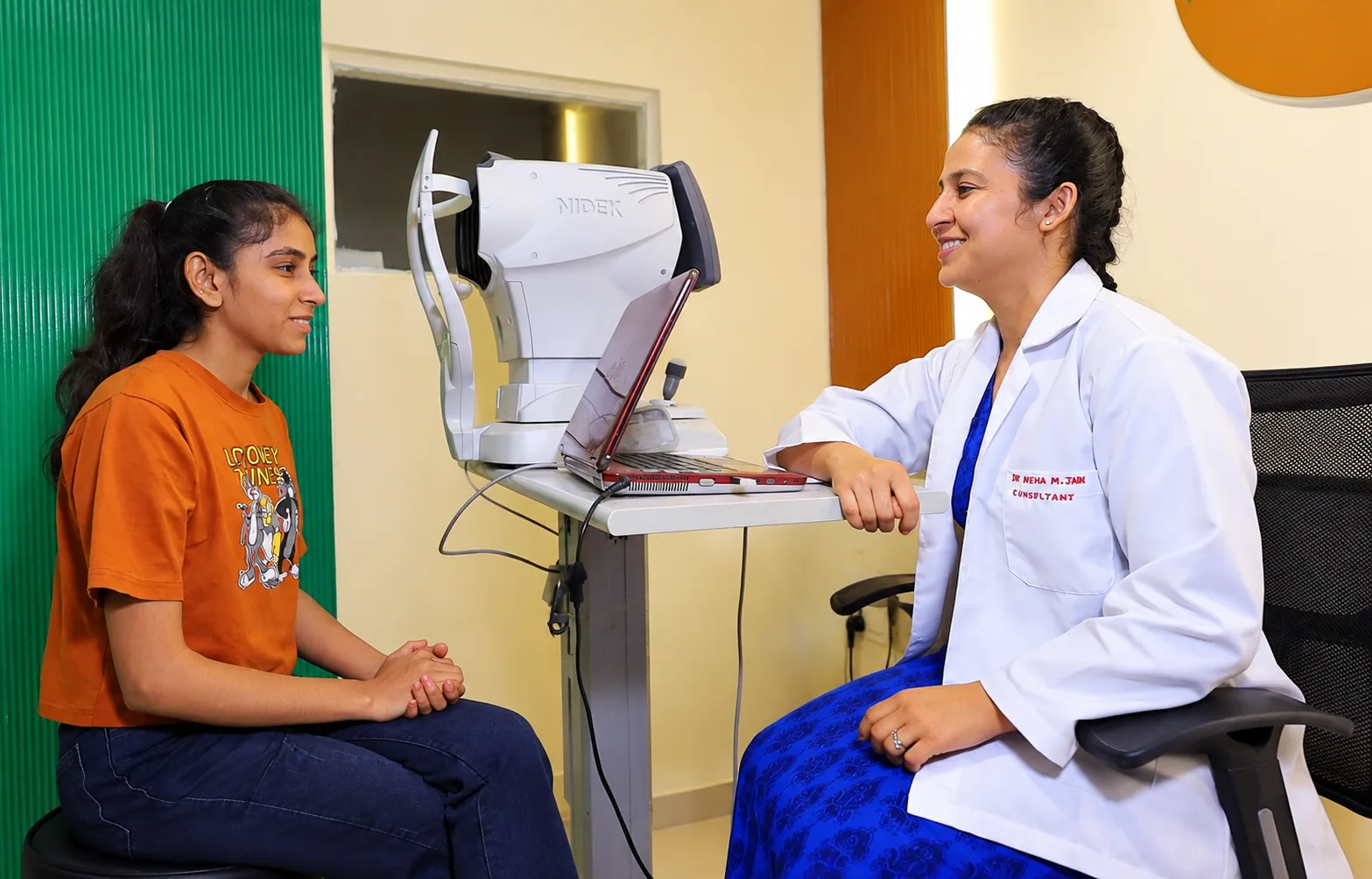
The doctor looks at the lid, turns it over to see the inside, and checks your vision and the surface of the eye. A slit lamp gives a magnified view of the lid margin and glands. Questions that matter: how long the lump has been there, whether it has been in the same place before, whether you have diabetes or a skin condition, and which drops or ointments you have used.
Treatment follows the type and stage:
- A stye is treated with warm compresses and lid cleaning. The doctor may add an antibiotic ointment, and tablets only if the redness is spreading across the lid or face.
- A new chalazion is treated with compresses, lid hygiene and time. The doctor also treats blepharitis or dry eye, which cause lumps to recur. Some chalazia are treated with a small steroid injection into the lump Confirm; this is a doctor's decision, not a home option.
- A chalazion that persists, is large, presses on the eye or affects sight is drained in a short procedure, described below.
Every lump is examined carefully, because the rare lid growths that mimic a chalazion need different treatment.
What happens in chalazion surgery (incision and curettage)?
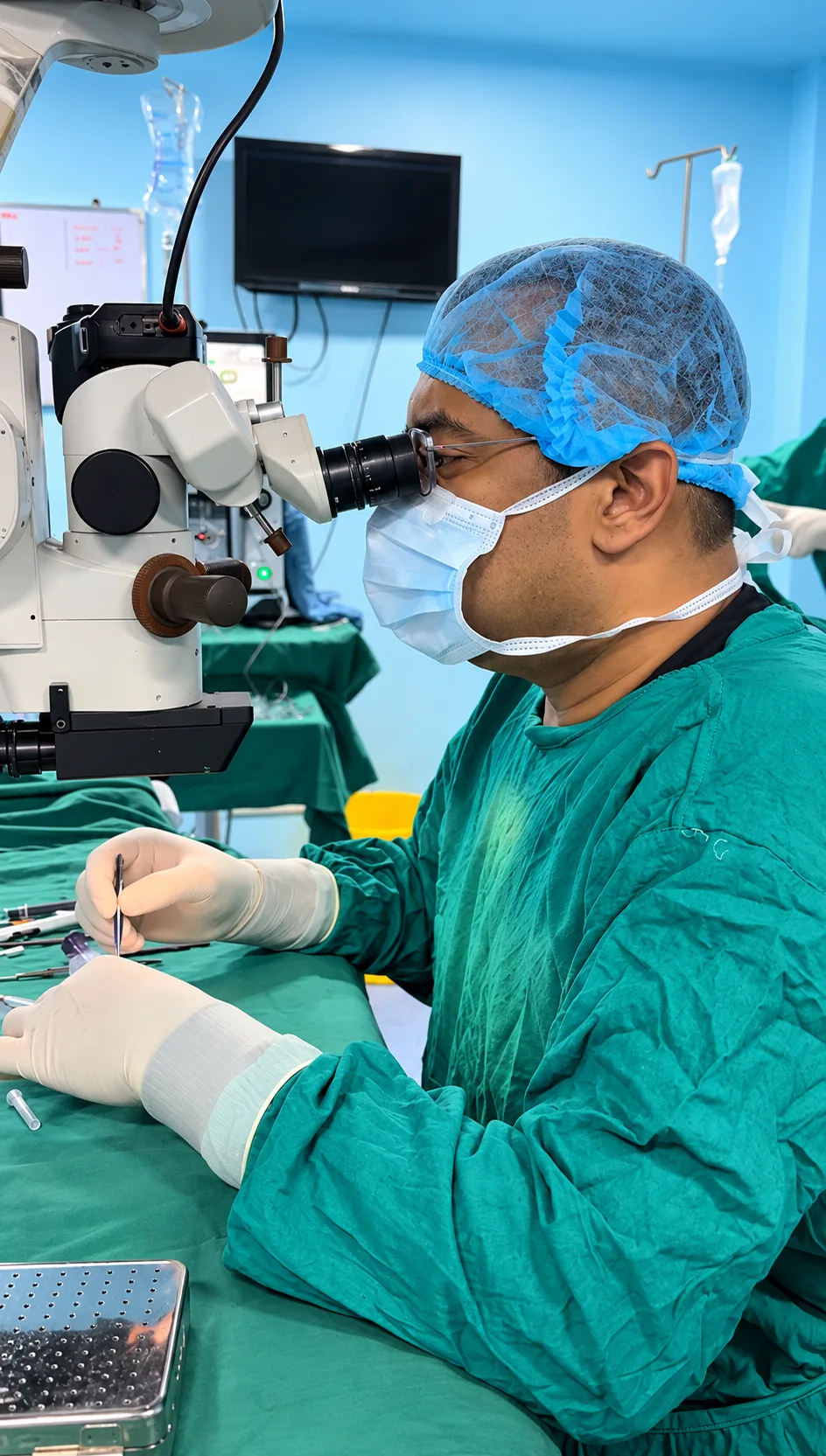
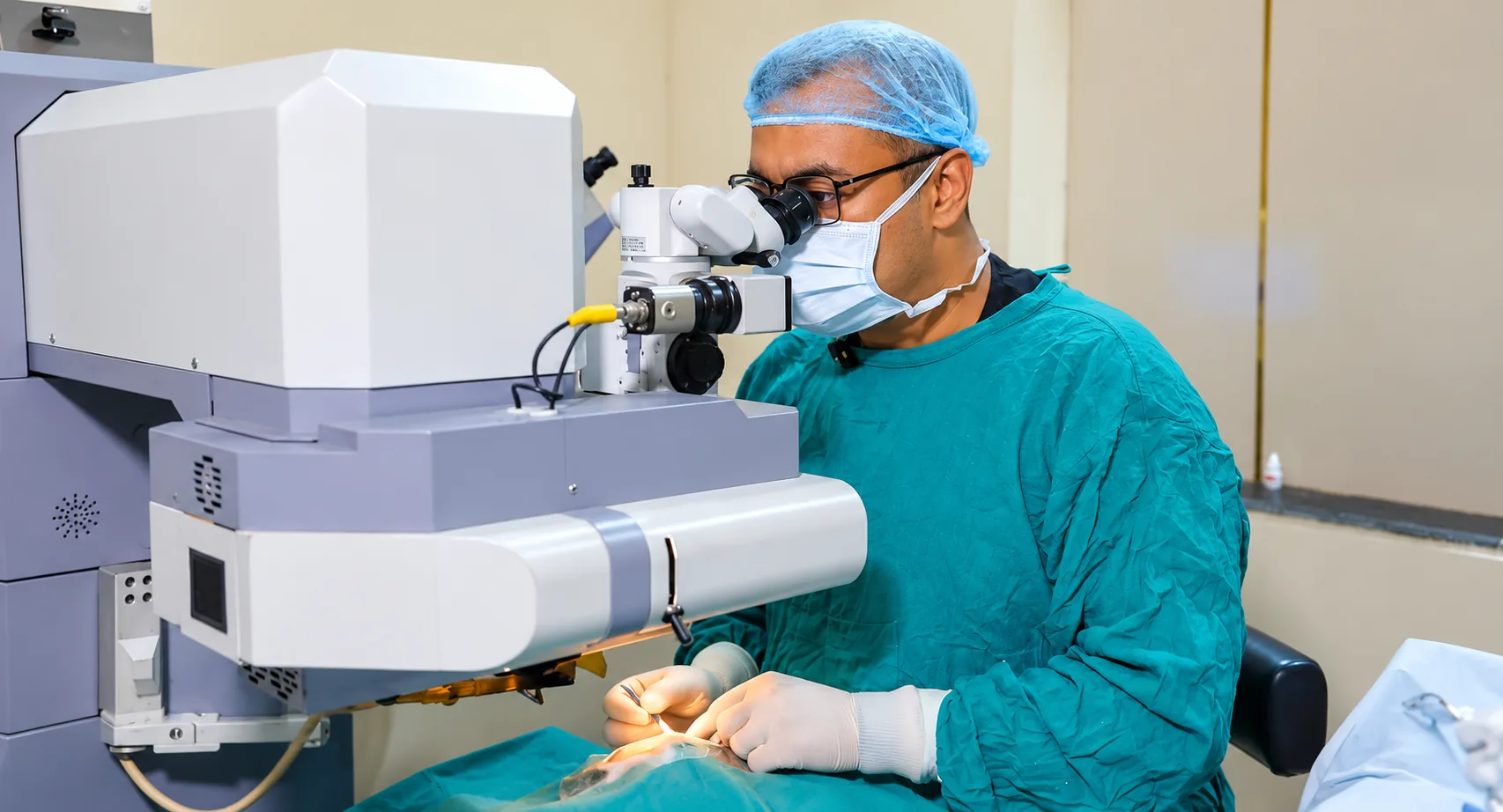
Incision and curettage, called I&C, is a minor procedure to open the lump and remove the thick contents. It is done as a day case Confirm.
- Your eyes are checked and the doctor explains the steps and consent.
- Numbing drops are given, then a small injection of local anaesthetic into the lid. You feel a brief sting, then pressure.
- A small clamp holds the lid steady. The doctor makes a small cut on the inside of the lid, so there is usually no scar on the skin.
- The contents are scooped out with a tiny instrument (curette). The whole procedure often takes about 15 minutes.
- A pad is placed over the eye for a few hours.
- You go home the same day, usually with drops or ointment as prescribed.
Expect mild swelling and some bruising for a few days. The lid may look puffy the next morning. You can return to light work soon, although most people avoid rubbing the eye and skip eye makeup until the doctor says it has healed. A follow-up visit checks that the lid has settled. In a small number of people the lump comes back and a second procedure may be needed.
Young children may need the procedure under short general anaesthesia so they stay still Confirm.
Can a chalazion affect a child's eye?
Yes. A large chalazion on the upper lid can press on the cornea and change its curve, causing astigmatism and blurred vision. In a young child this matters, because a blurred picture in one eye can slow the development of sight, a problem known as lazy eye. Children also rub the eye, so the lump spreads infection easily.
Try compresses first, but do not wait months. If the lump is big, stays beyond a few weeks or the child seems to see less well, bring them in. Our paediatric eye care team can also check whether glasses are needed, since uncorrected power makes children rub their eyes.
What if the lump keeps coming back?
A chalazion that returns in the same place, especially in an older adult, should be looked at by an eye doctor. Most recurrent lumps are harmless, but occasionally a lid growth can look like a chalazion, and a small sample may be sent for testing. Repeated lumps in different places point to blepharitis, dry eye, rosacea or high blood sugar, which we then treat.
How do I stop another chalazion or stye?
- Clean the lid margins daily with a warm compress and gentle cleaning if you tend to get crusts
- Treat dry eye and blepharitis; they keep the glands blocked
- Replace mascara and eyeliner every few months, never share them and remove makeup fully every night
- Wash your hands before you touch your eyes
- Have your glasses power checked, especially in children who rub
- If you have diabetes, keep your sugar well controlled
What does chalazion treatment cost?
The fee depends on whether you need only an examination and medicines, or a drainage procedure, and whether it is done with local or general anaesthesia. We confirm the exact fee after examination and tell you before any procedure. See treatment costs for what a visit includes. Our current CGHS empanelment status and letter validity: Confirm and cashless eligibility and covered services should be confirmed with the hospital and insurer; the insurance and payment page explains the process.
Seeing us in Shalimar Bagh
Jain Eye Hospital & Laser Centre is at AG-152, Poorbi Shalimar Bagh, near Richi Rich Banquet, Delhi 110088, near Shalimar Bagh station on the Pink Line Confirm. Patients visit from Rohini, Pitampura, Ashok Vihar, Model Town and the rest of Delhi. OPD days and hours: Confirm. A chalazion that is not shrinking after a few weeks of compresses is worth an examination. Book a visit or call 9643 900 900. WhatsApp: 96 43 53 63 73.
Medical reviewer: Confirm. Reviewer registration and source check: Confirm. Last reviewed: Confirm.
FAQs
How long does a chalazion take to go away?
Many chalazia shrink with warm compresses and gentle lid massage over 2 to 6 weeks. If a lump remains after about six weeks, is large, affects vision or keeps returning, a short drainage procedure called incision and curettage can remove it. It is done from inside the lid, so it usually leaves no visible scar.
Is a stye contagious?
A stye is caused by bacteria that already live on the skin and does not usually pass to others. Still, do not share towels, pillows or eye makeup, and wash your hands after touching the eye. Keep the lid clean, use warm compresses several times a day and avoid contact lenses until it heals.
Can I pop a stye or chalazion?
No. Squeezing or pricking can push infection deeper into the eyelid and face and can scar the skin. Use warm compresses for 10 minutes, 3 to 4 times a day, so it drains by itself. See a doctor if it is not improving in a week, grows quickly or the redness spreads across the lid.
Is chalazion surgery painful?
The lid is numbed with local anaesthetic, so you feel a brief sting from the injection and then pressure, not pain. The procedure takes about 15 minutes, the cut is on the inside of the lid, and you go home the same day with a pad for a few hours. Mild bruising and swelling settle over a few days.
Why do I keep getting styes?
Repeated styes are often linked to blepharitis, oily skin, rosacea, frequent eye rubbing or old eye makeup. Daily lid cleaning with warm compresses, replacing mascara every few months and treating the underlying condition reduce recurrence. Your doctor may also check for uncorrected glasses power or raised blood sugar.
Can a chalazion affect vision?
A large chalazion on the upper lid can press on the cornea and change its curve, causing blur and astigmatism, especially in children. In a young child this can contribute to lazy eye if left for long. Such lumps should be examined and treated rather than waited out for months.
Do I need antibiotics for a stye?
Most styes settle with warm compresses and clean lids within one to two weeks. A doctor may advise an antibiotic ointment, and tablets only if the redness and swelling are spreading across the lid or face. Do not use leftover drops or steroid drops without an eye doctor's advice.
Should I worry about an eyelid lump that keeps coming back?
A lump that recurs in the same place, especially in an older adult, should be examined by an eye doctor. Sometimes a small sample is sent for testing to rule out other growths that can look like a chalazion. Most recurrent lumps are harmless, but checking makes sure a different problem is not missed.
Can children get a chalazion?
Yes, chalazion is common in children. Warm compresses and lid hygiene are tried first. If the lump persists, grows or presses on the eye, a young child may need the drainage procedure under short general anaesthesia, because a large lump can affect how sight develops at this age.
Can I wear eye makeup with a stye?
Avoid eye makeup until the stye or chalazion has healed, because it can block the oil glands further and carry bacteria. Throw away the mascara and eyeliner you used just before it started, never share eye cosmetics, and remove makeup fully each night once you begin using it again.