



Common eye problems range from a stye or eye allergy that eases with simple care to cataract, glaucoma and retinal disease that need an ophthalmologist. This A to Z lists what we see most at Jain Eye Hospital & Laser Centre in Delhi, how each feels, and whether it needs care today, this week or your next checkup.
Which common eye problems need care today?
Come in the same day if
- vision drops suddenly or becomes dim, even in one eye
- an eye hurts more than mild irritation, especially with a headache, nausea or halos around lights
- a chemical, cleaning liquid or Holi colour has splashed in (rinse with clean running water for 15 minutes first, keeping the lids open, then come)
- something has hit, cut or entered the eye, including firecracker injuries
- you see new flashes of light, a shower of floaters or a dark curtain across your sight
- a red eye comes with light sensitivity or blurred vision, or you wear contact lenses
- a newborn has red, sticky or swollen eyes
Call 9643 900 900 before you set out. Our eye emergency guide explains what to do on the way.
Most other problems on this page can be seen within a few days. The table below tells you roughly how soon.
What does my symptom point to?
| What you notice | Common causes | How soon to be seen | Read more |
|---|---|---|---|
| Red, gritty, sticky eye, normal vision | Eye flu, allergy, dryness | Within 2 to 3 days, sooner if it hurts | Conjunctivitis, red eye |
| Intense itching in both eyes | Allergy, spring catarrh in children | This week | Eye allergy |
| Constant tears running down the cheek | Dry eye, blocked tear duct, loose lids | Within 1 to 2 weeks | Watery eyes |
| Tender red lump on the lid edge | Stye | Within a week if it is not easing | Stye and chalazion |
| Firm lump inside the lid that does not hurt | Chalazion | Within a few weeks | Stye and chalazion |
| Burning, tired eyes that are worse on screens | Dry eye | Next convenient visit | Dry eye treatment |
| Slowly hazier vision with glare | Cataract, change in glasses power | Within a few weeks | Cataract surgery |
| Side vision shrinking without any pain | Glaucoma | Soon, because damage does not hurt | Glaucoma treatment |
| Central blur or bent straight lines | Macular or other retinal disease | Within days | Retina treatment |
| A child's eye turning in or out | Squint | Within a few weeks | Squint surgery |
Common eye problems A to Z
These are the common eye problems we examine most often, with a plain-language description and the page to read next.
| Problem | In plain words | Where to read |
|---|---|---|
| Allergy of the eye | Itchy, watery, red eyes after dust, pollen or smog | Eye allergy |
| Amblyopia (lazy eye) | One eye that does not develop full sight in childhood | Lazy eye |
| Cataract (motiyabind) | The natural lens turns cloudy and vision hazes | Cataract surgery |
| Chalazion | A blocked oil gland lump in the eyelid | Stye and chalazion |
| Conjunctivitis (eye flu, aankh aana) | Inflamed surface of the eye, often viral and catching | Conjunctivitis |
| Corneal ulcer | An infected sore on the clear front window of the eye | Cornea treatment |
| Diabetic eye disease | Diabetes damages the small vessels of the retina | Retina treatment |
| Dry eye | Too few or poor-quality tears; burning and a gritty feel | Dry eye treatment |
| Glaucoma (kala motia) | Optic nerve damage, often with raised eye pressure | Glaucoma treatment |
| Keratoconus | The cornea thins and bulges, usually from the teens | Keratoconus |
| Myopia (short sight) in children | Distance blur that tends to increase through school years | Myopia control |
| Pterygium | A fleshy growth that creeps from the white onto the cornea | Cornea treatment |
| Red eye | A symptom with many causes, from harmless to urgent | Red eye |
| Retinal detachment | The retina lifts away; flashes, floaters, a curtain | Retina treatment |
| Squint (bhengapan) | The eyes do not point the same way | Squint surgery |
| Stye | A painful infected gland at the lash line | Stye and chalazion |
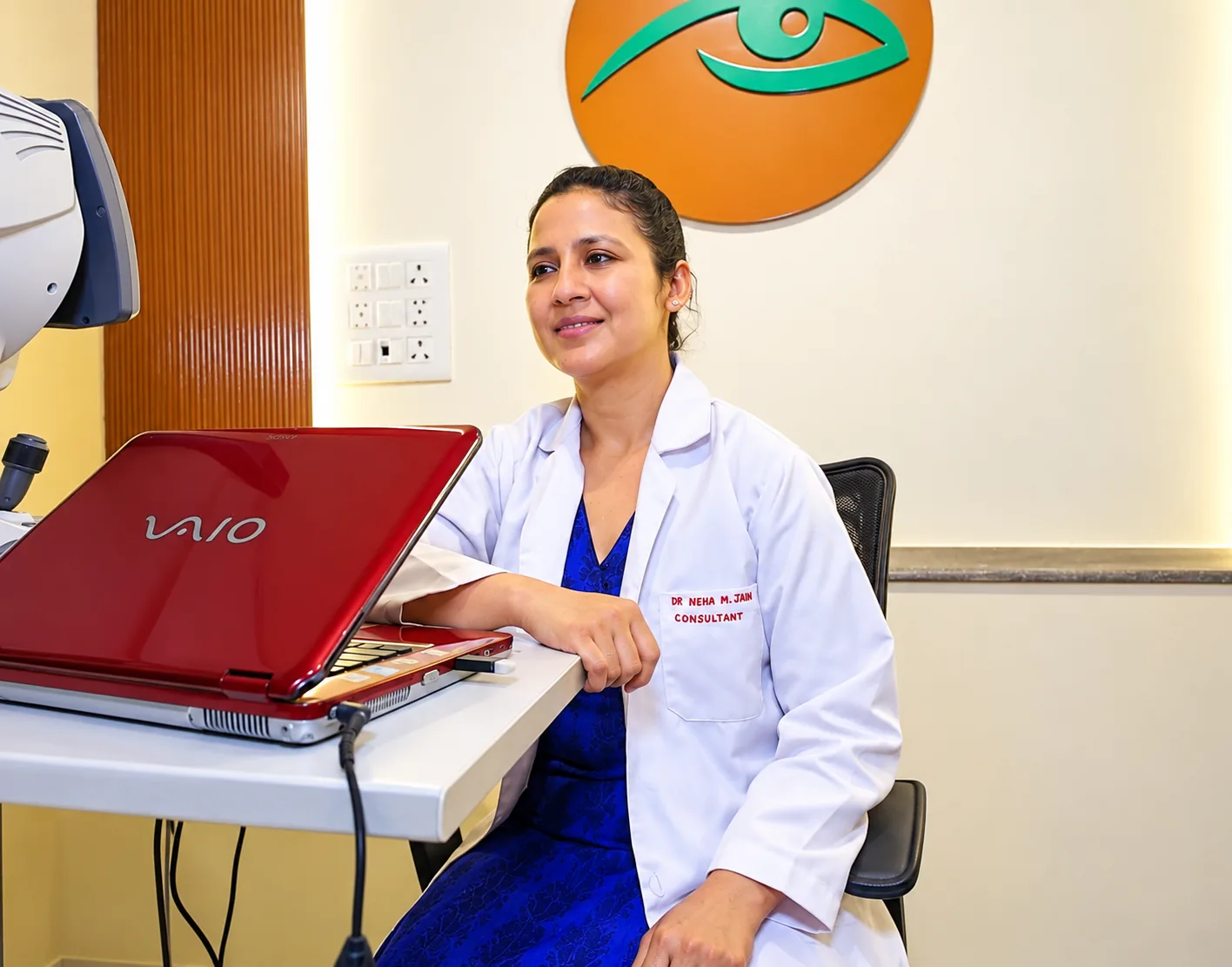
| Uveitis | Inflammation inside the eye; painful red eye with light sensitivity | Dr Neha Mohan |
| Watery eyes | Too many tears, or tears that cannot drain | Watery eyes |
Infections and inflammation: what is an eye infection and how is it treated?
An eye infection is any germ-driven problem of the lids, the surface of the eye or the clear cornea. Conjunctivitis is the most familiar and usually the mildest; a corneal infection is the most dangerous because it can scar the window you see through. A stye is an infection of one small gland, and a red eye can be any of these or none of them. The treatment depends on the germ: viral infections mostly need time and comfort care, bacterial ones need the right antibiotic drops, and inflammation inside the eye, such as uveitis, needs a specialist. Doctor-specific title, qualifications, registration, clinical assignments, procedures and OPD availability: Confirm.
Watering, dryness and allergy
These three overlap more than people expect. A dry eye can water because irritation triggers reflex tears, and an allergic eye both itches and waters. If you rub, you make all three worse. Our pages on watery eyes, dry eye and eye allergy help you sort out which one you have before you see the doctor.
Vision and age-related eye problems
Cataract, glaucoma, diabetic eye disease and macular degeneration mostly appear after 40 to 50, though diabetes and a family history can bring them earlier. Cataract clouds vision slowly and is treated by surgery. Glaucoma and retinal disease can take sight quietly, so the checkup matters more than the symptom. If you are over 40 and have not had your eyes dilated, book an eye checkup.
Eye problems in children
Common eye problems in children are easy to miss. Children rarely complain. Watch for a head tilt, sitting very close to the television, one eye drifting, constant rubbing or squeezed eyes. Squint, lazy eye and rising short sight are easiest to treat when found early. Our paediatric eye care page explains the checks.
Which eye drops are safe to use without a prescription?
Plain lubricating drops are generally safe for occasional dryness. Antibiotic drops, and especially combination drops that contain a steroid, should not be bought and used without an eye doctor's advice. Steroid drops can raise eye pressure, bring on cataract and make some infections much worse. If you have already been using such drops for more than a few days, tell us at your visit so we can check your eye pressure. Fees and what is included in a visit are on our treatment costs page, and the exact fee is confirmed after examination.
Do Delhi's smog and heat make eye problems worse?
Often, yes. Winter smog, construction dust and smoke dry and irritate the eye surface, and dust or pollen flare allergy. Monsoon crowding helps eye flu spread in schools and offices, and Holi colours and Diwali firecrackers bring injuries every year. Wraparound glasses outdoors, washing your face after you come home and never rubbing your eyes are simple protections.
How often should adults have an eye checkup?
If your eyes are healthy and you are under 40, about every two years is reasonable. After 40, once every one to two years, because glaucoma and cataract become more common. Yearly checks suit people with diabetes, a high glasses power or a family history of glaucoma. A full first visit with dilation usually takes 1.5 to 2.5 hours, so plan the time.
Where can I see an eye doctor for common eye problems in Shalimar Bagh?
For common eye problems of any kind, we are at AG-152, Poorbi Shalimar Bagh, near Richi Rich Banquet, Delhi 110088, close to Shalimar Bagh station on the Pink Line Confirm. Patients come from Rohini, Pitampura, Ashok Vihar, Model Town and across Delhi. Our doctors include a cornea, cataract and refractive surgeon, a retina and uveitis specialist and a senior ophthalmologist. Book an appointment, call 9643 900 900 or message us on WhatsApp at 96 43 53 63 73. The Shalimar Bagh page has the route and timings.
Medical reviewer: Confirm. Reviewer registration and source check: Confirm. Last reviewed: Confirm.
FAQs
Which eye problems need emergency care?
Sudden vision loss, severe eye pain, a chemical splash, a cut or blow to the eye, new flashes with a dark curtain across your sight, and a red painful eye that dislikes light need same-day care. For a chemical splash, rinse with clean running water for 15 minutes first. Then call 9643 900 900 and come in.
Can I use eye drops from the chemist without a prescription?
Plain lubricant drops are generally safe for occasional dryness. Antibiotic drops, and combination drops that contain a steroid, should be used only on an eye doctor's advice, because steroids can raise eye pressure, cause cataract and worsen viral or fungal infections. If symptoms last more than a few days or your vision changes, have your eyes examined.
How do I know if eye redness is serious?
Redness with pain, light sensitivity, blurred vision, halos around lights, a recent injury or contact lens use is serious and needs same-day care. Mild redness with itching, watering or a gritty feel and normal vision is usually infection, allergy or dryness. Even then, see a doctor if it does not improve within a few days.
Are eye problems more common during Delhi's pollution season?
Yes, many people notice more dryness, irritation and allergy during winter smog and dusty weeks. Preservative-free lubricants, wraparound glasses outdoors, washing your face after coming in and not rubbing your eyes all help. See a doctor if redness, pain or blurred vision persists, because pollution can also worsen an existing eye condition.
How often should adults get an eye checkup?
About every two years under 40 if you have no problems, and every one to two years after 40, when glaucoma and cataract become more common. People with diabetes, a high glasses power or a family history of glaucoma should go yearly. A full first visit with dilation usually takes 1.5 to 2.5 hours.