








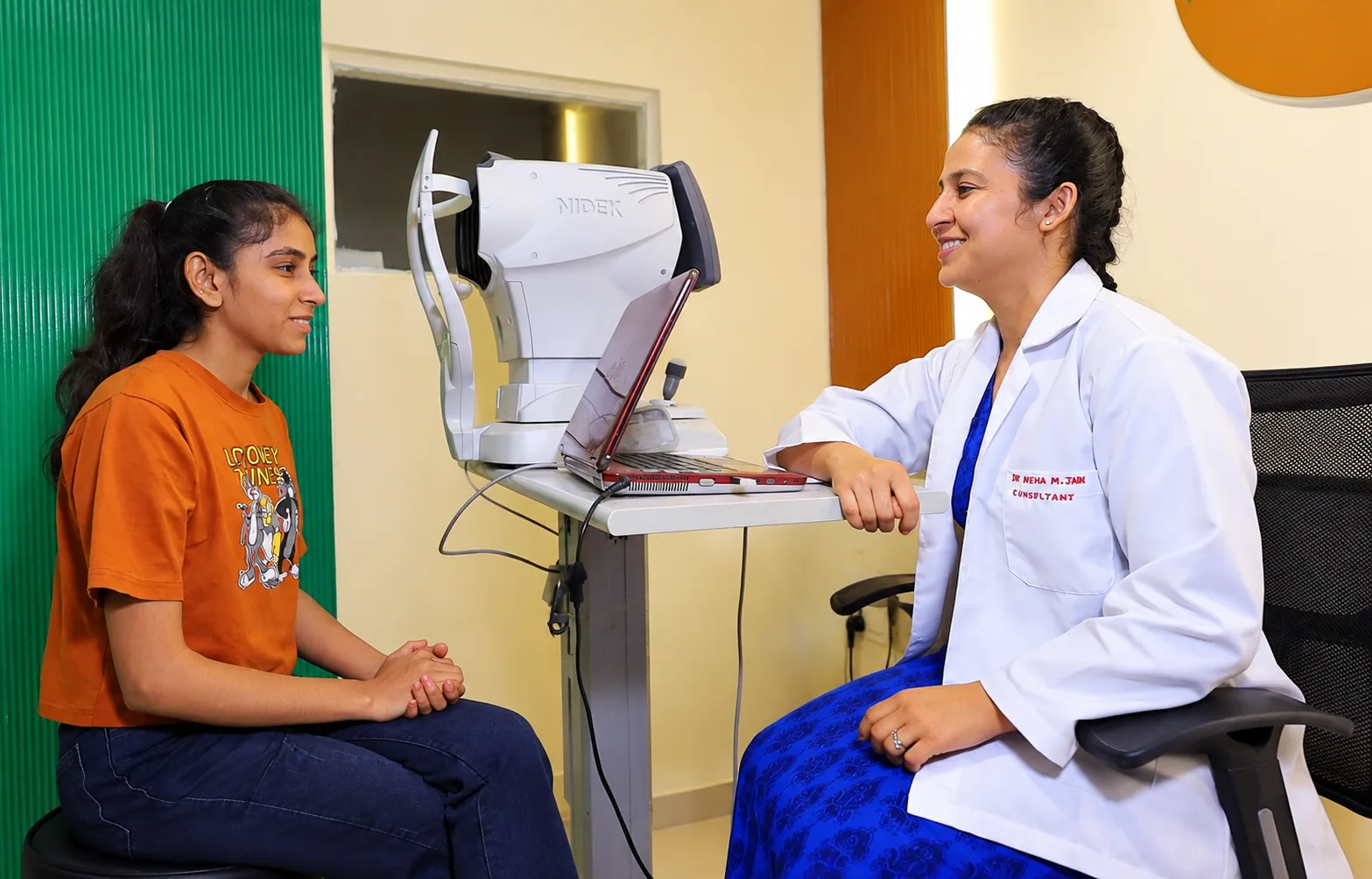
Conjunctivitis, known as eye flu, pink eye or aankh aana, is inflammation of the thin clear layer that covers the white of the eye. In Delhi most cases are viral, pass easily from hands to eyes, and settle in one to two weeks. Bacterial and allergic conjunctivitis need different treatment, so have the eye examined if it does not ease.
Key facts
- Viral conjunctivitis usually lasts 7 to 14 days and is often at its worst around days 3 to 5.
- Antibiotic drops do not cure a viral eye flu.
- It spreads through hands, towels, pillows, phones and shared eye drops, not by looking at someone.
- Stay home while the eyes are red, watery or sticky.
- Vision should stay clear. Blurred vision, pain or light sensitivity means the cornea may be involved and you should be seen the same day.
- Steroid or combination drops bought at a chemist can do real harm to an infected eye.
What is conjunctivitis (eye flu, aankh aana)?
The conjunctiva is a clear, moist lining that coats the inside of the eyelids and the white of the eye. When it is irritated by a virus, bacteria or an allergen, the tiny vessels in it widen and the eye turns pink or red. That is why the problem is also called pink eye.
Delhi families usually say "eye flu" or "aankh aana" (आंख आना), and people who search for conjunctivitis in Hindi are looking for the same condition. The word flu is a loose label: the germs that cause eye flu are not the influenza virus. Adenovirus is the most common viral cause.
Conjunctivitis rarely harms sight, but it can look exactly like more serious red-eye conditions. If you are not sure, our page on red eye shows what separates a routine red eye from one that needs urgent care.
How do I tell viral, bacterial and allergic conjunctivitis apart?
You cannot be certain at home, but the clues below point the right way. An eye doctor confirms the type with a slit lamp examination, usually in a few minutes.
| Feature | Viral (eye flu) | Bacterial | Allergic |
|---|---|---|---|
| Discharge | Watery, clear | Thick, yellow or green; lids stuck together after sleep | Watery or stringy |
| Itching | Mild | Mild | Marked |
| Which eye | Often one, then the other within days | One or both | Usually both together |
| Catching | Very | Yes | No |
| Usual care | Comfort measures, hygiene, time | Antibiotic drops prescribed by a doctor | Remove the trigger, antiallergy drops |
| Usual duration | 7 to 14 days | A few days once the right drops start | As long as the trigger is there |
Adults and children can have the same type at the same time, because families share towels and pillows. If itching is your main complaint, read our guide to eye allergy.
What are the symptoms of eye flu?
- Redness, often starting in one eye and reaching the other in two or three days
- A gritty or sandy feeling, as if dust is stuck under the lid
- Watering, or a sticky discharge that glues the lashes in the morning
- Swollen, puffy lids
- Mild light sensitivity
- Sometimes a tender lump in front of the ear, or a cold or sore throat just before
Vision should stay normal, apart from a brief blur that clears when you blink.
Come in the same day if
- your vision is blurred and does not clear with blinking
- the eye is painful, not just gritty
- bright light hurts
- you wear contact lenses
- a newborn has red or sticky eyes
- you had eye surgery, an injection or an injury recently
- the red eye is only on one side, with a headache or halos around lights
Call 9643 900 900. Our eye emergency page explains what to do on the way.
What can I safely do at home?
Most viral eye flu gets better by itself, and comfort care is all it needs. These steps are safe while you wait for an appointment or while the eye settles.
| Do | Do not |
|---|---|
| Wash hands with soap before and after touching the eyes or face | Rub or squeeze the eyes |
| Wipe discharge from the inner corner outward with a clean tissue, then throw it away | Share towels, pillows, handkerchiefs, kajal or eye drops |
| Use a clean cool or lukewarm compress for comfort | Wear contact lenses until the doctor clears you |
| Use plain lubricating drops if the eye feels gritty | Put in leftover drops from an old prescription |
| Keep your own towel and wash pillowcases in hot water | Use home remedies such as rose water, milk, tea bags or breast milk in the eye |
| Throw away eye makeup used just before the infection began | Wear eye makeup until the eye is clear |
Warning on chemist drops Do not use steroid eye drops, including combination antibiotic and steroid drops, unless an eye doctor has examined you. Steroids can raise eye pressure, bring on cataract and make viral or fungal infections worse. If you have already used them, tell the doctor.
How long is eye flu contagious, and when can I go back to school or work?
Viral eye flu spreads most in the first week, while the eyes are red and watery. Most people can go back when the discharge has stopped and the eyes are no longer watering heavily, which is usually between day 5 and day 10 but varies. If your doctor gives you a different date, follow that.
| Stage | What usually happens | What to do |
|---|---|---|
| Days 1 to 3 | Redness, grittiness and watering begin; second eye may follow | Stay home, strict hand washing, own towel |
| Days 3 to 5 | Often the worst phase, with swelling and discharge | Cool compresses, lubricants, do not touch the eyes |
| Days 5 to 10 | Discharge fades, redness eases | Return when your doctor agrees or discharge has stopped |
| Days 10 to 14 | Last redness settles; sometimes a few spots on the cornea cause mild blur for weeks | See us if blur or light sensitivity persists |
When you return, wipe shared surfaces like desks, keyboards and phones. Parents should send a child back only when the eyes are no longer sticky or running.
Eye contact does not spread eye flu. A person sitting across the room from you is not a risk; a shared towel or a handshake followed by a rubbed eye is.
Why does eye flu rise in the Delhi monsoon?
Many people see eye flu cases climb between July and September. Damp weather, crowded classrooms, offices, Metro coaches and swimming pools give the virus plenty of hands to travel on, and dust and humidity irritate eyes that are already red. In some monsoons Delhi hospitals have seen eye flu rise sharply across schools and neighbourhoods. Holi colours in March can irritate the eye surface and look like conjunctivitis. Winter smog does the same for allergic eyes.
If your child's class has several cases, keep hand washing strict at home, give your child a personal towel and water bottle, and teach them to cough or sneeze into the elbow, not the hands.
How does Jain Eye Hospital diagnose and treat conjunctivitis?
At Jain Eye Hospital & Laser Centre in Shalimar Bagh, the visit is simple and usually short.
- We ask when it started, whether others at home have it, whether you wear contact lenses and which drops you have already used.
- Your vision is checked with a chart, one eye at a time.
- We examine the lids, conjunctiva and cornea under a slit lamp, sometimes with a harmless dye (fluorescein) to look for scratches or ulcers. Eye pressure is checked if you have used steroid drops.
- In selected cases, such as a newborn, repeated infection or a case that does not respond, a swab is taken for testing.
- The doctor explains the type and the plan.
Treatment follows the type. Viral eye flu is managed with lubricants, compresses and hygiene, because antibiotics do not act on a virus. Bacterial conjunctivitis is treated with antibiotic drops, chosen and timed by the doctor. Allergic conjunctivitis is treated with antiallergy drops and by removing the trigger. If the cornea is involved, we treat that first and plan closer follow-up. Some cases of conjunctivitis come from another eye problem, such as dry eye or an eyelid infection, and we treat those causes too. Doctor-specific title, qualifications, registration, clinical assignments, procedures and OPD availability: Confirm.
The fee for the consultation is confirmed after examination, and our treatment costs page explains what a visit includes. Our current CGHS empanelment status and letter validity: Confirm and cashless eligibility and covered services should be confirmed with the hospital and insurer; see insurance and payment.
Conjunctivitis in babies, children and contact lens wearers
Newborns. Red, sticky or swollen eyes in the first weeks of life need a doctor promptly, because some causes must be treated at once to protect sight. A blocked tear duct can also cause stickiness in babies, so an examination tells the two apart. See our watery eyes page for the tear duct.
Children. Eye flu spreads fast in classrooms. Children rub their eyes more, so the second eye often follows the first. Our paediatric eye care team checks children gently and can examine both eyes in one visit.
Contact lens wearers. Stop wearing lenses at the first sign of redness and switch to glasses. Lenses trap germs against the cornea, and a red eye in a lens wearer is one of the commonest starting points for a corneal ulcer. Throw away the lenses and case you used while the eye was infected, and restart with a fresh pair after the doctor agrees.
When should I see an eye doctor?
See a doctor if any of these apply:
- the eye is not clearly better after about a week
- one eye is much worse than the other
- the discharge is thick and persistent
- vision is blurred, or pain or light sensitivity appears
- you have diabetes, a weak immune system or recently had eye surgery
- the same red eye keeps coming back
- you were treated with steroid drops and the eye still is not settling
The first visit is quick. If you are in Shalimar Bagh, Rohini, Pitampura, Ashok Vihar or Model Town, you can reach us the same day. Book an appointment or call 9643 900 900.
Where to find us
Jain Eye Hospital & Laser Centre, AG-152, Poorbi Shalimar Bagh, near Richi Rich Banquet, Delhi 110088. The nearest Metro station is Shalimar Bagh on the Pink Line Confirm. OPD days and hours: Confirm. WhatsApp 96 43 53 63 73. Directions are on our Shalimar Bagh page and contact page.
Not sure whether this is conjunctivitis, allergy or something else? An examination answers that in minutes. Book a visit.
Medical reviewer: Confirm. Reviewer registration and source check: Confirm. Last reviewed: Confirm.
FAQs
How long does eye flu last?
Viral eye flu usually improves in 7 to 14 days and sometimes takes up to three weeks, often getting worse for the first 3 to 5 days. Bacterial conjunctivitis improves within a few days of the right antibiotic drops. Allergic conjunctivitis lasts as long as you stay exposed to the trigger and eases with antiallergy treatment.
Is eye flu contagious?
Viral and bacterial conjunctivitis spread easily through hands, towels, pillows, phones and shared eye drops, mostly while the eyes are red and watery. Wash your hands often, keep a separate towel and avoid touching your eyes. Allergic conjunctivitis is not contagious, so it needs no isolation, even though it can look similar.
Can I go to school or office with eye flu?
Stay home while your eyes are red with watery or sticky discharge, usually the first 3 to 5 days, so you do not pass it on. Return once the discharge has stopped or when your doctor says so. When you go back, wipe shared surfaces such as desks, keyboards and phones.
Which eye drops are good for eye flu?
Lubricating drops and cool compresses ease discomfort in viral eye flu, which usually clears by itself. Antibiotic drops help only bacterial infection and do not speed up a virus. Do not use steroid or combination drops without an eye doctor, because they can raise eye pressure and make some infections worse.
Does looking at someone with eye flu spread it?
No. Eye flu spreads through touch and shared items, not through eye contact. The germ travels from hands to eyes, so washing hands with soap, not touching your face, and not sharing towels, pillows, cosmetics or eye drops are the main protections at home, school and work.
What is aankh aana?
Aankh aana is the common Hindi phrase for conjunctivitis, when the eye turns red, watery, gritty and sometimes sticky, often in outbreaks during the Delhi monsoon. Most cases are viral and settle in one to two weeks with home care. Pain or blurred vision needs a doctor's check.
Can conjunctivitis affect vision?
Usually not. Vision should stay clear, apart from a brief blur from discharge that clears when you blink. If your vision stays blurred, or there is pain and light sensitivity, the cornea may be involved, which some viral types cause. See an eye doctor the same day so it is treated before it affects sight.
Should I stop wearing contact lenses?
Yes. Stop wearing lenses until the eye is fully better and your doctor agrees, because lenses can trap germs and raise the risk of a corneal infection. Use glasses meanwhile, throw away the lenses and case you used during the infection, and start again with a fresh pair once you are cleared.
Is eye flu the same as pink eye?
Yes. Eye flu and pink eye are common names for conjunctivitis, inflammation of the thin clear layer covering the white of the eye. It can be viral, bacterial or allergic, and each is managed differently. A quick slit lamp examination tells which type you have and rules out more serious causes of a red eye.
Do newborns get conjunctivitis?
Yes. A newborn with red eyes and discharge in the first weeks of life should be seen promptly, because some causes need urgent treatment to protect sight. A blocked tear duct can also cause watering and stickiness in babies, so an examination helps tell the two apart.