
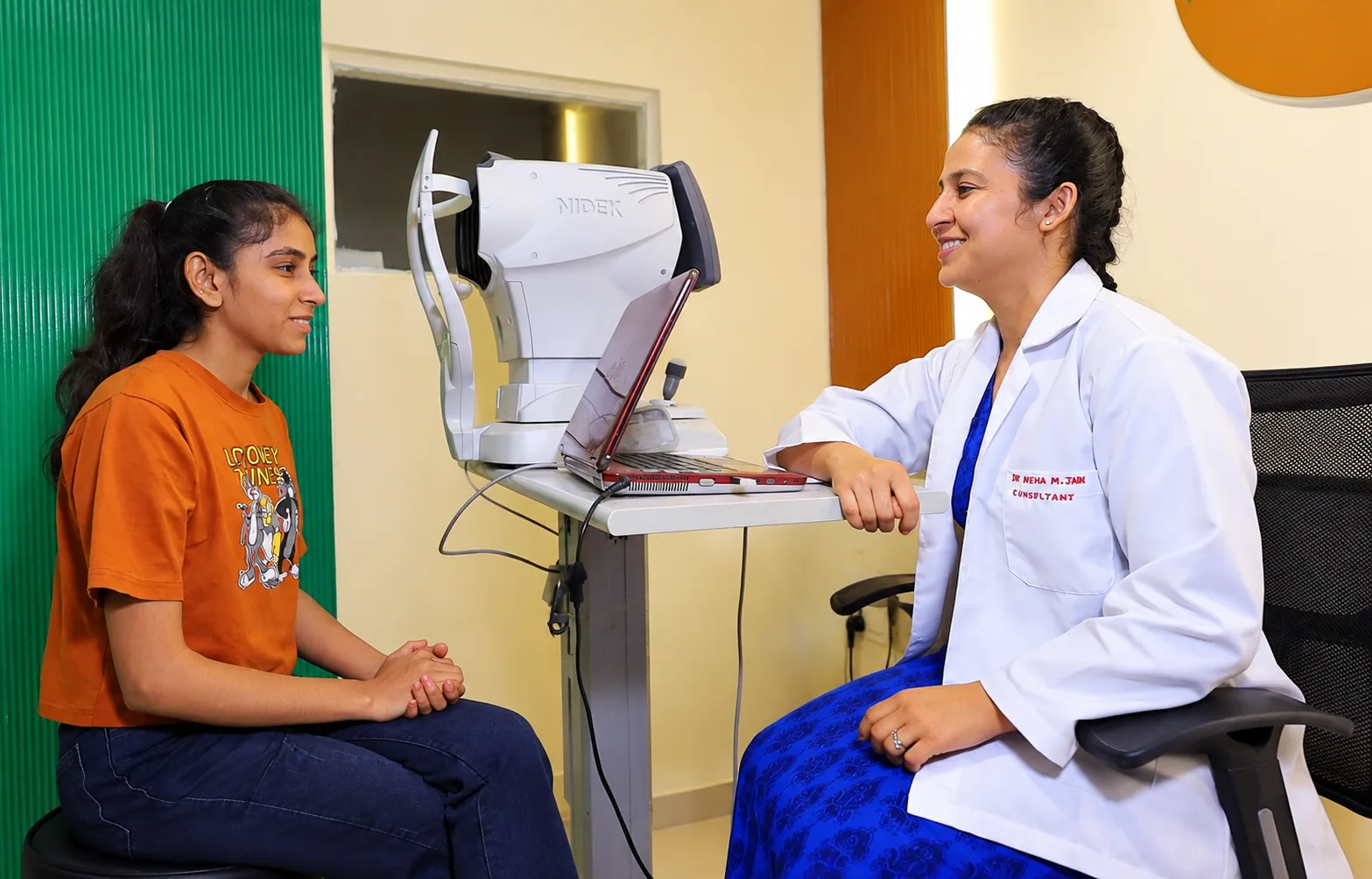
Glaucoma (kala motia) is damage to the optic nerve, the cable that carries images from the eye to the brain, usually because pressure inside the eye is too high for that eye. Vision already lost does not return, but drops, laser or surgery can often stop further loss. Glaucoma treatment in Delhi starts with an eye pressure and nerve check.
Medical reviewer: Confirm. Reviewer registration and source check: Confirm. Last reviewed: Confirm.
Book a glaucoma check or call 9643 900 900. This page is also available in Hindi: काला मोतिया की जानकारी हिंदी में.
Key facts
- Early glaucoma usually gives no symptoms. Side vision fades so slowly that the brain fills the gaps.
- Vision lost to glaucoma does not come back. Treatment protects what is left.
- Normal eye pressure is roughly 10 to 21 mmHg, but glaucoma can occur inside that range and pressure above it does not always mean glaucoma.
- A baseline check at 40, earlier with a family history, is the usual advice.
- Treatment is lifelong monitoring plus drops, laser or surgery, chosen for your eye.
- Kala motia is glaucoma. Safed motia (motiyabind) is cataract. They are different diseases.
What is glaucoma (kala motia)?
Your eye keeps a clear fluid circulating inside it. The fluid is made continuously and leaves through a drainage mesh in the angle where the iris (coloured part) meets the cornea (clear front window). When that drain works slowly or is blocked, pressure builds. The optic nerve at the back of the eye is the weak point: over months and years, high pressure kills nerve fibres one by one.
Pressure is the main risk factor we can treat, but it is not the whole story. Some people lose nerve fibres at pressures that count as normal, and some people carry high pressure for years without damage. That is why a glaucoma assessment looks at the nerve itself, not only at a pressure number.
Is kala motia the same as safed motia?
No, and this confusion sends many people to the wrong clinic. Safed motia (motiyabind) is cataract: the lens inside the eye turns cloudy, vision becomes foggy, and an operation that replaces the lens usually brings the clearness back. Kala motia is glaucoma: the lens may be perfectly clear, but the nerve is being damaged. Despite the word "kala" (black), nothing turns black in the eye.
| Safed motia (cataract) | Kala motia (glaucoma) | |
|---|---|---|
| What is affected | The lens | The optic nerve |
| Early symptoms | Blur, glare, dull colours | Usually none |
| Pain or redness | No | Only in an acute angle-closure attack |
| Can lost vision return | Yes, usually, after surgery | No |
| Main treatment | Surgery | Drops, laser or surgery to lower pressure, then lifelong follow-up |
Many older people have both. If you are told you have cataract, ask also whether your pressure and nerve were checked. Our cataract surgery page explains the other condition.
What are the types of glaucoma?
Doctors group glaucoma by how the drain fails.
Open-angle glaucoma is the commonest type. The drain looks open but works poorly, pressure rises slowly and nothing hurts. Angle-closure glaucoma happens when the iris sits too close to the drain and blocks it, either slowly or suddenly. Narrow angles are common in Indian eyes, particularly in people who are long-sighted, so this type deserves more attention here than many foreign websites give it. Normal-tension glaucoma damages the nerve while pressure stays in the usual range. Secondary glaucoma follows another problem: steroid use, an old injury, inflammation (uveitis), diabetes-related eye changes or a very advanced cataract. Childhood (congenital) glaucoma is present from birth or infancy because the drain did not form properly.
| Type | What happens | Usual symptoms | Usual first treatment |
|---|---|---|---|
| Primary open-angle | Drain works slowly, pressure rises gradually | None until late | Drops or SLT laser |
| Primary angle-closure | Iris blocks the drain | Often none; an acute attack gives pain, halos, vomiting | Laser iridotomy, sometimes lens surgery |
| Normal-tension | Nerve damage at normal pressure | None until late | Drops to lower pressure further |
| Secondary | Another condition or medicine raises pressure | Depends on the cause | Treat the cause and control pressure |
| Childhood (congenital) | Drain did not develop normally | Large, cloudy or watering eyes, light sensitivity | Surgery by a specialist |
What are the symptoms of glaucoma?
The honest answer for the common types is: none, at first. There is no pain, no redness and no blur, because the first fibres lost are in the outer field of vision and the other eye covers for the weak one. By the time people notice something, a good part of the nerve may be gone.
Later signs include patches missing in side vision, bumping into door frames or people on the side, difficulty in dim light, and reading with a small tunnel of clarity. Do not wait for these. A routine check is the only reliable early warning.
Angle-closure glaucoma can also come as a sudden attack, which is an emergency.
Come in the same day if
- You have a sudden, severe pain in one eye, often with a headache on the same side
- The eye is red and the vision turns hazy or misty
- You see coloured rings or halos around lights
- You feel sick or vomit along with eye pain
- You were given eye drops to widen the pupil elsewhere and now have these symptoms
Call 9643 900 900 and come straight to Jain Eye Hospital & Laser Centre, AG-152, Poorbi Shalimar Bagh. Do not wait for the next OPD day and do not take a painkiller and sleep on it. More on the eye emergency page.
Who is at risk of glaucoma?
Anyone can develop it, but these raise the chance:
- Age 40 and above, with risk rising each decade
- A parent, brother or sister with glaucoma
- Diabetes
- High myopia (heavily minus glasses) or, for angle-closure, high plus power
- Long-term steroid use in any form: eye drops, ointments, inhalers, creams or tablets
- A past eye injury or eye surgery
- A thin cornea, or known high eye pressure
- Migraine, very low blood pressure or sleep apnoea, which some doctors consider in the picture
A baseline eye check at 40 is a sensible rule for everyone. If a close relative has glaucoma, start earlier and ask your doctor how often to repeat. Our eye checkup page lists what a routine visit includes.
How is glaucoma diagnosed?
No single reading proves or excludes glaucoma. The diagnosis comes from putting several tests together:
| Test | What it tells us |
|---|---|
| Tonometry | The pressure inside the eye |
| Pachymetry | Corneal thickness, which affects how pressure readings should be read |
| Gonioscopy | Whether the drainage angle is open or narrow |
| Optic disc examination | The shape and colour of the nerve head |
| OCT of the nerve fibre layer | The thickness of the nerve fibre layer, which can thin before vision changes |
| Visual field (perimetry) | A map of side vision and any patches of loss |
Most visits include dilating drops, so plan about one to two hours and do not drive yourself afterwards. The tests are explained one by one, with what they feel like, on our glaucoma test and eye pressure page.
What is the treatment for glaucoma?
All glaucoma treatment works by lowering eye pressure to a target set for your eye. None of it restores lost vision, and none of it is a one-time cure. The choice depends on the type, the stage of damage, your age, other eye conditions, and how reliably you can use drops.
| Option | In short | Often chosen when |
|---|---|---|
| Eye drops | One or more drops daily to reduce fluid or help it drain | Most new open-angle cases |
| SLT laser | A short laser session that helps the drain work better | Open-angle glaucoma, drop side effects, trouble with daily drops |
| Laser iridotomy | A tiny laser opening in the iris | Narrow or closed angles |
| Trabeculectomy | An operation that makes a new drainage channel | Pressure stays above target despite drops or laser |
| Tube or shunt surgery | A small implant that carries fluid out | Complex or previously failed cases |
| MIGS Confirm | Micro-stents, usually placed during cataract surgery | Mild to moderate disease with cataract |
| Cyclo procedures Confirm | Laser to reduce fluid production | Eyes with very high pressure or poor vision where other options are limited |
Our glaucoma treatment options compared page sets these side by side with recovery time and limits.
How do I put in glaucoma drops correctly?
Drops only work if they go in, and many people miss the eye.
- Wash your hands and, if you use two kinds of drops, check which one is due.
- Tilt your head back, pull the lower lid down to make a pocket, and let one drop fall in. One is enough; the eye holds less than a drop.
- Close the eye gently and press the inner corner, next to the nose, for about two minutes. This keeps the drop in the eye and out of the bloodstream.
- Wait five minutes before the next kind of drop.
- Wipe the extra from the cheek and do not touch the bottle tip to the eye or lashes.
Never stop drops because the eye feels fine. Pressure rises within days of stopping and the damage is silent. If drops sting, redden the eye or are hard to afford, tell us. There is usually another drop, a simpler schedule or a laser option.
What happens on the day of laser or surgery?
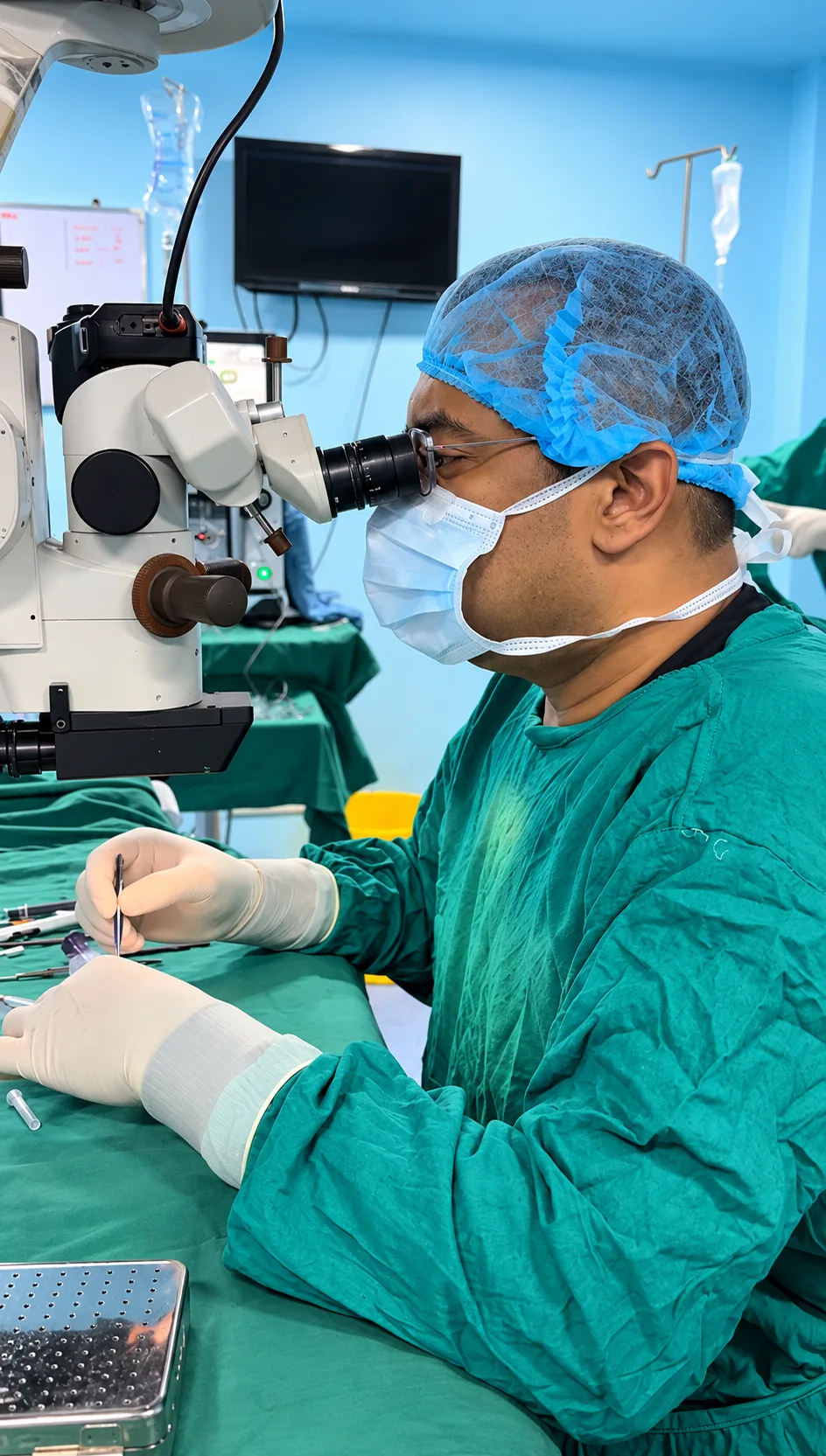
Laser and surgery are planned visits, usually as day care. You arrive with someone, the pressure is checked, and numbing drops or local anaesthesia are given. SLT takes roughly 5 to 10 minutes. A trabeculectomy usually takes about 45 to 60 minutes. You normally go home the same day with drops and a shield or instructions, and the first check is generally the next day.
After laser, the eye may ache for a day and the pressure effect builds over some weeks. After surgery, expect frequent visits in the first weeks. They are part of the treatment, because the new channel needs adjusting. In Delhi's summer, keep sweat, dust and water away from the eye in the early days and avoid crowded Metro hours when you can.
What does living with glaucoma look like?
For most people it becomes a routine, like blood pressure care.
| What | How often |
|---|---|
| Drops | As prescribed, every day, same time |
| Pressure and nerve check | Often every 3 to 6 months once stable; sooner after any change |
| Visual field test | Usually once or twice a year |
| OCT nerve scan | Usually once a year |
| Refill and review of drops | Before the bottle runs out |
Skipped visits and stopped drops are the commonest reasons treated patients still lose sight. Keep a written note of your target pressure, bring all your bottles to each visit, and tell every doctor who prescribes you medicine that you have glaucoma. Steroids in any form can push pressure up, so do not use over-the-counter eye drops for redness or itching without an eye examination. Glaucoma can also run in families, so ask your brothers, sisters and grown children to get checked.
What does glaucoma treatment cost?
We do not quote glaucoma fees from a general list because the cost depends on which tests, which drops, whether laser or surgery is needed, and whether cataract surgery is combined. The exact fee is confirmed after examination, and we give you a written estimate before any procedure. Laser and surgery are often covered by health insurance and by CGHS, subject to your policy terms; routine tests and drops are often not. See CGHS and insurance for eye surgery and the full fee schedule.
Glaucoma treatment in Shalimar Bagh and across Delhi
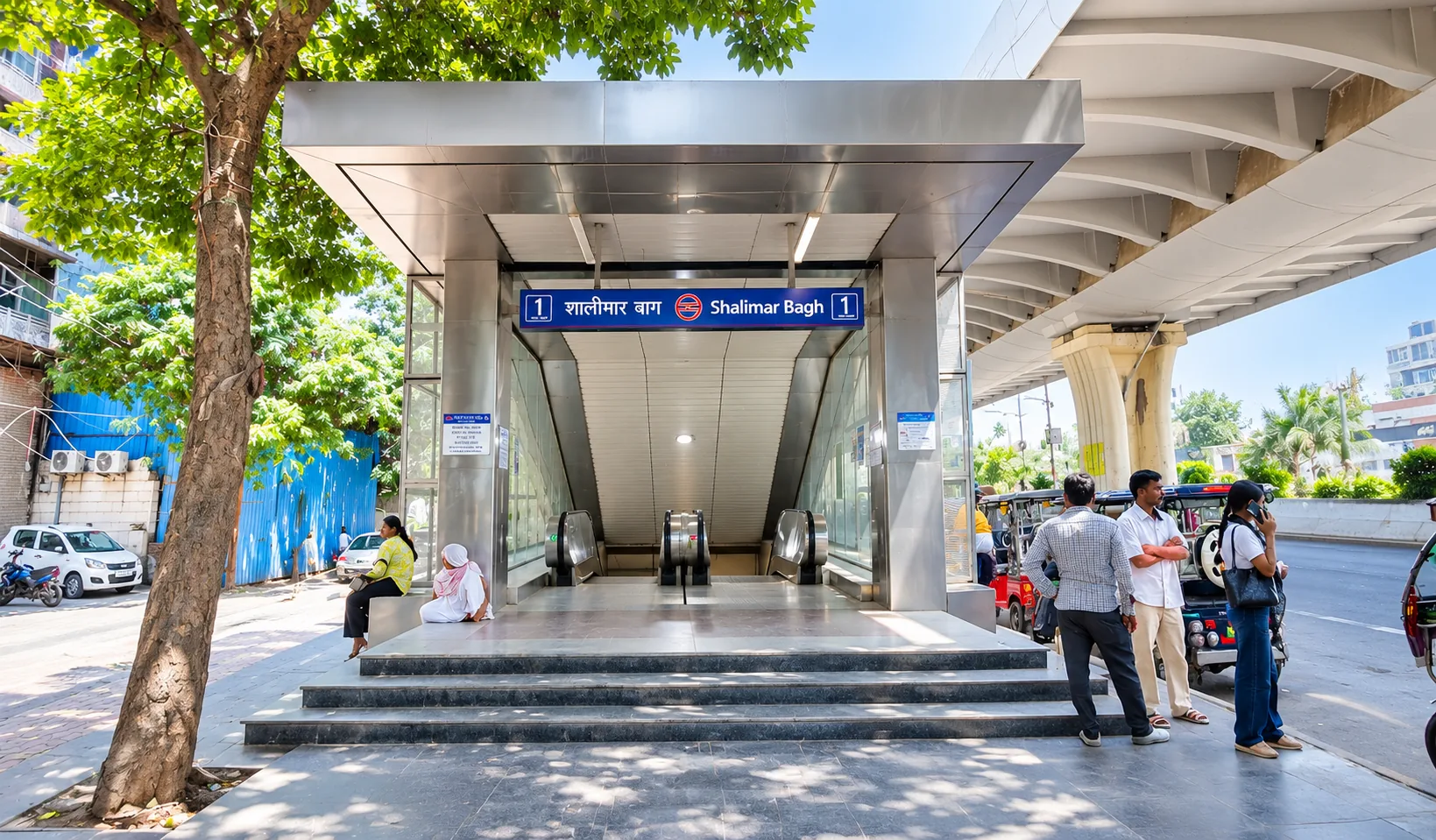
We see glaucoma patients from across Delhi at Jain Eye Hospital & Laser Centre, AG-152, Poorbi Shalimar Bagh, near Richi Rich Banquet, Delhi 110088. If you are looking for glaucoma treatment in Shalimar Bagh, the hospital is on the Pink Line side of the city, and the nearest Metro station is Shalimar Bagh Confirm. Patients from Rohini, Pitampura, Model Town, Ashok Vihar, Paschim Vihar and nearby colonies can usually plan the whole work-up as one visit, so bring someone along for the dilation. Details for each area are on our North-West Delhi page and the Shalimar Bagh hospital page. Not connected with Jain Eye & Medical Centre, Shalimar Bagh.
Who looks after glaucoma at Jain Eye Hospital?
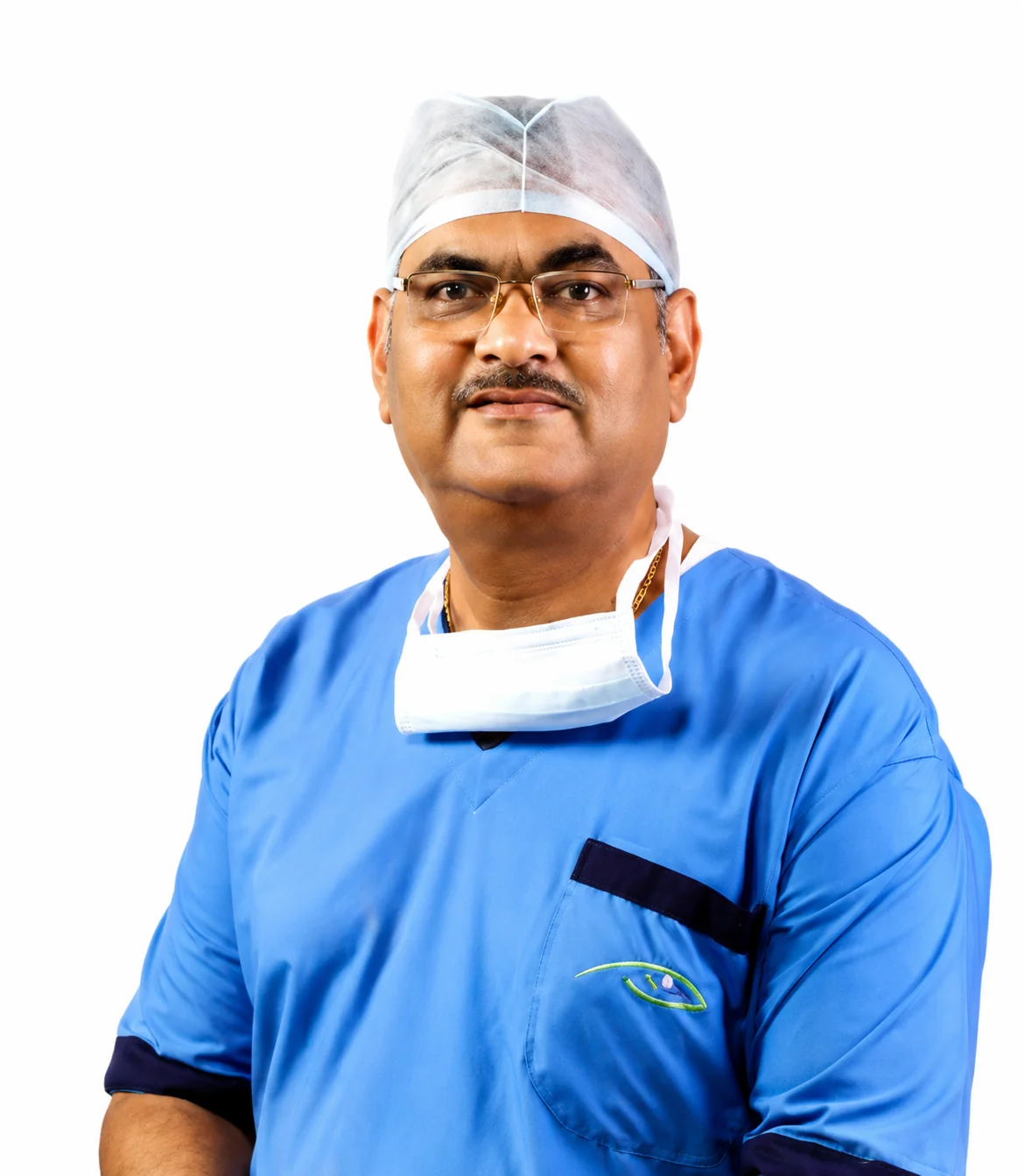
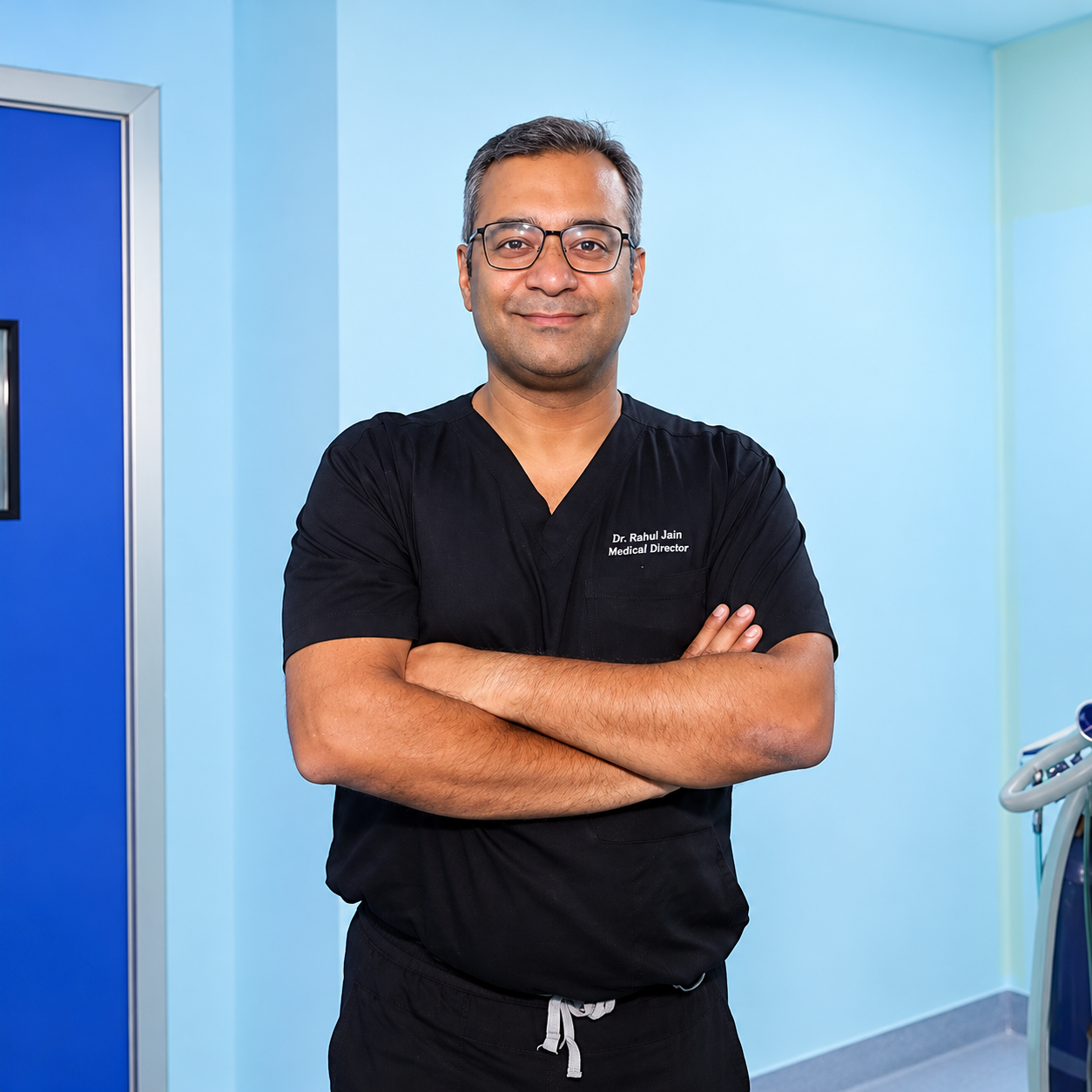
Doctor-specific title, qualifications, registration, clinical assignments, procedures and OPD availability: Confirm. Whether OCT, visual field testing, laser and surgery are available in-house still needs confirmation. You will leave with a written plan: your target pressure, your drops, and the date of your next check. Our current CGHS empanelment status and letter validity: Confirm, and Cashless eligibility and available services: Confirm with the hospital and insurer. Meet the team on our doctors page or read Dr Arun Kumar Jain's profile.
Based on, and next step
This page follows general patient guidance from the American Academy of Ophthalmology, the National Eye Institute and the World Health Organization. It is information, not a diagnosis. Read our editorial policy for how pages are reviewed.
The first visit usually takes one to two hours with dilation. Book a glaucoma check or call 9643 900 900 or WhatsApp 96 43 53 63 73. For glaucoma treatment in Delhi, an early baseline is worth more than any later correction.
FAQs
What is kala motia in English?
Kala motia is the Hindi name for glaucoma, a disease in which the optic nerve is slowly damaged, usually by eye pressure that is too high for that eye. It is not cataract, which is safed motia or motiyabind. Cataract vision can often be restored by surgery, but nerve damage from glaucoma cannot be reversed, which is why early checks matter.
Can glaucoma be cured?
Glaucoma cannot be cured and lost vision does not return, but it can usually be controlled. Drops, laser or surgery lower the pressure to a target, and regular nerve scans and visual field tests show whether the disease is stable. Most people who keep their treatment and follow-up visits keep useful vision for daily life, though no one can promise a result.
What are the early symptoms of glaucoma?
The common open-angle type has no early symptoms. There is no pain or redness, and side vision fades so slowly that people rarely notice. Later signs are missing patches at the sides and bumping into things. Because waiting for symptoms means waiting for damage, people over 40, or with diabetes, high myopia, steroid use or a family history, should be checked.
What eye pressure is normal?
Most healthy eyes read between about 10 and 21 mmHg. Pressure shifts through the day, and corneal thickness changes how accurate a reading is. Glaucoma can occur at normal pressure, and some people with higher pressure never develop it. Doctors therefore decide with the optic nerve scan, visual field and corneal thickness, not the number alone.
Is glaucoma hereditary?
Glaucoma often runs in families. Having a parent, brother or sister with it raises your own risk several times compared with people with no family history. Close relatives are usually advised to start pressure and optic nerve checks by around 35 to 40, or earlier if the doctor says so, and to repeat them even when vision seems perfect.
Do I have to use glaucoma drops for life?
Usually yes, unless laser or surgery controls the pressure well enough to reduce or stop them. Never stop on your own, because pressure climbs again within days and the nerve damage is silent. If drops sting, cost too much or are hard to remember, say so. A different drop, a simpler schedule or SLT laser may suit you better.
Is SLT laser painful?
SLT is done after numbing drops and takes about 5 to 10 minutes. Most people feel mild pressure or see bright flashes, and the eye may ache a little for a day. You go home the same day. The pressure effect builds over some weeks, may wear off after a few years and can sometimes be repeated.
How much does glaucoma treatment cost?
The fee depends on the tests, the drops, whether laser or surgery is needed and whether cataract surgery is combined, so it is confirmed after examination, with a written estimate before any procedure. Laser and surgery are often covered by insurance and CGHS, subject to policy terms. See the fee schedule and insurance page for how we handle estimates.
Can glaucoma cause blindness?
Untreated glaucoma is a major cause of permanent blindness because it damages the nerve without pain or warning. With early diagnosis, pressure kept at the target and regular follow-up, the risk of serious loss falls a great deal. In treated patients, missed visits and stopped drops are the commonest reasons sight is still lost.
Does cataract surgery help glaucoma?
In angle-closure glaucoma, removing the natural lens can widen the drainage angle and lower pressure, sometimes reducing the need for drops. In open-angle glaucoma the effect is smaller and less predictable. When both problems need surgery, the doctor may combine them or plan them separately, depending on pressure control and the stage of nerve damage.
Can steroid eye drops cause glaucoma?
Yes. Steroid drops, ointments, inhalers, creams and tablets can raise eye pressure in some people within weeks, and long use can cause steroid-induced glaucoma and cataract. Do not buy steroid or antibiotic-steroid combination drops over the counter for red or itchy eyes. If steroids are truly needed, an eye doctor should measure your pressure while you use them.
Is glaucoma treatment covered by CGHS or insurance?
Current CGHS empanelment status, certificate validity and coverage: Confirm with the hospital and insurer.