

Glaucoma treatment options all do one job: lower the pressure in the eye to a safe target. Drops are the usual first step, SLT laser can reduce or replace drops in open-angle glaucoma, and surgery is kept for eyes where pressure or nerve damage keeps worsening. None of them brings back lost vision.
Medical reviewer: Confirm. Reviewer registration and source check: Confirm. Last reviewed: Confirm.
New to the condition? Start with our glaucoma treatment at Jain Eye Hospital overview, then come back here. To talk through your own eye, book a glaucoma consultation or call 9643 900 900.
Key facts
- Every glaucoma treatment lowers pressure. None restores vision already lost.
- Drops need daily use for life in most people. Missed doses are the commonest reason treatment fails.
- SLT laser takes minutes, is done as day care and can often be repeated.
- Trabeculectomy lowers pressure the most but needs the closest follow-up in the first weeks.
- Narrow-angle eyes often need a laser iridotomy before anything else.
- The right option depends on your type, stage, age, other eye problems and daily habits.
What are the treatment options for glaucoma?
There are four families: medicines (eye drops, rarely tablets), lasers, drainage surgery, and procedures that reduce fluid production. Which one a doctor suggests first depends less on fashion than on three facts about your eye: which type of glaucoma it is, how much nerve is already lost, and how high the pressure is compared with the target.
A short note on availability: the options below are described in general. Which of them we perform in-house, and which we arrange with a colleague, is confirmed at your consultation Confirm.
What is target eye pressure?
The target is a pressure number, set for your eye, below which the nerve is expected to stay stable. It is not 21 for everybody. An eye with mild damage and early disease may do well with a modest drop in pressure. An eye with a lot of nerve already lost needs a lower target, because it has less to spare.
The target is a moving goal. If the optic nerve scan or the visual field worsens at the old target, the number is lowered and the treatment is stepped up. If you are stable for years, the plan stays. This is why the pressure reading alone never tells you whether treatment is working: the scans and field tests do. Our eye pressure test page explains each one.
Side by side: which glaucoma treatment suits which eye?
Read the table by row. The "suited when" column is general; your own eye can differ.
| Option | How it works | Suited when | Recovery | Limits |
|---|---|---|---|---|
| Eye drops | Reduce fluid production or help fluid leave the eye | Most new cases of open-angle glaucoma and ocular hypertension | None; started the same day | Daily use for life; stinging, redness, forgetting doses |
| SLT laser | Low-energy laser stimulates the natural drain | Open-angle glaucoma, drop side effects, difficulty with daily drops | Same day; mild ache for a day | Effect builds over weeks, may fade after some years, some eyes still need a drop |
| Laser iridotomy | A tiny laser opening in the iris gives fluid a bypass | Narrow or closed angles, and after an angle-closure attack | Same day | Does not lower pressure in open-angle disease; sometimes glare or a flicker |
| Trabeculectomy | Surgeon makes a new drainage channel under the eye's outer coat | Pressure above target despite drops or laser, or worsening nerve damage | About 2 to 6 weeks of close follow-up | Pressure too low or too high, infection, scarring that closes the channel |
| Tube or shunt surgery | A small implant carries fluid to a reservoir on the eye wall | Complex cases, previous failed surgery, some secondary glaucomas | About 2 to 6 weeks | Implant-related problems, pressure swings, needs a surgeon who does these regularly |
| MIGS Confirm | Micro-stent or small device improves natural drainage | Mild to moderate glaucoma, usually combined with cataract surgery | Usually faster than trabeculectomy | Smaller pressure drop; not for advanced disease; suitability varies |
| Cyclo procedures Confirm | Laser reduces the tissue that makes fluid | Very high pressure or poor vision when other options are limited | Days to a couple of weeks | Inflammation; repeat treatment is common; kept for selected cases |
Fees are not shown in this table because they depend on the eye and the procedure. See what we charge and how we confirm it.
Glaucoma eye drops
Drops are the first step for most people because they work without a procedure and can be changed easily. They come in a few classes, each acting differently:
| Class (plain words) | What it does | Things to know |
|---|---|---|
| Prostaglandin analogues (latanoprost is a common example) | Help fluid leave through a second route | Usually once a day, often at night; can redden the eye, darken eyelashes or lids |
| Beta-blockers (timolol is a common example) | Reduce fluid production | Can slow the pulse or worsen asthma; tell the doctor about heart and lung conditions |
| Alpha-agonists | Reduce production and help outflow | Can cause allergy, dry mouth or drowsiness |
| Carbonic anhydrase inhibitors | Reduce production | Can sting or leave a bitter taste |
| Combination bottles | Two classes in one bottle | Fewer bottles and fewer instillations; the preservative load may matter |
Doses and schedules are set by your doctor and printed on your prescription, so we do not list them here. If you use more than one drop, the rule is five minutes between them, and the order is whatever the doctor wrote. Many people also use preservative-free versions when the eyes are dry or irritated, which is worth asking about.
The real weak point of drops is not the medicine, it is the routine. Eyes that look healthy at each visit may still be losing nerve because the drops are missed three or four days a week. Tie the drop to something that happens daily, such as brushing teeth, and keep a spare bottle at work or in the bag.
SLT laser and laser iridotomy
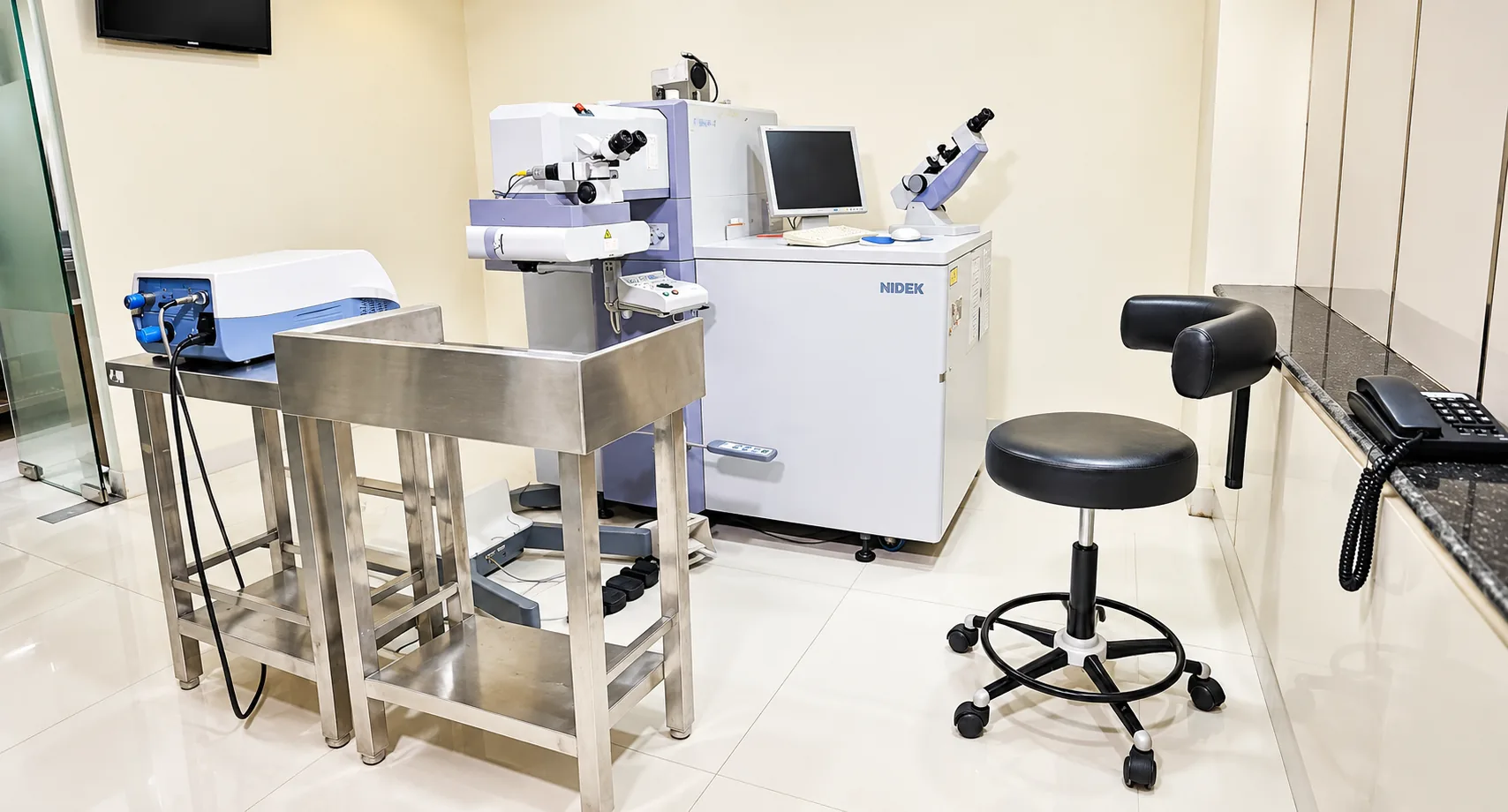
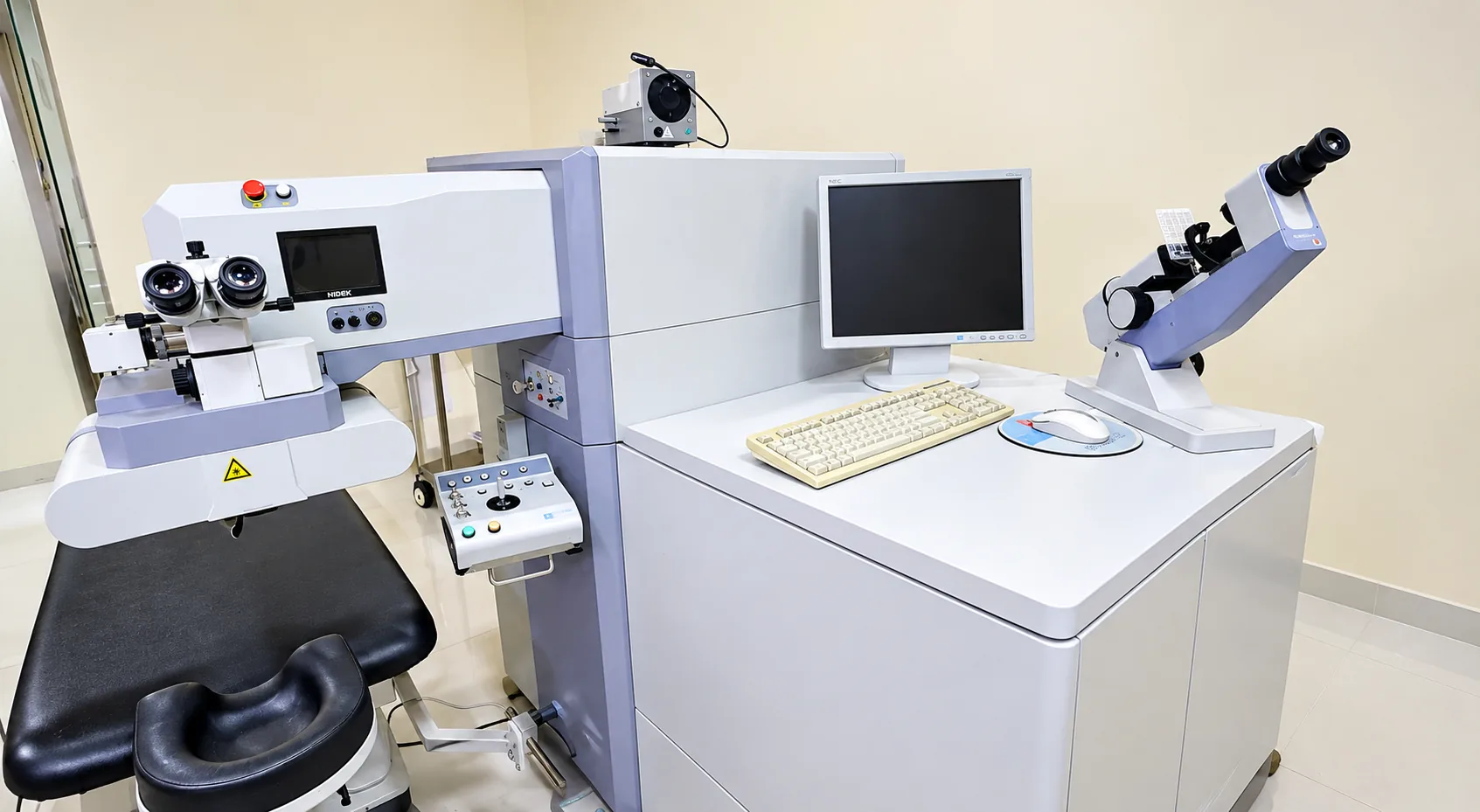
Selective laser trabeculoplasty (SLT) is for open-angle glaucoma. After numbing drops, a laser is applied to the drainage mesh for roughly 5 to 10 minutes. It does not cut tissue. Most people see flashes and feel a mild pressure, then go home the same day. The pressure falls over the following weeks, so a check is usually done around then. A large UK trial of laser as a first treatment found it controlled many eyes without long-term drops, and today it is an accepted first choice for suitable open-angle eyes. The effect can wear off over several years; SLT can usually be repeated, and some eyes still need one drop alongside it.
Laser iridotomy (YAG) is a different laser for a different problem. It makes a pin-sized opening in the iris so that fluid can reach the drainage angle in a narrow eye. It is done to prevent or treat angle-closure attacks, takes a few minutes, and is followed by a pressure check within an hour or so. It protects against a blocked angle; it is not a pressure-lowering treatment for open-angle glaucoma.
Trabeculectomy
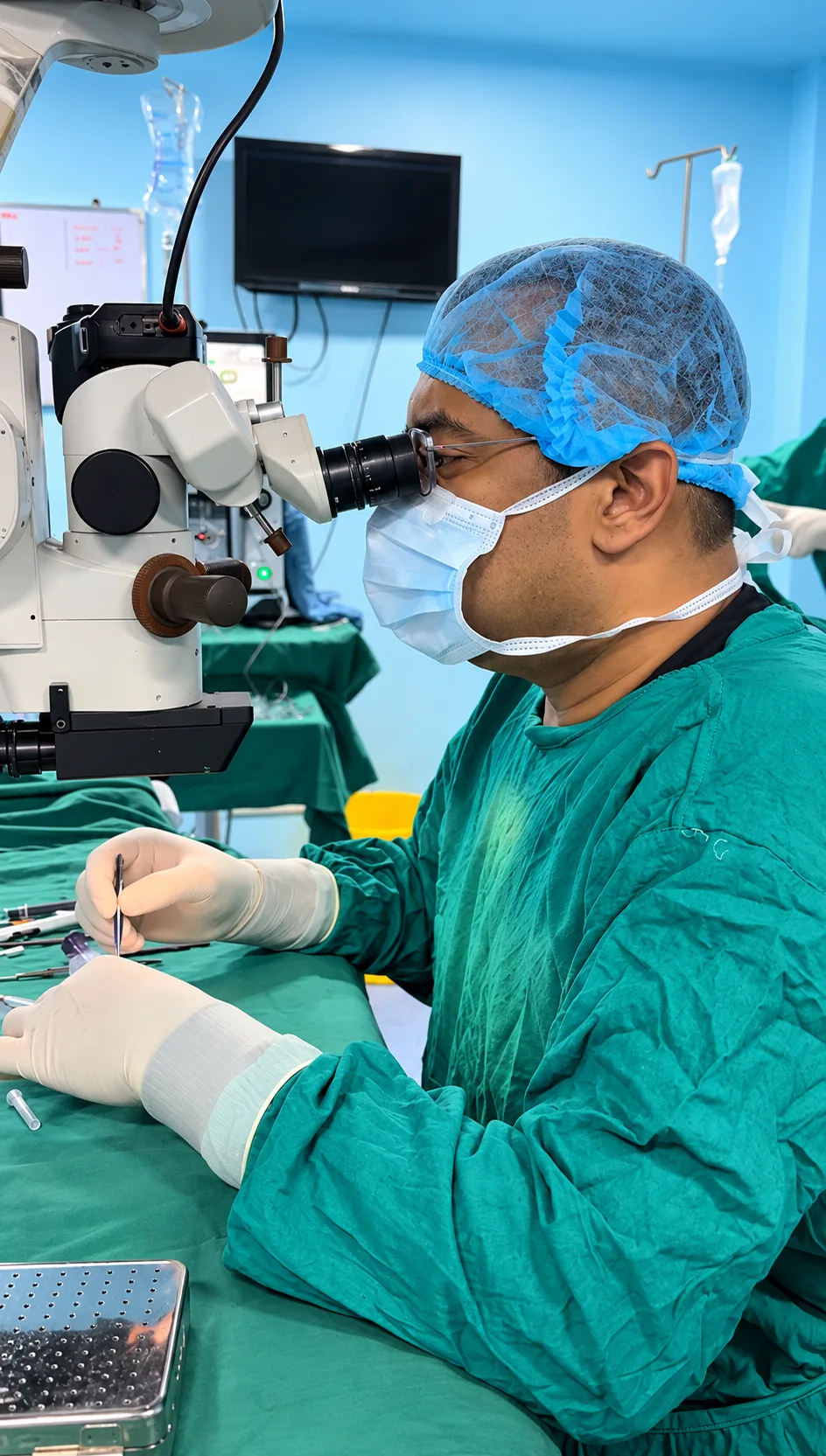
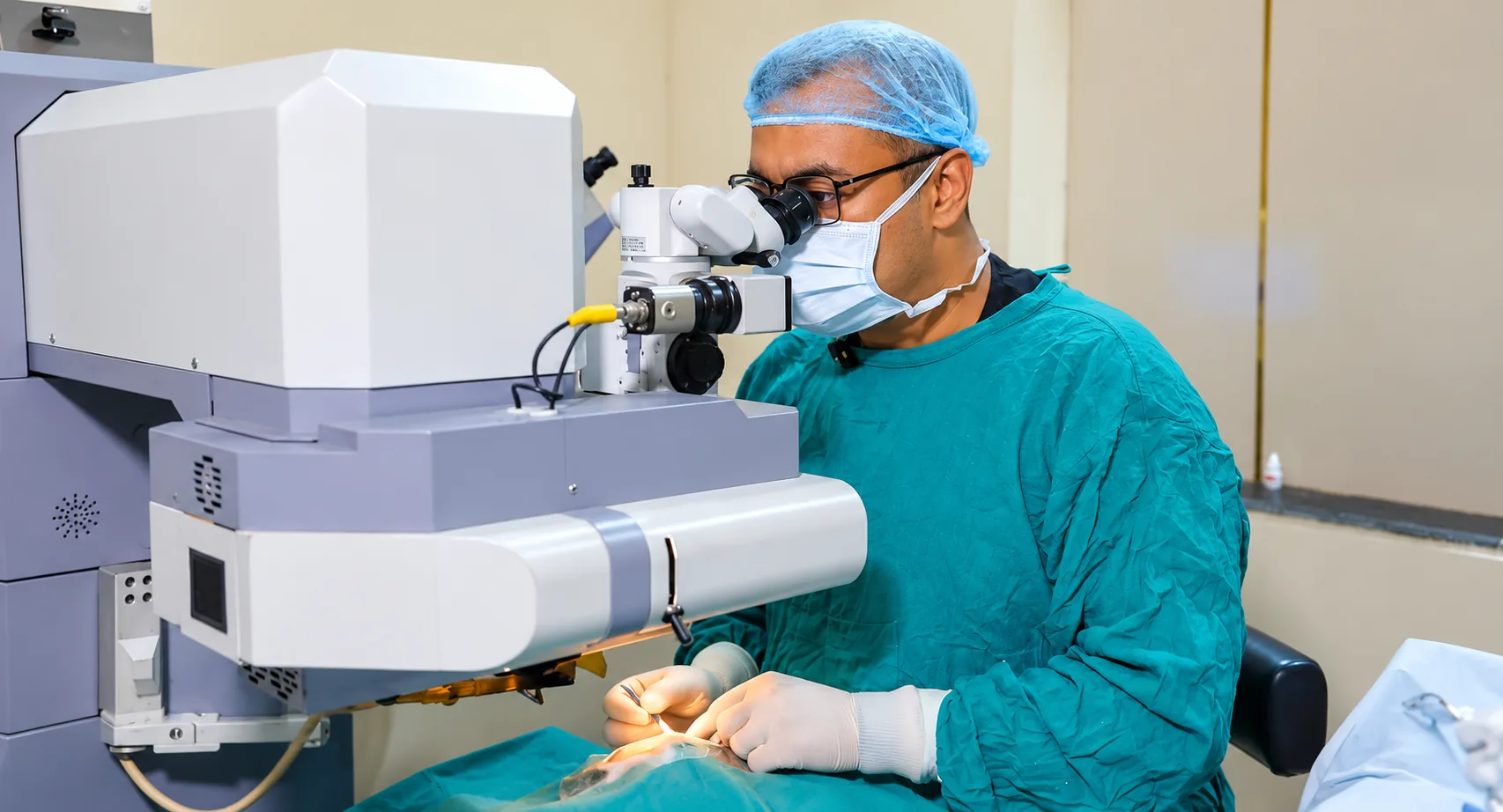
This is the long-established drainage operation. The surgeon creates a small flap in the white of the eye and a new channel, so that fluid can leave and collect under the surface skin in a small raised area called a bleb. Done under local anaesthesia, it usually takes about 45 to 60 minutes and you go home the same day.
The first 4 to 6 weeks are busy. You may need visits every few days at first, drops to calm inflammation, and sometimes small adjustments or injections to stop the channel scarring shut. Possible problems include pressure that falls too low, infection of the bleb, bleeding and scarring. They are uncommon enough that the operation remains in wide use, and the close follow-up exists to catch them early. Pollution, dust and sweat in the first weeks are real issues in Delhi: no swimming, no rubbing, no head-down work, and a clean shield at night.
Tube or shunt surgery
When trabeculectomy is likely to fail, for example after an earlier operation, in some inflammatory or injury-related glaucomas, or when the eye scars easily, a small tube can be placed to carry fluid to a plate on the eye wall. The recovery runs along similar lines to trabeculectomy, about 2 to 6 weeks of close follow-up. It is a specialist operation and should be done by a surgeon who does it regularly Confirm. We will tell you plainly if your eye is better served elsewhere.
MIGS
Minimally invasive glaucoma surgery uses very small stents or devices that improve the eye's own drainage, usually placed through the same tiny incision as cataract surgery. They suit mild to moderate glaucoma in people who also need a cataract operation, and the recovery is usually quicker than a trabeculectomy. The trade-off is a smaller pressure drop, so MIGS is not the answer for advanced disease Confirm. Our cataract surgery page explains the lens operation that MIGS is usually paired with.
Cyclo procedures
In a few eyes the pressure stays high and vision is already poor or other operations have failed or are not safe. Here a laser can be applied to the tissue that makes the fluid, to reduce the amount. It is a pressure-lowering measure rather than a way to improve sight, and repeat sessions are common Confirm.
Steroids and glaucoma: a caution
Steroids, in eye drops, ointments, inhalers, creams or tablets, can push eye pressure up in some people, sometimes within weeks. The effect is silent, and long use may cause steroid glaucoma and cataract. Do not use over-the-counter drops sold for "red" or "itchy" eyes, which often contain steroids, without an eye examination. If you have glaucoma and a doctor outside eye care prescribes steroids, tell them and book a pressure check.
What happens if glaucoma is not treated?
Untreated open-angle glaucoma usually narrows side vision slowly, over years, and the loss cannot be reversed. In the late stages the field shrinks to a small central area, reading and walking become hard, and eventually the sight can be lost completely. The loss often happens in one eye first, and the better eye hides it. Untreated angle-closure can cause an acute attack that damages the nerve within days. The practical message is the same in both: the sooner a pressure target is reached, the more vision is kept. If you suspect an attack, read our eye emergency guidance.
Come in the same day if
- You have sudden eye pain with redness and blurred vision
- You see halos around lights with headache or vomiting
- Your vision suddenly drops in one eye after glaucoma surgery or laser
- Your operated eye becomes very red, painful or sticky with discharge
Call 9643 900 900 straight away.
How do drops, laser and surgery compare on cost over the years?
We do not publish glaucoma fees on this page: the exact fee is confirmed after examination, because it depends on the procedure, whether one or both eyes are treated, and whether it is combined with cataract surgery. What can be said in general is how the money behaves. Drops are cheap to start and keep costing every month, for both eyes, for life, plus tests and visits. A procedure costs more on one day and may reduce what you spend on bottles later. For someone using two or more drops, a laser can work out cheaper over the years. For someone with advanced damage the cost of surgery is not a deciding factor: the medical need is.
Medical suitability comes first, cost second. Laser and surgery are often covered by health insurance and CGHS, subject to your policy, while drops and tests are often not. See CGHS and insurance for eye surgery and the full fee schedule, or ask our desk for a written estimate.
How do we decide with you?
We go through the same short list with every patient, and you are part of it:
- Type of glaucoma and the angle of the drain
- Stage of nerve damage on the OCT and visual field
- Your age, work and general health
- Other eye problems, especially cataract and dry eye
- Whether daily drops are realistic for you or the family
- How far you travel for follow-up from Rohini, Pitampura, Model Town or beyond
- Your insurance and what you wish to spend
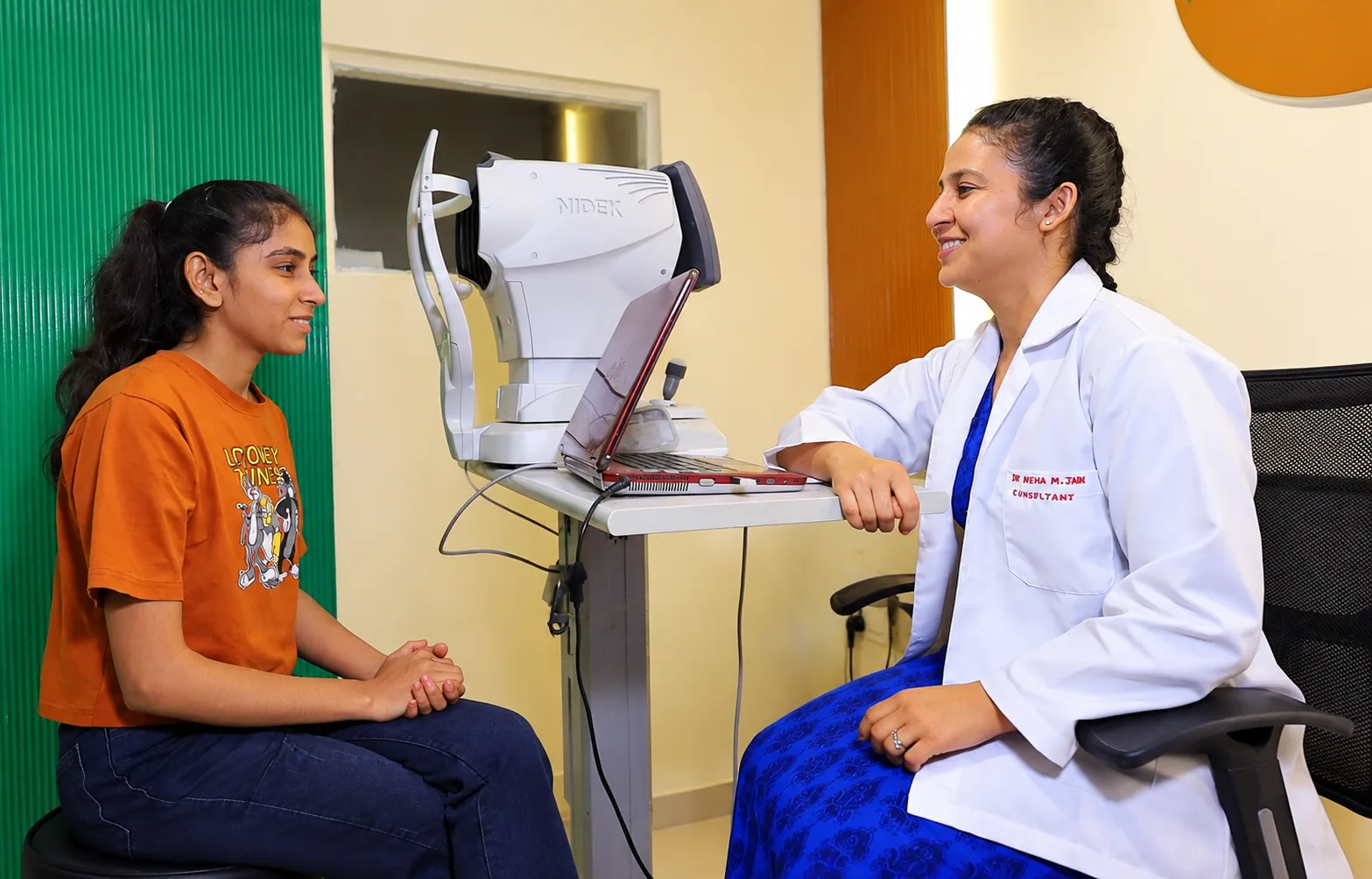
You leave with a written target pressure and a plan. Book a glaucoma consultation with the team at Jain Eye Hospital & Laser Centre, AG-152, Poorbi Shalimar Bagh, Delhi 110088. A first visit with dilation usually takes one to two hours. This page follows general guidance from the American Academy of Ophthalmology, the National Eye Institute and the Indian ophthalmology community; see our editorial policy.
Fees and written estimates
Published ranges are not an individual estimate. Read what we charge and how we confirm it, then ask the team for the written fee for the option being discussed. Confirm which tests, medicines and follow-up are included, whether the figure applies per eye or to both eyes, and whether the hospital or an outside provider will perform the service. If an amount is marked Confirm, ask the hospital for the current figure before making a decision.
FAQs
Is laser better than eye drops for glaucoma?
Neither is better for everyone. A large UK trial found SLT laser as a first treatment controlled pressure well and reduced the need for drops in many people with open-angle glaucoma, and drops remain a sound choice for many others. Your doctor weighs the type, stage, angle anatomy, other eye problems and how easily you can use drops every day.
How long does SLT last?
The effect of SLT often lasts a few years and then gradually fades. Unlike older lasers, it can usually be repeated. Some people still need a drop after laser to reach their target, so pressure checks, OCT scans and visual field tests continue at the intervals your doctor sets, often every 3 to 6 months at first.
When is glaucoma surgery needed?
Surgery is considered when pressure stays above target despite drops or laser, when the nerve or visual field keeps worsening, or when drops cannot be used because of allergy, side effects or difficulty putting them in. Trabeculectomy and tube surgery lower pressure the most, but they need closer follow-up in the first weeks and a longer recovery than laser.
Is trabeculectomy safe?
Trabeculectomy is a long-established operation with known risks, including pressure that is too low, infection, bleeding and scarring that closes the new channel. Most early problems are managed at the frequent follow-up visits in the first weeks, which are part of the treatment. Your surgeon will explain the specific risks for your eye before you decide.
Can I stop drops after surgery?
Many people need fewer drops, or none, after successful glaucoma surgery, but some still need one or two to hold pressure at target over the years. Never stop until your doctor confirms the pressure is where it should be. Stopping on your own can let pressure rise silently and damage the optic nerve further.
What is MIGS?
Minimally invasive glaucoma surgery (MIGS) uses tiny stents or devices to improve drainage, usually inserted during cataract surgery through the same small cut. It suits mild to moderate glaucoma, recovers faster and lowers pressure less than trabeculectomy. Availability varies, so ask your doctor whether MIGS is offered here and suitable for your eye Confirm.
Which option costs the least over time?
Drops cost less each month but usually go on for life, while laser or surgery costs more on a single day. Over many years, SLT can cost less than daily drops for some people, particularly those using two or more bottles. We confirm fees after examination and give a written estimate, so you can compare with your own drop spending.
Does glaucoma treatment improve vision?
No. Treatment protects the vision you still have by lowering pressure; it does not restore side vision already lost. If your vision is blurry, a cataract, dry eye, a change in glasses power or a retina problem may be the cause, and these can often be checked and treated separately during the same visit.
What is YAG iridotomy?
YAG iridotomy is a quick laser that makes a tiny opening in the iris so fluid can reach the drainage angle. It is used for narrow angles, to prevent or treat angle-closure attacks. It is done after numbing drops in a few minutes, you go home the same day, and the pressure is checked again within an hour or so.
Are glaucoma surgeries covered by insurance?
Current CGHS empanelment status, certificate validity and coverage: Confirm with the hospital and insurer.