


A glaucoma test is not one test. It combines an eye pressure reading (tonometry) with a check of corneal thickness, the drainage angle, the optic nerve and the side vision. Normal eye pressure is roughly 10 to 21 mmHg, but a number alone never diagnoses glaucoma. Plan about one to two hours with dilation.
Medical reviewer: Confirm. Reviewer registration and source check: Confirm. Last reviewed: Confirm.
If you already know you have glaucoma, see glaucoma treatment. To book a test, book a glaucoma test or call 9643 900 900.
Key facts
- Normal eye pressure is about 10 to 21 mmHg, as a general range.
- Glaucoma can occur at normal pressure, and high pressure does not always mean glaucoma.
- The test is a set of six checks, not one. None is painful, though dilation is a nuisance.
- Dilating drops blur near vision and glare for several hours, so do not plan to drive.
- A baseline check at 40 is the usual advice, sooner with family history, diabetes or high myopia.
What does a glaucoma test include?
Glaucoma damages a nerve slowly, and pressure is only one of the clues. So a proper assessment adds up several findings: how high the pressure is, how thick the cornea is, whether the drainage angle is open, how the optic nerve looks, how many nerve fibres are left, and whether any part of your side vision is missing. You will hear these named as tonometry, pachymetry, gonioscopy, optic disc examination, OCT of the nerve fibre layer and visual field testing (perimetry). The sections below explain each one.
What is eye pressure, and what is normal eye pressure?
Eye pressure, also called intraocular pressure, is the fluid pressure inside the eye, measured in millimetres of mercury (mmHg). The fluid is made all the time and drains away, and the balance sets the pressure.
As a general guide, most healthy eyes read between 10 and 21 mmHg. It moves during the day, can be higher early in the morning, and changes a little with posture, a tight collar, caffeine or holding your breath. Corneal thickness also changes the reading: a thick cornea can make the number look higher than the true pressure, and a thin one lower.
| Reading (mmHg) | What it usually suggests | Usual next step |
|---|---|---|
| Below 10 | Low; can follow surgery, injury or other conditions | Doctor review |
| 10 to 21 | Within the usual range | Nerve and field checks if you are at risk |
| 22 to 29 | Raised; possible ocular hypertension or glaucoma | Full glaucoma assessment |
| 30 and above | High; risk of nerve damage | Prompt treatment decision |
| High with pain, halos or vomiting | Possible acute angle-closure attack | Same-day emergency care |
This table is general. Numbers alone do not diagnose glaucoma. People with normal-tension glaucoma lose nerve at readings inside the usual range, and some people with raised readings never develop damage. Your doctor reads the pressure with the nerve scan, the field test and the corneal thickness.
What is ocular hypertension?
Ocular hypertension means eye pressure above the usual range with a healthy-looking optic nerve and a normal visual field. It is not glaucoma yet, but it raises the chance of getting it. Whether to treat or only watch depends on how high the pressure is, how thick the cornea is, your age, your family history and what the nerve scan shows. Many people are watched with regular checks; others are started on drops when the risk is judged high enough. Do not skip the follow-up because you feel well. A small number go on to damage without any warning.
Who needs a glaucoma test, and how often?
Everyone should have a baseline eye pressure and nerve check at about 40. It is sensible to start earlier and repeat more often if you have:
- A parent, brother or sister with glaucoma
- Diabetes
- High myopia (heavily minus glasses)
- Long-term steroid use in any form
- A past eye injury
- Known raised eye pressure or a thin cornea
- Migraine, or very low blood pressure, which doctors sometimes consider
| Your situation | Usual frequency of testing |
|---|---|
| Age 40 or over, no risk factors, normal results | Every 1 to 2 years |
| One or more risk factors, normal results | Often yearly, as your doctor advises |
| Ocular hypertension or suspected glaucoma | As set by your doctor, often every 3 to 6 months at first |
| Confirmed glaucoma | Pressure checks every 3 to 6 months once stable; field test and OCT usually once or twice a year |
Our eye checkup page lists what a routine visit includes.
What does each glaucoma test show and feel like?
Tonometry: the eye pressure test
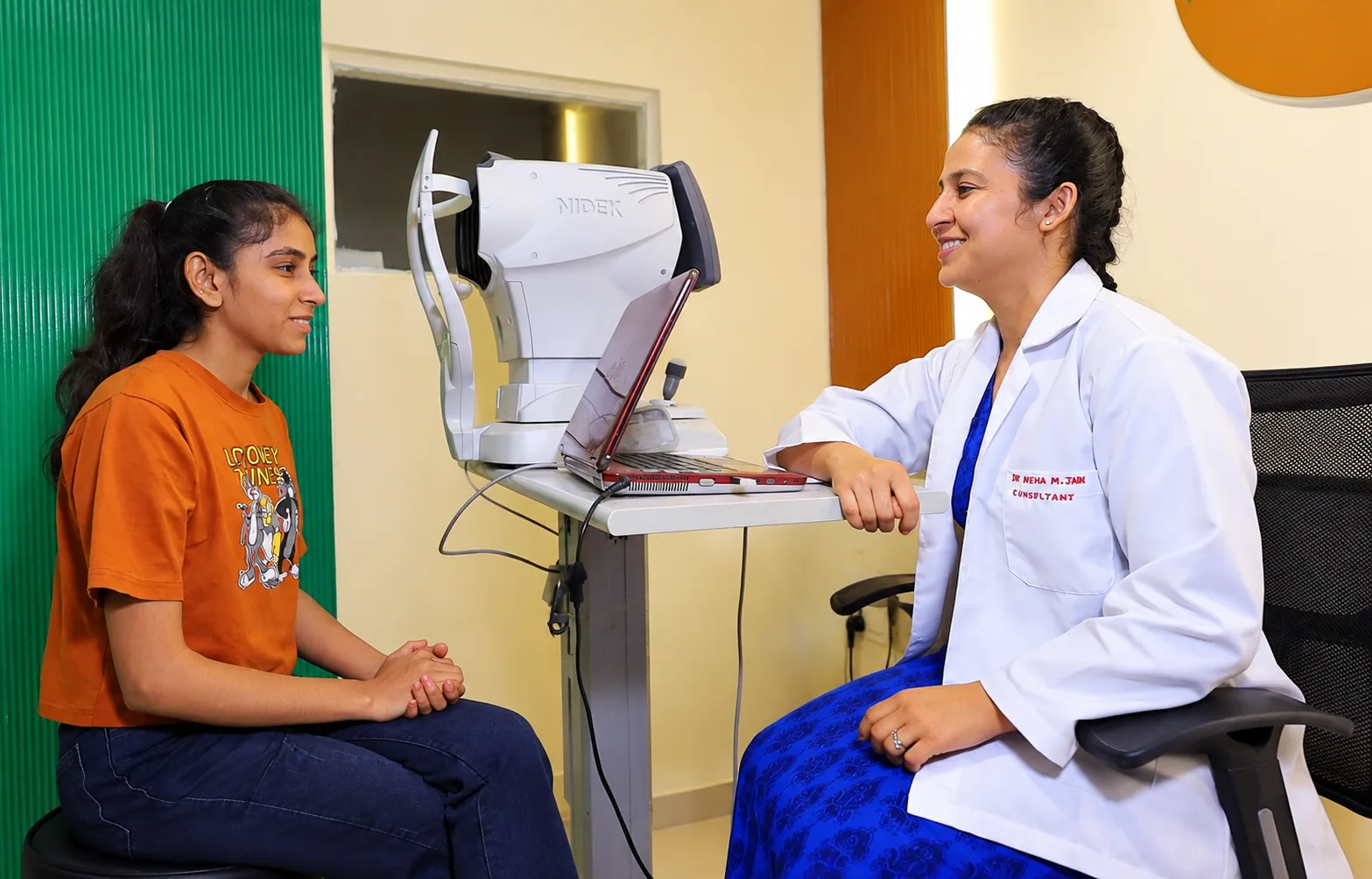
Two types are common. The air-puff (non-contact) test sends a soft puff of air at the eye while you look at a light. It surprises more than it hurts. The applanation (Goldmann) method is the more precise one: after a drop that numbs and stains the eye, a small blue-lit probe touches the surface for a second or two. You feel nothing sharp. It takes two to five minutes for both eyes. Take out contact lenses before.
Pachymetry: corneal thickness
A small probe or scan measures the thickness of the clear front window of the eye in a minute or two. The result adjusts how the pressure reading is read.
Gonioscopy: the drainage angle
The doctor places a small lens on the numbed eye and looks into the angle where fluid drains. It tells open-angle from narrow-angle, which decides whether a laser iridotomy is needed. It takes about five minutes, and the lens may feel like a slight pressure.
Optic disc examination
After dilating drops, the doctor looks at the head of the optic nerve at the back of the eye with a lens. A nerve that looks thinned, cupped or pale can be the first sign of damage.
OCT of the nerve fibre layer
Optical coherence tomography is a non-contact scan, like a photograph, that measures the thickness of the nerve fibre layer. Thinning can show up before you notice any change in vision, and repeat scans show whether the nerve is stable. It takes a few minutes per eye. You only look at a light.
Visual field test (perimetry)
You rest your chin on a support, look at a central light and press a button each time a faint light appears at the side. It maps your side vision. It takes about 10 to 15 minutes per eye and needs concentration. The first test is often a learning test, and a repeat gives a more reliable baseline, so do not be alarmed if we ask you to come back.
| Test | What it checks | Usual time |
|---|---|---|
| Tonometry | Eye pressure | A few minutes |
| Pachymetry | Corneal thickness | About 1 to 2 minutes |
| Gonioscopy | Whether the drainage angle is open or narrow | About 5 minutes |
| Optic disc examination | Look of the nerve head | After dilation, a few minutes |
| OCT nerve fibre layer | Nerve fibre thickness | A few minutes per eye |
| Visual field | Side vision map | About 10 to 15 minutes per eye |
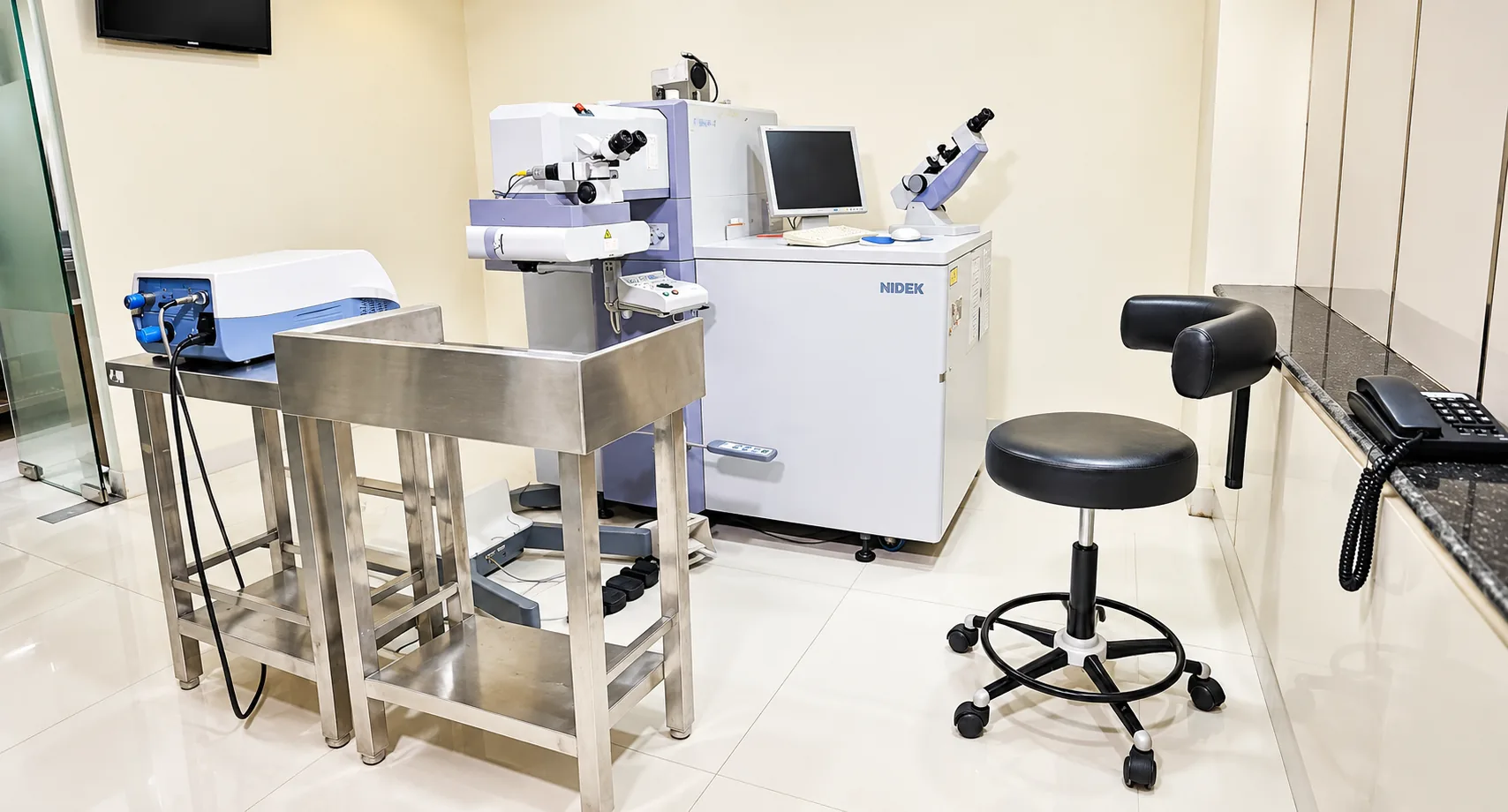
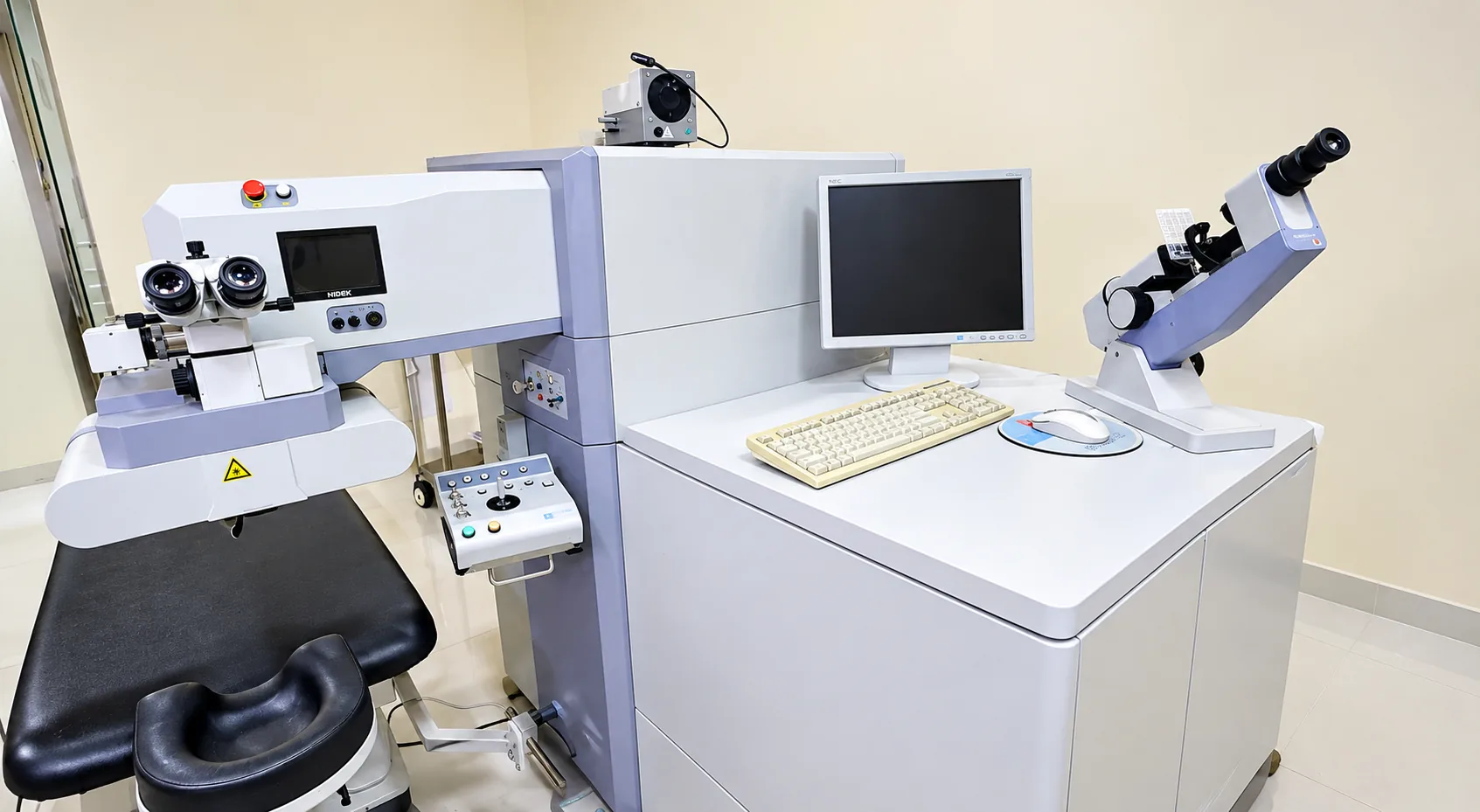
Confirm See our technology page for the equipment we use.
How do I prepare, and how long does it take?
The full work-up usually takes about one to two hours, depending on queues and how many tests are needed that day. A few things make it smoother:
- Bring your glasses, any previous reports, and all your eye drops or medicines in their boxes.
- Remove contact lenses beforehand: soft lenses a day before if possible, and ask us if you wear hard lenses.
- Tell us about steroid use, eye surgery, diabetes, blood pressure and family history.
- Come with someone, or plan a cab or the Metro. Dilating drops blur near vision and cause glare for several hours, so do not drive yourself.
- Carry sunglasses. Delhi sun after dilation is harsh.
- Eat normally and take your regular medicines unless told otherwise.
Reading and phone use will be difficult for a few hours. Plan any work that needs fine near vision for the next day.
Come in the same day if
- You have sudden severe pain in one eye with redness or haze
- You see halos around lights with a headache or vomiting
- Your vision drops suddenly in one eye
Do not wait for a test slot. Call 9643 900 900 or read our eye emergency guidance.
How do I read my results?
Your report will have a few terms. The cup-to-disc ratio compares the hollow centre of the optic nerve head to the whole disc; a large or uneven ratio between the two eyes is a clue, not a diagnosis. The OCT report uses colours: green is within the usual range for age, yellow borderline, red thin. The visual field shows grey or black patches where you did not see faint lights, and indices that the doctor compares across visits. Findings are described as normal, suspect (glaucoma suspect) or glaucoma, and that judgement is made by the doctor from all the tests together, not by one printout. If glaucoma is found, our glaucoma treatment options compared page explains what comes next.
What does a glaucoma test cost?
We do not quote a single price here because the tests you need depend on your eye and your history: a pressure check alone is different from a full work-up with OCT and a visual field. The exact fee is confirmed after examination and told to you before the tests are billed. See the fee schedule for how fees are set, and our insurance page for CGHS and cashless claims. Our current CGHS empanelment status and letter validity: Confirm, and Cashless eligibility and available services: Confirm with the hospital and insurer.
Where do I get a glaucoma test in Shalimar Bagh?
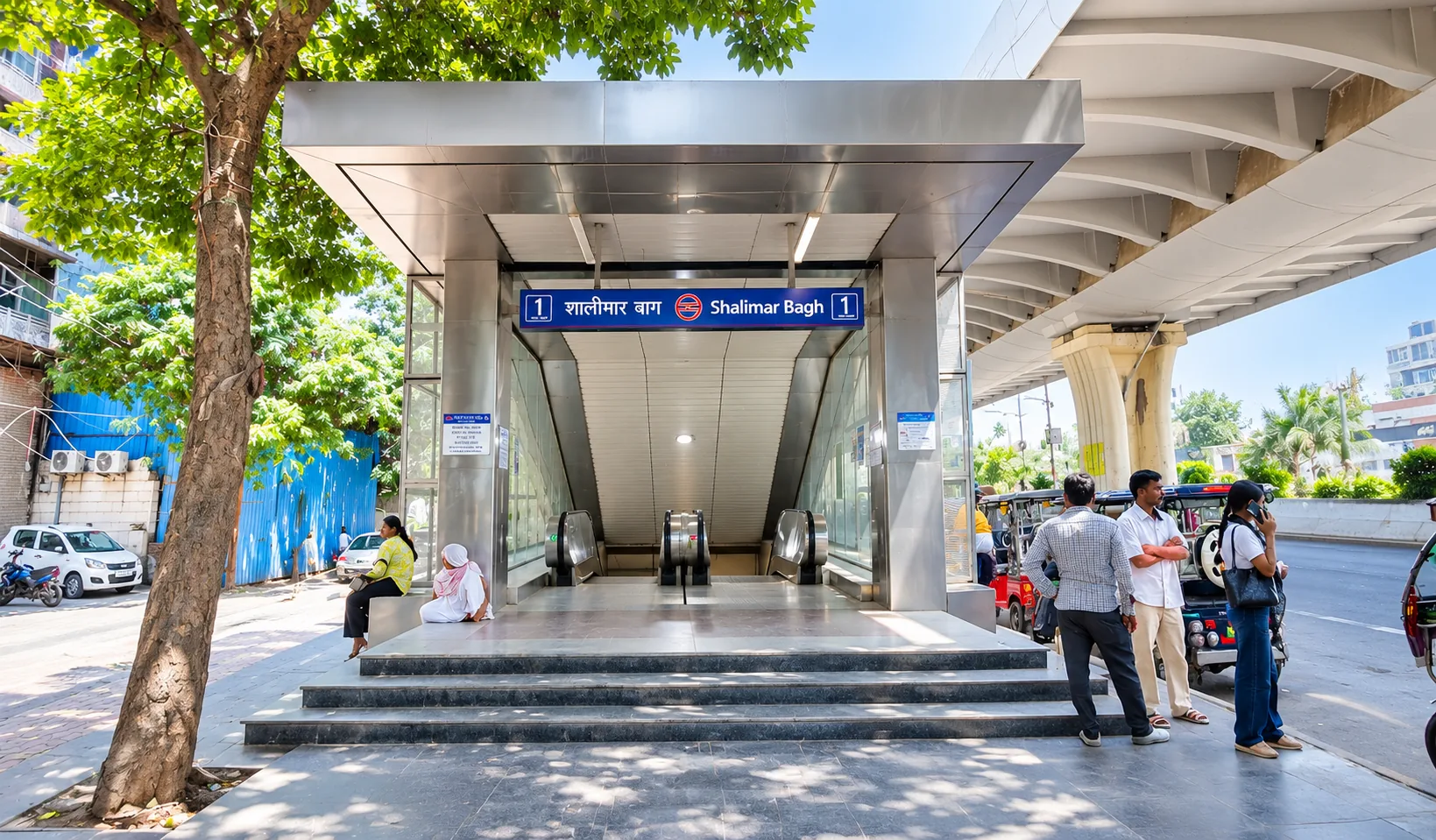
The glaucoma test can be done at Jain Eye Hospital & Laser Centre, AG-152, Poorbi Shalimar Bagh, near Richi Rich Banquet, Delhi 110088, a short trip from Rohini, Pitampura, Model Town and Ashok Vihar. The nearest Metro station is Shalimar Bagh on the Pink Line Confirm. Confirm Not connected with Jain Eye & Medical Centre, Shalimar Bagh.
Book a glaucoma test or call 9643 900 900. A first visit with dilation usually takes one to two hours. This page follows general guidance from the American Academy of Ophthalmology and the National Eye Institute; see our editorial policy.
FAQs
What is normal eye pressure?
Most healthy eyes read between about 10 and 21 mmHg. Pressure varies through the day, with posture and with corneal thickness, so one reading cannot diagnose or rule out glaucoma. A thin cornea can make pressure read falsely low and a thick cornea falsely high, which is why corneal thickness and an optic nerve scan are added to the pressure check.
Is the eye pressure test painful?
No. The air-puff test makes you blink but does not hurt. The more precise applanation test uses numbing drops and a light touch from a blue-lit probe for a second or two. Neither is painful. Remove contact lenses before the test and tell the technician about any recent eye surgery or infection.
How long does a full glaucoma test take?
A full glaucoma work-up usually takes about one to two hours, including the pressure check, corneal thickness, dilation, the nerve scan, the visual field test and the doctor's review. The queue and how many tests are needed that day change the time. Expect blurred near vision and glare for several hours if your pupils are dilated.
How often should I get a glaucoma test?
Have a baseline check at 40, then every 1 to 2 years if results are normal. Test yearly or more often if you have a family history, diabetes, high myopia, raised eye pressure or steroid use. If glaucoma is suspected or confirmed, your doctor sets a closer schedule, often every 3 to 6 months at first.
Can I drive after a glaucoma test?
If your pupils were dilated, avoid driving until the blur and glare settle, usually several hours. Bring someone with you, take a cab or use the Metro, and wear sunglasses. If only a pressure check and a scan were done without dilation, driving is usually fine, but ask the doctor before you go.
What is an OCT scan for glaucoma?
OCT is a quick, non-contact scan that measures the thickness of the optic nerve fibre layer. Thinning can show glaucoma damage before you notice any loss of vision, and repeat scans show whether the nerve is stable. It takes a few minutes per eye, and you only need to look at a light.
Can glaucoma be present with normal eye pressure?
Yes. Normal-tension glaucoma damages the optic nerve even when pressure stays in the usual range, and it is not rare in Asian populations. That is why the nerve scan and visual field test are part of every glaucoma assessment. Treatment still aims to lower pressure further, because that slows damage in most eyes.
How much does a glaucoma test cost in Delhi?
The fee depends on which tests you need: a pressure check alone differs from a full work-up with OCT and a visual field test. At Jain Eye Hospital the exact fee is confirmed after examination and told to you before billing. Insurance and CGHS may cover some parts, and our desk can explain what applies to your plan.
What is a visual field test?
You look at a central light and press a button whenever a faint light appears at the side. The machine maps your side vision and finds patches of loss caused by glaucoma or other nerve problems. It takes about 10 to 15 minutes per eye. The first test is often a learning test, so a repeat is usually needed for a reliable baseline.