
What is childhood myopia?
Myopia, often called short-sightedness or near-sightedness, is a focusing condition: close objects may look clear while distant objects look blurred. It usually begins during childhood and can change as a child grows. In many myopic eyes, the eye is longer than average from front to back, so incoming light focuses in front of the retina rather than directly on it. A child may see the classroom board poorly but read a book held nearby without difficulty. Myopia is common, and a child who needs spectacles has not done anything wrong; it is a vision condition that deserves an accurate examination and a practical plan.
Two goals should be kept distinct. Correcting the current prescription helps a child see clearly now. Myopia management also means measuring change over time and discussing evidence-based ways that may slow progression for an individual child. Glasses or contact lenses correct blur, but an ordinary prescription does not necessarily stop the eye from continuing to grow. A clinician can explain what the measurements show, whether the prescription is changing, what options are appropriate for the child's age and eyes, and how progress will be reviewed. No method guarantees that myopia will stop.
Signs parents and teachers may notice
Children do not always describe blur in the same way adults do. Watch for sitting unusually close to a screen, holding books close, squinting at distant objects, difficulty seeing the board, frequent headaches during visual tasks, or rubbing and closing one eye to see more clearly. A child may lose their place while copying from the board, avoid ball games, or rely on a friend for information displayed at a distance. These clues do not confirm myopia: tiredness, learning differences, dry or irritated eyes, and other refractive errors can create overlapping complaints.
Ask the child what they can and cannot see in specific situations rather than only asking whether their vision is “fine.” Note when the difficulty began, whether it is getting more noticeable, and whether one eye seems different from the other. A family history of myopia is useful to mention, but it cannot diagnose a child. Sudden loss of vision, a painful red eye, new flashes or a curtain-like shadow are not routine signs of childhood myopia and need prompt medical attention.
Why monitoring matters as a child grows
The prescription often changes during the years when a child is growing, although each child's pattern is different. A single spectacle number cannot show whether myopia is progressing; comparison of properly measured results over time is more informative. More severe myopia is associated with a higher lifetime chance of some retinal and other eye problems, so clinicians may discuss the amount of myopia as one part of long-term eye health. That association is not a prediction that a particular child will develop a complication.
Several influences may be considered together: the age when myopia started, the current prescription, family history, the child's daily routine, and the rate of change on prior records. Evidence links more time outdoors in childhood with a lower chance of developing myopia; outdoor activity is healthy but does not replace spectacles, examinations, or prescribed management. Reading and screen habits can be discussed as part of balanced visual routines, but families should be wary of claims that a single exercise, food, screen filter, or “natural” remedy will reverse myopia.
How a myopia assessment is built
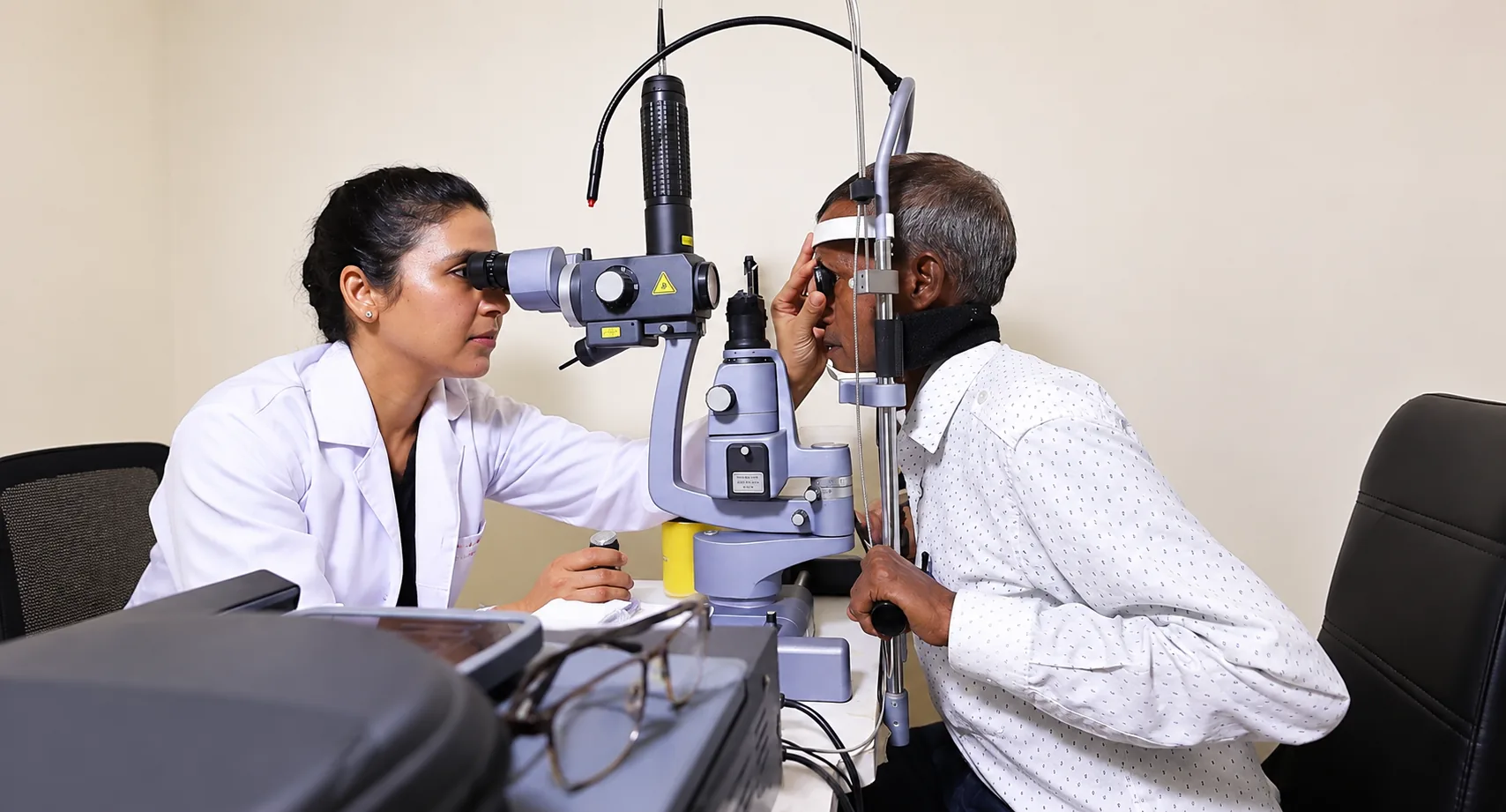
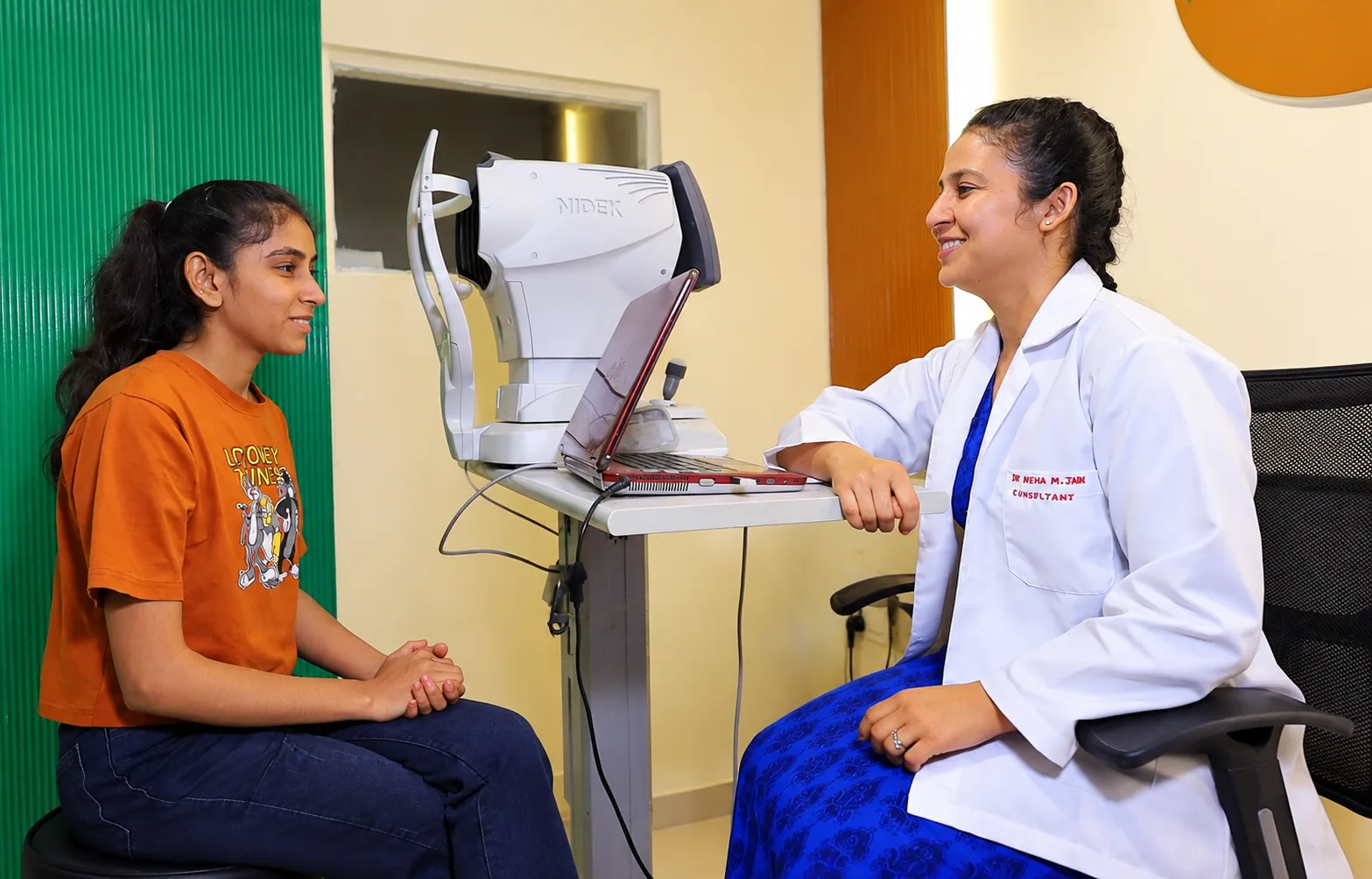
An assessment starts with the child's and family's account: what the child struggles to see, when it began, whether spectacles are worn, and whether there are earlier prescriptions or examination reports. The clinician checks vision separately in each eye, measures refractive error, and assesses how the eyes work together. In children, drops may sometimes be used before refraction so that focusing effort does not hide part of the prescription. The clinician will explain whether drops are needed, what they do, and any temporary effects before using them.
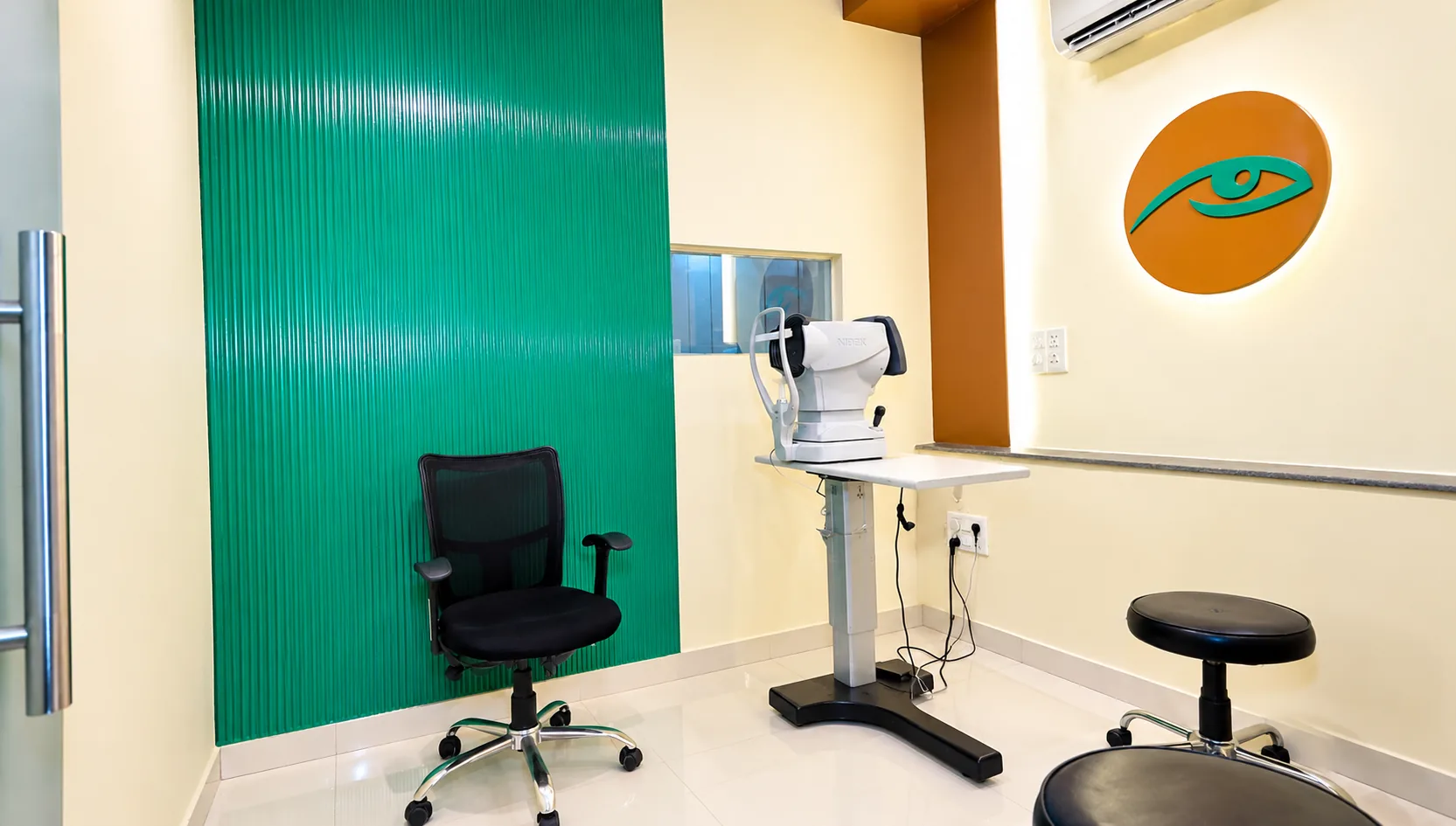
Some myopia-management plans include repeated measurements of eye length in addition to refraction. These measurements can help a clinician follow change; the choice of tests depends on the clinical question, age, and available equipment. Bring current spectacles, old prescriptions, school concerns, and a list of medicines or eye drops. Ask which measurements will be compared at the next visit, what a meaningful change would look like, and when the next review should happen. A measurement is useful only when interpreted in context; a phone app or online chart cannot replace an eye examination.
Correction and myopia-management options
Prescription spectacles are a common, straightforward way to correct distance blur. Contact lenses may suit some children and families, but safe handling, hygiene, maturity, and the ability to follow instructions matter. Special optical designs, certain contact-lens approaches, and low-dose atropine drops have been studied for myopia management. These are not interchangeable and are not suitable for every child. Evidence, local approvals, availability, benefits, possible side effects, and follow-up needs should be discussed with an eye-care professional before a family chooses an option.
Do not start, stop, borrow, or change eye drops based on a social-media post or another child's prescription. Ask what the proposed approach is intended to do, what is known and uncertain, how often the child will be reviewed, and what to do if discomfort or another concern develops. More than one approach may be considered in some circumstances, but a specialist must decide whether that is appropriate. The aim is a clear, safe plan—not a promise of zero progression or freedom from glasses.
Measurements, records and decisions
A prescription is only one snapshot. If the team recommends monitoring, keeping dated prescriptions and visit summaries makes comparisons easier. Bring the actual glasses, because the written prescription may not reveal whether a lens is damaged, poorly fitting, or no longer being worn. The clinician may use a vision chart, refraction and other tests to answer different questions; a more elaborate test is not automatically better unless it addresses the child's clinical need.
Families should feel able to ask how each measurement changes the plan. For example: Is the distance blur corrected in both eyes? Has the prescription changed compared with the last visit? Is a separate measure of eye growth useful here? What would cause the care team to recommend a shorter review interval? These questions support shared decisions without turning a normal variation into a diagnosis. The particular tests offered at a clinic can vary; contact the hospital to confirm equipment, appointment length, and preparation before travelling.
A comfortable visit for a child
Tell your child that an eye visit is a chance to learn how their eyes are working, not a test they can pass or fail. Bring the spectacles they actually use, previous reports, and a short list of situations where vision seems difficult. If a teacher has raised a concern, a note describing what happens in class can help. Tell the clinician about allergies, medicines, previous eye care, and any family history that may be relevant.
Let the child answer questions in their own words when possible, and invite them to say if a test is uncomfortable or they need a pause. If dilating drops are suggested, ask why, how long near blur or light sensitivity may last, and whether the child should have sunglasses or an adult to accompany them. Before leaving, repeat the plan in your own words: what correction to use, which management steps were agreed, what changes to watch for, and when to return. If advice is unclear, ask for it in writing.
Everyday habits and follow-up
Most children can take part in school, reading, play and sport using their prescribed correction, unless their own clinician gives different advice. Encourage comfortable viewing distances, regular breaks from prolonged near work, and enjoyable outdoor activity as part of a balanced routine. These habits support general well-being and may be discussed in relation to myopia risk, but they are not a substitute for a prescribed lens or review. There is no need to blame children for normal study or screen use.
The follow-up interval should come from the clinician who knows the child's age, findings and treatment plan; one schedule is not right for every child. Attend reviews even when the child reports seeing well, because children may adapt to gradual blur. Contact the eye-care team sooner if vision changes noticeably, the glasses stop helping, the child develops persistent headaches or one eye behaves differently. Sudden severe pain, injury, marked redness, flashes or a shadow across vision warrants urgent assessment rather than waiting for a routine myopia appointment.
A practical family plan for school and home
Make the school day easier while the clinical plan is being worked out. Ask the child whether the board, projector, sports field or bus number is difficult to see, and speak with the teacher about a seat that gives a clear view. This is an accessibility adjustment, not a substitute for an eye examination. Encourage the child to wear the prescribed correction for the situations recommended by the clinician. If spectacles are uncomfortable, keep slipping or are frequently misplaced, solve the fit or routine problem rather than leaving the child to manage blurred distance vision alone.
Families can keep a small eye-health record with the dates of visits, prescriptions, measurements and agreed next steps. Add the name and schedule of any prescribed drops or special lenses, what the clinician said to watch for, and whom to contact with questions. At each review, ask the clinician to compare the new results with the prior ones and explain whether the management plan changes. A steady prescription, a changing prescription and a change in measured eye growth do not all mean the same thing; ask the care team to interpret the whole picture rather than focusing on one number.
Be cautious with products advertised as a cure or a way to permanently reverse myopia. Eye exercises, unsupervised drops, online glasses purchases and another person's contact-lens plan cannot replace a child-specific assessment. Ask for the evidence, possible side effects, expected monitoring and practical demands of any proposed strategy. Children should be included in decisions at a level they can understand; they can describe comfort and daily difficulties even when the clinician and parent make medical decisions. A calm, consistent routine is more useful than fear about a prescription.
If the child wears contact lenses, teach handwashing, correct cleaning, storage and the importance of not sharing lenses. A child should be mature enough to follow safe handling instructions and should have adult support as directed. Redness, pain, light sensitivity or blur while wearing a lens means remove it and contact an eye-care professional promptly. Never sleep, swim or shower in lenses unless specifically instructed by the prescribing clinician. These safeguards apply regardless of whether the lenses are ordinary correction or part of a myopia-management plan.
Turning measurements into a follow-up plan
At a review, compare the child’s current prescription with dated earlier prescriptions rather than relying on memory. Ask whether the change is within the expected measurement variation or represents a meaningful trend, and whether both eyes are changing similarly. If the clinician also measures eye length, ask how that result fits with refraction and whether it changes the management decision. A number is most useful when the family understands what it means for this child and what action follows from it.
Agree on who will arrange the next appointment and what to do if the child cannot attend on the planned date. If a management lens or drop is prescribed, make sure everyone caring for the child knows the safe-use instructions and review schedule. Tell the clinician about missed doses, discomfort or practical barriers honestly; the purpose is to adjust support, not assign blame. Never compensate for missed treatment by doubling a dose or extending wear beyond the instructions.
As the child grows, priorities may change. School demands, sport, travel and willingness to wear spectacles or lenses can affect which option is practical. Review goals with the child and clinician instead of assuming that the original plan remains right forever. When a child becomes a teenager, include them directly in discussions about hygiene, lens handling and follow-up responsibilities. An evidence-based plan works best when it is safe, understandable and possible for the family to follow over time.
What to check at the next review
Use each follow-up to check whether the plan still fits the child. Ask the clinician to compare the prescription, confirm that correction remains comfortable, and explain any change in the measured trend. If the child is using a special lens or prescribed drops, discuss wear time, handling, missed doses and side effects without embarrassment. The clinician needs accurate information to decide whether a strategy is practical and safe or needs adjustment.
Before the family leaves, make sure the next review date is clear and that someone knows how to arrange it. Ask what symptoms should bring the child back sooner, how to reach the clinic with a question, and whether school should receive any written recommendation. If the prescription changes, ask for an updated copy and clarify whether old glasses remain useful as a backup. Keeping the child involved in these steps helps build age-appropriate responsibility while adults continue to supervise treatment.
Bring any previous eye reports, your current spectacles and a list of medicines or eye drops you use. Your clinician can explain which examinations or options are relevant to you.
Read the patient visit guideThis information is for general education and does not replace a personal consultation. Treatment recommendations vary from patient to patient and are made only after a detailed eye examination.